


You are likely using both Lovable and n8n as tools to get to the same place, that being shipping faster without getting bogged down by engineering bottlenecks. However, these two tools operate at different levels of your technology stack. Lovable compresses the time required to develop a complete application from an idea to an operational application, whereas n8n was created to orchestrate automation across APIs, SaaS applications, and internal systems.
I will be providing a side-by-side comparison of the two tools in practical terms, the time savings provided by each tool, and the hidden work that each tool provides. In addition, I will provide information on how teams have used both of these tools together in actual product releases. If you want to start with the best deal, you can use the Lovable discount on annual Pro and Business plans.
- 01 Lovable vs n8n: overview
- 02 What's the difference between Lovable and n8n?
- 03 Lovable pros and cons
- 04 n8n pros and cons
- 05 Lovable compared to n8n
- 06 n8n compared to Lovable
- 07 Features comparison
- 08 Lovable vs n8n: Which is the best for your business?
- 09 Alternatives to Lovable & n8n
- 10 Promotions on Application Development software
- 11 Lovable vs n8n: Conclusion
Start saving on the best SaaS
Secret has already helped tens of thousands of startups save millions on the best SaaS like Microsoft Teams, Google Workspace & many more. Join Secret now to buy software the smart way.

01 Lovable vs n8n: overview
While both Lovable and n8n can remove some of the manual effort required for development; they do so from the opposite direction. Lovable creates the product's surface (UI and backend), while n8n provides the operational plumbing (workflow, integration, and automation logic). If you choose the incorrect solution, you will be left with either a well-designed app that cannot reliably perform tasks in the background, or a very effective automation engine with no user interface.
Lovable is an AI powered platform that allows users to create full-stack web applications through natural language prompts which then generate the frontend and backend code rapidly. Founders, product teams, and builders are typically evaluating Lovable to see how quickly they can get from requirements to a working app without having to assemble their entire engineering stack from day one.
n8n is a workflow automation platform based on triggers, nodes, data transformations, execution monitoring, etc. Typically, technical ops, RevOps, and engineering teams own n8n because they need to automate processes reliably, connect multiple tools together, and keep workflows observable and maintainable.
Below is a side-by-side comparison across features that buyers care about most.

Integrations and connectors
n8n offers a broad automation-first integration approach and flexible triggers. Lovable integrates, but usually as part of a product build.

Lovable
n8n
Custom logic and extensibility
Lovable is strong for app-level customization. n8n shines for workflow logic and transformations, with a “fall back to code” mindset.
Lovable
n8n
Customer support
Both can be strong depending on the plan. Lovable support tends to be product-building oriented, n8n support is often workflow and integration troubleshooting.
Lovable
n8n
Time-to-value
Lovable delivers fastest when you need UI plus a basic backend immediately. n8n pays off fastest when you already know integrations and process steps.
Lovable
n8n
Observability and debugging
n8n is designed for inspecting executions step by step. Lovable debugging is closer to standard app debugging, UI state, backend errors, integration failures.
Lovable
n8n
Ease of use
Lovable is “prompt to app” fast. n8n is friendly, but serious workflows require comfort with nodes, payloads, and data mapping.
Lovable
n8n
Workflow automation depth
n8n is built for routing, loops, retries, scheduling, and step-level execution. Lovable can call APIs, but it’s not a workflow engine.
Lovable
n8n
App/UI generation
Lovable specializes in generating full-stack apps from natural language. n8n isn’t meant to produce a user-facing application layer.
Lovable
n8n
Security and governance
n8n fits governance-heavy ops better due to workflow controls and operational isolation. Lovable governance depends on how you deploy and secure the generated app.
Lovable
n8n
Pricing plan and customer reviews
Lovable’s discount is clear and improves first-year economics. n8n pricing is predictable if you model execution volume and criticality correctly.
Lovable
n8n
02 What's the difference between Lovable and n8n?
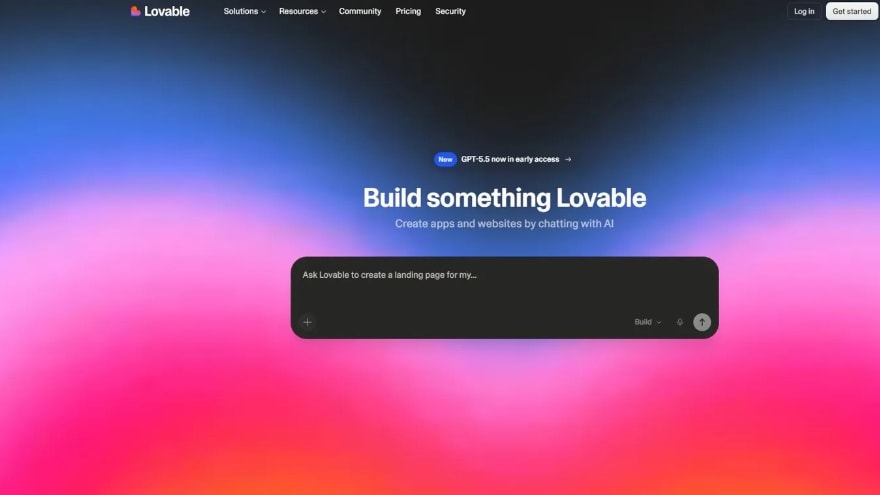
Build full-stack apps by chatting with Lovable's AI
Lovable
Build apps in seconds, not weeks

What triggers look like in n8n
n8n
n8n is a powerful automation platform that allows users to seamlessly connect and automate workflows across various apps and services.
The simplest distinction is output. Lovable's output is a full-stack application (pages, flows, backend endpoints) with a product people can use. The output of n8n is a workflow graph made up of triggers and actions which will move data, call APIs, and execute business logic automatically.
The main reason for this difference in output is the type of user who will be purchasing each solution. Founders will typically purchase Lovable as it is primarily a "founder" tool or "product acceleration" tool. It is ideal when the bottleneck is building the user interface and connecting the parts of the application so they can collect data about their users' behavior to improve their product. Ops teams will typically purchase n8n as it is typically an "ops backbone". It is ideal when the bottleneck is operational throughput, lead routing, enrichment, notifications, provisioning, data synchronization, and multi-tool processes that need to run reliably in the background.
Lovable will grow as you formalize your product, develop consistent data models, define permission boundaries, create reliable integrations, and adopt good coding practices. n8n will grow as you begin to think of your workflows as production systems and create name conventions, versioning, execution monitoring, secrets management, and least privilege access for all of them.
For a technical overview of how n8n structures automation, triggers, actions, nodes, see n8n’s node documentation.

Lovable
Used by 4131 members
15% off annual Pro and Business plans
Save up to $500

n8n
Used by 4443 members
50% off the monthly and annual Business plan for 1 year
Save up to $4,800
03 Lovable pros and cons
What are the advantages of Lovable?
- Full-stack app generation: Lovable is purpose-built to generate front-end and back-end code from natural language, which is ideal when your deliverable is a real product, not just an automation.

- Shortens the spec-to-demo gap: You can validate product assumptions when you can put a working UI in front of users quickly, then iterate with tight feedback loops.
- Strong fit for MVPs and internal tools: When speed beats perfection, Lovable can produce an initial baseline you can harden later, especially for admin panels, portals, and workflow-heavy internal apps.
- Clear pricing upside via deal: You can activate 15% off annual Pro and Business plans, which is meaningful if you’re already committing to a year.
- Compatible with common startup building blocks: The deal page references tools like Supabase, Stripe, and GitHub, which signals a modern SaaS stack orientation.
What are the disadvantages of Lovable?
- Not a workflow engine: If you try to implement orchestration patterns, routing, retries, execution history, complex scheduling, inside the app layer, you’ll rebuild what n8n already does well.

- Prompt quality affects architecture: Lovable can move fast, but ambiguous requirements can create almost-right implementations that still need technical judgment to make production-safe.
- Background automation can become brittle: Using an app builder as your automation runtime often leads to scattered cron jobs and hidden coupling unless you impose strong conventions.
- Governance depends on your deployment: Security, auditability, and access control aren’t just tool features, they depend on how you host the generated app and manage secrets.
- Total cost is more than subscription: The subscription is only one part. You may also pay in integration work, hosting, monitoring, and the engineering time needed to harden the generated system.
Compare Lovable to other tools


Emergent vs Lovable

Lovable vs bolt.new
04 n8n pros and cons
What are the advantages of n8n?
- Workflow orchestration depth: n8n supports routing, merging, looping, filtering, and sophisticated data transformations, exactly what automation-heavy teams need. See n8n’s workflow automation features.
- Observability for runs: Execution visibility matters in production. When a workflow fails, you want to pinpoint the node, payload, and credential involved.
- Great integration posture: It’s designed as connective tissue across tools, not as a single product surface, ideal for messy real-world stacks.
- Flexible deployment model: n8n supports cloud plans and self-hosting options. The official overview is on n8n pricing.
- Excellent for agent execution: If you’re building AI agents that must take real actions, create tickets, update CRM, run enrichment, notify teams, n8n is a pragmatic executor with guardrails and logs.
What are the disadvantages of n8n?
- No product UI layer: n8n doesn’t build your frontend. If you need a customer portal or a SaaS UI, you still need an app builder or a traditional framework.
- Requires API fluency for advanced work: The easy flows are quick, but the high-value flows typically require understanding auth, payload shapes, rate limits, and idempotency.
- Workflow sprawl is real: Without conventions, a team can end up with dozens of workflows that behave like unowned microservices.
- Execution-based pricing can surprise teams: It’s predictable if you model volume correctly, but production usage can spike when you add polling, retries, or multi-entity fan-out.
- Security hygiene is non-negotiable: Automation platforms hold powerful credentials. You must restrict who can edit workflows and keep instances patched and hardened.
Compare n8n to other tools


Clay vs n8n

Make vs n8n
05 Lovable compared to n8n
Lovable is the preferred option when your primary goal is to build a usable application, dashboard, user interface (UI), or login page, which all help deliver a cohesive experience to your customers. Lovable's design allows it to greatly enhance your MVP velocity by accelerating the development process into a rapid-cycle iteration using prompt-based input.
n8n is the preferred option when your objective is to automate your processes, transform your data, and integrate your systems, as well as to perform complex workflows (i.e., orchestrate) across multiple steps. For many teams, the ideal architecture will not be lovable or n8n alone, but rather lovable and n8n together, creating a clear separation between product and operations.
Is Lovable better than n8n?
 Is Lovable better than n8n?
When the primary focus is on delivering UI to your customers as quickly as possible, lovable is the superior option. When the primary focus is on delivering high-quality automation, providing visibility into executions, retry capabilities, and creating long-term operational infrastructure, n8n is the superior option.
What is Lovable best used for?
Lovable is the best option for companies that have a rapid MVP process and need to demonstrate their UI as part of the MVP process. Examples include a customer portal, a lightweight SaaS, an internal admin console, or a prototype to present to investors/design partners.
Lovable is a good fit for companies that need to minimize the upfront coordination effort required to develop a full-stack solution. You begin with a solid foundation and continue to refine the accuracy, performance, and security of the product over time.
Can Lovable replace n8n?
If your automation needs are basic, and the workflow is simply receive event -> call API -> update database, you can use lovable instead of n8n to keep your automation logic close to your product code.
When you require advanced orchestration, branching, replay capabilities, and operational visibility into cross-tool processes, n8n will be the most reliable option to manage these complexities. Forcing lovable to act as your automation runtime typically results in hidden operational debt.
Is Lovable cheaper than n8n?
Lovable will save you money when it replaces engineering hours. Even if it minimizes a single sprint, the economics will favor lovable. On top of that, you can activate a clear discount via the Lovable deal on annual Pro and Business plans.
n8n will be less expensive when it replaces several automation subscriptions or minimizes your manual ops workloads at scale. Your primary concern should be forecasting the total number of executions per year and the operational ownership costs. Automation is cheap if it remains maintainable.
Is there a better Application Development software than Lovable?
Depending on your definition of "better", there could be alternative solutions for your team. Perhaps more visual control, different deployment options, deeper database integration, or a larger community surrounding plugins/templates. Lovable is very successful when speed and full-stack scaffolding are your priorities.
Can I connect Lovable to n8n?
Yes, and it is generally the cleanest way to do so. Utilize Lovable as the product layer and n8n as the automation back-end. A typical example would be that Lovable sends events/webhooks to n8n when users register, upgrade, etc., and/or trigger actions, and then n8n uses those events/webhooks to provision, update CRM, send notifications, enrich, and log.
The technical approach for this is generally accomplished using webhooks, API endpoints, and shared services. The true benefit of this model lies in the architectural separation of your product experience and the workflow visibility, testability, and operational ownership.

Lovable
Build apps in seconds, not weeks
15% off annual Pro and Business plans
Save up to $500
06 n8n compared to Lovable
n8n will be the better option if your product is essentially a collection of processes, synchronization of systems, automation of processes, running jobs at scheduled times, and transferring data reliably through a complex SaaS landscape. It was designed to make these process flows transparent and easy to manage instead of hiding them inside scripts.
When you require a user-facing product surface, Lovable is a better option. While n8n can handle the back-end processing for the product, it cannot handle the front-end storefront. Therefore, most teams that attempt to utilize n8n as their UI-layer will ultimately implement a separate front-end UI anyway, so it is generally easier to accept this from the beginning.
Is n8n better than Lovable?
If you need automation to function as your product's infrastructure, including routing logic, transformation capabilities, execution monitoring, and integration that continues to run even after the original creator has moved on, then n8n is a better option. As a result, its workflow model and feature set were created for this type of environment. Please refer to n8n's official feature set overview.
When the primary objective is to rapidly deploy a full stack app from natural language, Lovable is the better option. It is addressing a different issue by creating the product surface, whereas n8n addresses the operation of the systems supporting the product surface.
What is n8n best used for?
n8n is best utilized for dependable cross-tool workflows, lead routing and enhancement, ticket routing/triage, onboarding/provisioning, finance operations automation, and wherever data needs to be transformed and delivered to multiple destination points.
In addition, n8n is a great executor for AI-driven workflows; In such workflows, an LLM decides what action should occur next, while n8n executes the call to the applicable tool(s), including providing logging and operational protection/guard rails.
Can n8n replace Lovable?
You can only use n8n to replace Lovable if you do not have a requirement for an application UI. If your end-product is automation, n8n can serve as the sole solution.
However, as soon as you need a customer account portal, dashboard, permission levels, and a cohesive UX experience, you will need an app-layer, at which point Lovable (or another framework) will become required.
Is n8n cheaper than Lovable?
n8n can be cheaper when it consolidates multiple tools into one workflow platform and reduces manual operations. Its official plans are execution-based, so it’s wise to sanity-check volume using n8n’s pricing page before you commit.
Lovable can be cheaper when it reduces the time to ship a real app, and if you’re going annual, the Lovable annual discount improves the first-year cost profile.
Is there a better Business Process Management software than n8n?
Dependent on your constraints, possibly. If you wish to minimize setup time and have access to a large library of plug-and-play recipe options, some teams choose alternatives to n8n. If you desire transparency, self-hosting, and control over your workflow, n8n is typically the better fit.
n8n is included in the same competitive space as Make, Zapier, and Pipedream in n8n alternatives, which are common reference points for comparisons.
Can Lovable create AI agents?
Lovable can be utilized to create agent-like product experiences, a UI where a user requests an outcome and backend logic that invokes LLMs and tool APIs to accomplish tasks. This is a good method to encapsulate agent workflows within a user-friendly product surface.
While n8n is likely to excel at the execution layer (multi-step tool utilization, branching logic, retriable actions, etc.) and auditing, Lovable provides a good means to wrap agent workflows into a user-friendly product surface. Therefore, in many instances, utilizing Lovable in combination with n8n is a more robust design than attempting to incorporate all elements into a single tool.

n8n
Build smarter workflows
50% off the monthly and annual Business plan for 1 year
Save up to $4,800
07 Features comparison
Lovable tends to deliver faster time-to-value for MVPs, n8n delivers faster ops value

A working Lovable app in no time
Time-to-value for MVPs is often defined by a user completing the core journey. Lovable compresses that path by creating a functional app baseline from prompts and allowing you to iterate towards the correct UX.
Time-to-value for operations is no longer manual handoffs. n8n provides that value when you standardize processes into workflows and make them visible and reliable.
Determine the value you want to eliminate first, either product build time or operational friction.
n8n is typically stronger for debugging and operational observability
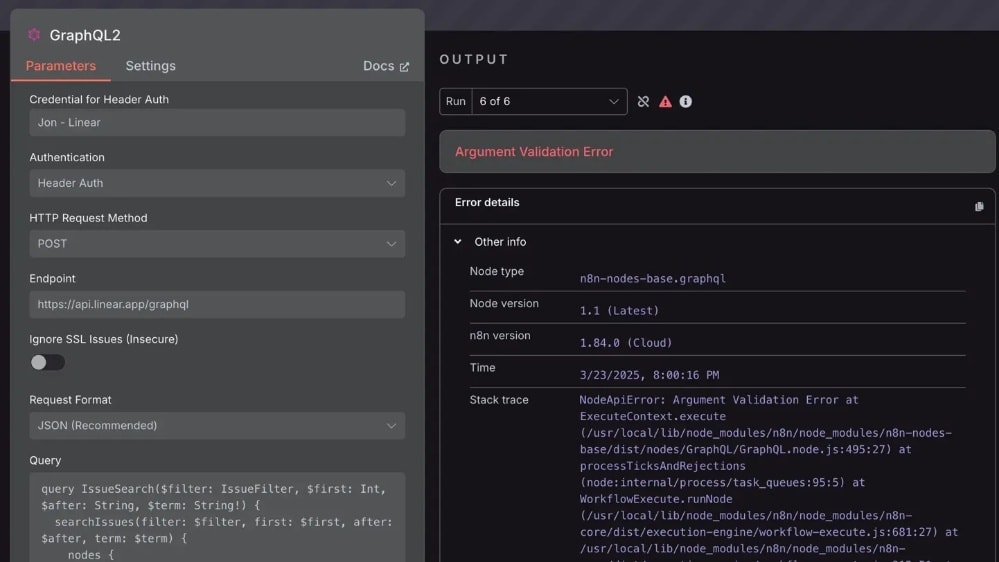
n8n shows you exactly where things broke
It is not just important to know if something "ran", but also what happened, at which step, with which inputs, and if it can be safely replayed. n8n is built around the execution centric workflow lifecycle and emphasizes step execution and node-level inspection in its documentation. The node model provides a good perspective on why debugging feels more native within n8n.
Debugging Lovable is app debugging, UI state, backend responses, permissions, and integration failure within your codebase. While this is common for products, it is less convenient for high volume automations.
If a failed run results in lost revenue or broken provisioning, n8n's operational visibility is difficult to beat.
Lovable excels ahead of n8n for user-friendliness when building a product

From plain English to working product with Lovable
Lovable has been optimized for a single task and transforms user intent into a working application. Since the interface for creating the application is a natural language prompt, you remove an additional level of overhead for the user to coordinate, create tickets, scaffold, boilerplate, and determine the initial architecture of the application. This is the type of acceleration that matters when you are still determining what the product should look like.
n8n is easy to learn and use; however, its mental model is still centered around a system, event, node, credential, payload, etc., which is the reason n8n is so powerful, yet requires a higher level of technical knowledge to operate.
If your first goal is to get a real application that users can navigate, Lovable will win. If your first goal is to get automated processes to run end-to-end, with little to no human intervention, n8n will win.
n8n outclasses Lovable for automation depth and workflow control

n8n's branching, looping and merging in action
As soon as your workflow is no longer linear, n8n's advantages will appear. Real-world operations require the ability to branch, loop, merge, conditionally route and have robust trigger strategies for workflows.
While Lovable can call APIs and implement logic, it is not optimized as a workflow runtime. As you try to push Lovable further into orchestration territory, you will find yourself missing many of the workflow-specific tools that n8n provides.
For teams with significant operational needs, n8n will be the better long-term provider of automation complexity.
Lovable is the clear winner for app and UI generation

Full-stack apps on Lovable, ready to launch
Lovable has been designed to create full-stack applications from natural language prompts, therefore it competes directly with the early stages of the app development process, rather than with automation platforms.
n8n can provide workflows behind a UI, but it cannot create the UI itself. This is not a weakness, it is simply a product boundary. n8n remains focused on execution, integrations, and providing a clear operational view of your workflows.
If the UI is a major component of the value proposition you are delivering, Lovable would be a better place to start.
n8n is generally stronger for governance, Lovable is stronger for speed-first teams
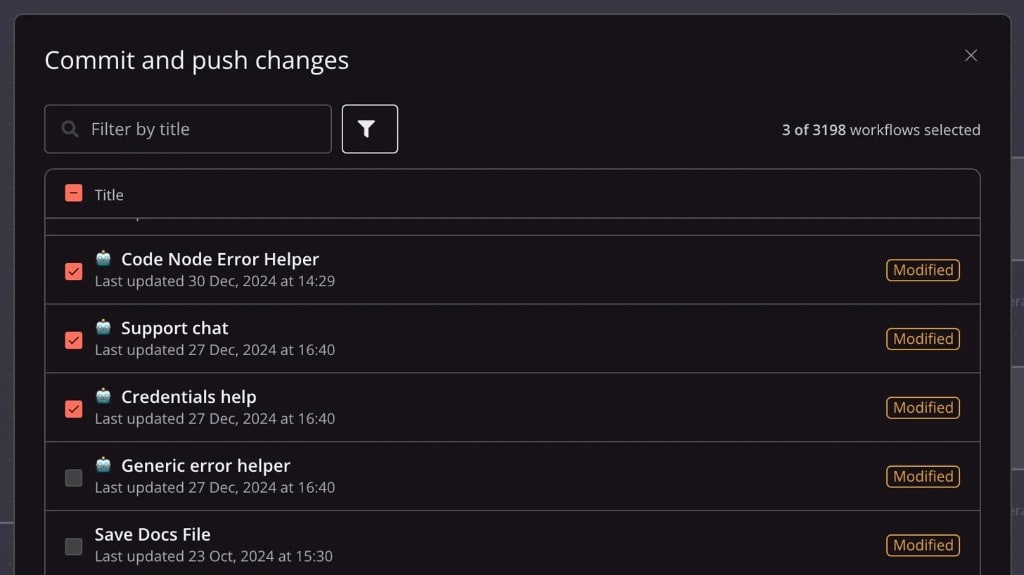
n8n treats automation as a production system
Governance is an area where workflow platforms tend to excel. They provide a centralized location for automation, credentials, and execution history, making it easier to manage the operational aspects of automation. n8n fits teams that want their automation to behave as a production system and not as a collection of scripts.
Lovable fits teams that value momentum and product discovery. Lovable is a sharp tool for rapidly building a product, and then iterating once you receive real feedback.
If you are developing in a highly regulated or controlled environment, n8n's operational posture is likely the safer baseline for you. If you are still searching for product-market fit, Lovable's velocity is likely the best advantage for you.
Lovable is easier to optimize for cost when you have a clear deal
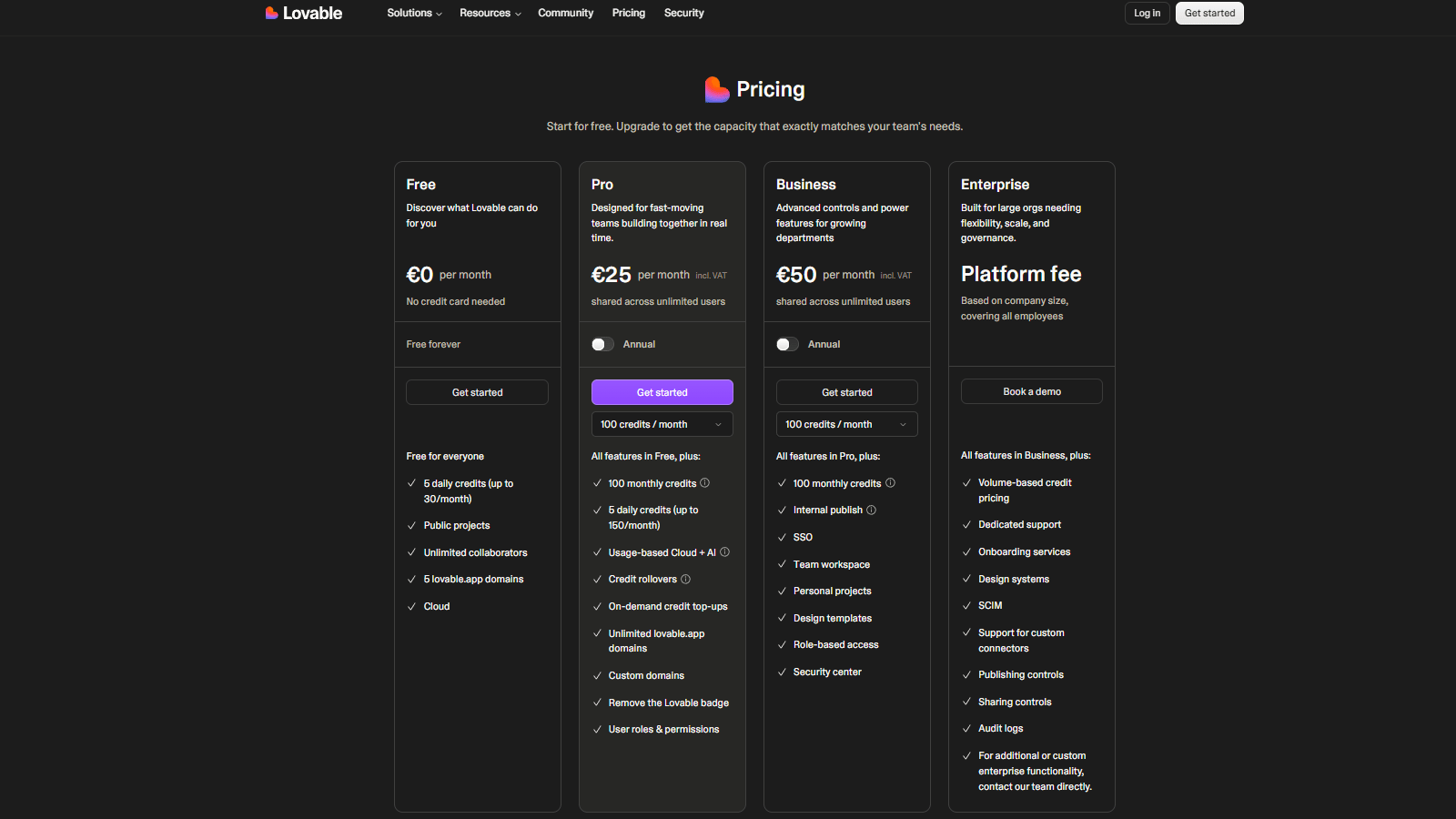
Clear pricing for every stage of growth
Pricing discussions are easiest when the offer is explicit. With Lovable, you can point readers to 15% off annual Pro and Business plans, which directly reduces first-year spend.
With n8n, pricing depends heavily on execution volume and how you architect triggers and fan-out patterns. The official model is clearly described on n8n’s pricing page, and it’s worth aligning that with your expected workload.
The cheaper tool is the one that avoids your bigger constraint, engineering time or operational labor.
08 Lovable vs n8n: Which is the best for your business?
Lovable is the best tool for you if:
- You need a full-stack app generated quickly from natural language prompts.
- Your priority is shipping an MVP, a portal, or an internal tool where the UI is part of the value.
- You want to iterate on product requirements rapidly without heavy scaffolding overhead.
- You prefer consolidating early product build work into one accelerated workflow.
- You want to reduce first-year costs with the Lovable annual plan discount.
 You need a full-stack app generated quickly from natural language prompts.
n8n is the best tool for you if:
- You need deep automation across tools, APIs, and data sources with strong control primitives.
- You care about execution visibility, replayability, and operational debugging.
- Your workflows are business-critical, provisioning, routing, enrichment, sync, and must be maintainable.
- You want an automation backbone for AI-driven processes and agent execution.
- You’re ready to forecast workload and choose a plan aligned to workflow executions via n8n’s official pricing model.
Lovable
Used by 4131 members
15% off annual Pro and Business plans
Save up to $500
n8n
Used by 4443 members
50% off the monthly and annual Business plan for 1 year
Save up to $4,800
09 Alternatives to Lovable & n8n

Base44
Used by 3315 members

Emergent
Used by 2580 members
20% off your first month on the Pro plan
Save up to $40

OpenAI - ChatGPT
Used by 1949 members

bolt.new
Used by 1295 members
20% off all plans for the first 3 months
Save up to $400
10 Promotions on Application Development and Business Process Management software
Lovable and n8n are great tools, but Secret offers promo codes with discounts on over 2250+ different SaaS solutions. New deals are added regularly, helping you save money on your online subscriptions. Get access to codes for other Application Development and Business Process Management software you might want to purchase

Promo code Retool
1 year free on the monthly Team or Business plan

Promo code Make
3 months free on the Teams plan (240k credits included)
bolt.new promotion code
20% off all plans for the first 3 months

Bonsai coupon code
2 months free on annual plans

Discount for Auth0
1 year of the B2B Professional plan free

Promo code Xero
80% off for 6 months

Mobbin discount code
20% off for 1 year on the Pro plan

Stripe Atlas promo
$50 off for the incorporation of your company

Discount for AWS Activate
Up to $100,000 in credits or 20-50% off your monthly spend through an AWS partner (must be spending $100+/month)

Zapier promotion code
14 days free + 33% off annual plans
11 Lovable vs n8n: Conclusion
Lovable and n8n are complementary tools that serve different goals. As an accelerator for creating product experiences quickly, Lovable will build applications based on user input in the form of natural language, while n8n will provide a strong backbone to support reliable automation of multiple systems.
If I were to describe both tools in one sentence, Lovable builds the user interface, while n8n supports all the automation behind the scenes that businesses need. To use these tools together efficiently, keep user logic in the application and run your cross-tool automation using n8n where it can be reviewed, executed, viewed and controlled.
To reduce your tooling cost, start with the Lovable deal on annual Pro and Business plans.
Start saving on the best SaaS
Secret has already helped tens of thousands of startups save millions on the best SaaS like Microsoft Teams, Google Workspace & many more. Join Secret now to buy software the smart way.