


Effectively deploying web applications and managing your hosting infrastructure are essential components of running an online business. Cloud hosting platforms offer a range of options to suit different needs, and two prominent choices in this space are Heroku and DigitalOcean.
In this comprehensive comparison, we'll delve into Heroku vs DigitalOcean, both renowned players in the cloud hosting and deployment arena. By examining their key features and capabilities, we aim to shed light on how each platform addresses various hosting and deployment requirements. Whether you're running a small web application or managing a large-scale online enterprise, this article will assist you in making an informed decision about the right platform for your specific needs.
- 01 Heroku vs DigitalOcean: overview
- 02 What's the difference between Heroku and DigitalOcean?
- 03 Heroku pros and cons
- 04 DigitalOcean pros and cons
- 05 Heroku compared to DigitalOcean
- 06 DigitalOcean compared to Heroku
- 07 Features comparison
- 08 Heroku vs DigitalOcean: Which is the best for your business?
- 09 Alternatives to Heroku & DigitalOcean
- 10 Promotions on Application Development software
Start saving on the best SaaS
Secret has already helped tens of thousands of startups save millions on the best SaaS like Microsoft Teams, Google Workspace & many more. Join Secret now to buy software the smart way.

01 Heroku vs DigitalOcean: overview
Heroku and DigitalOcean are prominent players in the realm of cloud hosting and infrastructure management, each bringing a unique array of features and capabilities to the table.
Heroku is a platform as a service (PaaS) that provides cloud hosting. With Heroku, developers can focus solely on refining their application development without having to worry about infrastructure. It takes care of scalability and deployment, allowing developers to concentrate on perfecting their applications. On the other hand, DigitalOcean offers cloud computing solutions for businesses and developers. Their services enable companies to easily deploy and scale their applications, allowing them to run smoothly on servers without any impact on performance.
Now, let's dive into the Heroku vs. DigitalOcean comparison to assist you in making a well-informed decision about selecting the right cloud hosting and infrastructure management solution that suits your specific business requirements.

Ease of Use
For users accustomed to cloud solutions, the learning curve will not be as steep as for those using a solution like DigitalOcean for the first time. Heroku is a bit more complicated in certain aspects, while some bugs increase the difficulty.

Heroku
DigitalOcean
Manageability
Heroku offers developers the flexibility to focus on optimizing their applications as it handles the infrastructure aspects such as server and database maintenance. On the other hand, with Digital Ocean the main emphasis should be on application development and backend management.
Heroku
DigitalOcean
Server control
Digital Ocean provides users with the ability to create their own virtual private server. While the service does not include management, there are helpful guides available to assist in setting up these servers independently. Regrettably, Heroku does not offer a similar option.
Heroku
DigitalOcean
Scalability
Both Heroku and DigitalOcean have the ability to scale, but they have different approaches to achieving it. Heroku’s is more automatic as the application scales naturally, while with DigitalOcean you will have to do most of the work manually.
Heroku
DigitalOcean
Security
Security is of importance to both Heroku and DigitalOcean. They each provide a range of security measures to protect your application. Heroku prioritizes security by implementing SSL encryption, establishing connections with databases, regularly updating security protocols and maintaining a team that actively monitors for potential threats. In contrast, DigitalOcean integrates security features into its platform by offering backups and employing secure password hashing techniques. Additionally, DigitalOcean offers the option to augment security further with the inclusion of firewalls and malware scans for a cost.
Heroku
DigitalOcean
OS compatibility
DigitalOcean doesn’t play nice with Windows, as deployment is done through predefined Linux instances and the same can be said of Heroku, whose instances are Unix-based.
Heroku
DigitalOcean
Customer Reviews
Heroku has more criticism directed at various aspects of its platform compared to DigitalOcean, making it a less appealing choice according to customer reviews.
Heroku
DigitalOcean
Pricing Plan
As both platforms cover the basics pretty well and are competitively priced, we could say that they’re evenly matched when it comes to value for money. DigitalOcean’s one-year Github Pro that comes as a sign-on bonus makes it a much better option.
Heroku
DigitalOcean
Customer Support
While customer support is not perfect by any means with either platform, Heroku manages to make things worse with a lack of documentation for certain aspects and slower response times.
Heroku
DigitalOcean
Integrations
Heroku offers a simplified PaaS experience with many integrations with tools like SendGrid, UseCSV, and Fastly, while DigitalOcean provides more control but may require more manual setup for integrations.
Heroku
DigitalOcean
02 What's the difference between Heroku and DigitalOcean?

Heroku's Web Dashboard Showing Metric like Errors and Response Times
Heroku
Unleash your code's full potential.

DigitalOcean Allows You to Easily Build, Deploy and Scale Your Apps within a Fully Managed Solution
DigitalOcean
Easily develop and deploy your apps in complete security. Scale your business and manage your infrastructures with confidence.
Heroku is a platform as a service (PaaS) that simplifies application deployment and scaling. It aims to make the development process easy and efficient, allowing developers to focus on writing code rather than dealing with infrastructure management. By using it, developers can focus on writing code for managing infrastructure. An important advantage of Heroku is its user interface. Additionally, Heroku offers integrations (add-ons) that enhance functionality and streamline the development workflow.
On the other hand, DigitalOcean is an infrastructure as a service (IaaS) provider that offers users control and flexibility over their infrastructure. Unlike Heroku, DigitalOcean requires users to have an understanding of server management and configuration. A significant difference between Heroku and DigitalOcean lies in the level of control users have over their environment.
With DigitalOcean, users have root access to their machines (known as droplets), allowing them to customize and configure their infrastructure according to their requirements. This aspect makes DigitalOcean a popular choice among developers who need control over their hosting environment.
The decision between the two depends on your needs and level of expertise. Digital Ocean provides a platform that's user-friendly and specifically tailored for developers. It offers the advantage of costs and a wider range of data centers, making it more accessible. In contrast, Heroku offers a managed infrastructure and scalable hosting. Moreover, it adds value by offering software solutions that are built upon an Infrastructure as a Service (IaaS) framework.
03 Heroku pros and cons
What are the advantages of Heroku?
- Ease of use: Heroku simplifies application deployment with a user-friendly platform, making it accessible to developers of all levels.

- Auto-scaling: It offers automatic scaling, ensuring your application can handle traffic spikes without manual intervention.
- Extensive add-ons: Heroku provides a wide range of third-party add-ons for databases, caching, monitoring, and more.
- Continuous integration: Integration with popular CI/CD tools like GitHub Actions streamlines the development workflow.
- Managed services: Heroku takes care of server management, reducing the operational burden on developers.
What are the disadvantages of Heroku?
- Cost: While convenient, Heroku can be more expensive than self-managed solutions, especially for large-scale applications.

- Limited control: Developers have less control over the underlying infrastructure, which can be limiting for certain customization needs.
- Performance: High-traffic applications may experience performance bottlenecks due to resource limitations.
- Vendor lock-in: Migrating away from Heroku can be complex, potentially leading to vendor lock-in.
- Limited database options: While it offers various database add-ons, advanced database customization may be limited compared to self-hosted solutions.
Compare Heroku to other tools


Vercel vs Heroku

04 DigitalOcean pros and cons
What are the advantages of DigitalOcean?
- Affordability: DigitalOcean offers competitive pricing, making it a cost-effective choice for developers and small businesses.
- Control: Users have full control over their virtual servers (Droplets), allowing for extensive customization and configurations.
- Scalability: DigitalOcean enables easy horizontal and vertical scaling to accommodate growing application demands.
- SSD storage: Fast SSD storage is included with all Droplets, enhancing overall performance.
- Large community and resources: A vast community and extensive documentation provide support and resources for troubleshooting and learning.
What are the disadvantages of DigitalOcean?
- Steeper learning curve: Compared to managed platforms like Heroku, DigitalOcean may be more challenging for beginners due to its manual setup.
- Infrastructure management: Users are responsible for server maintenance, security updates, and backups.
- Limited managed services: While it offers some managed services, they are not as extensive as those of other cloud providers like AWS or Azure.
- No fully managed database: DigitalOcean provides database services, but they require more hands-on management compared to fully managed database solutions.
- No out-of-the-box CI/CD: Developers need to set up their CI/CD pipelines, which can be more time-consuming initially.
Compare DigitalOcean to other tools


DigitalOcean vs Linode

DigitalOcean vs Cloudways

OVHcloud vs DigitalOcean

DigitalOcean vs Microsoft Azure

DigitalOcean vs AWS Activate

Scaleway vs DigitalOcean
05 Heroku compared to DigitalOcean
In comparing Heroku and DigitalOcean, Heroku stands out with its user-friendly platform that simplifies application deployment. It's an excellent choice for developers looking for straightforward deployment processes and automatic scaling to handle traffic spikes effortlessly. Heroku's strength lies in its streamlined approach, abstracting much of the infrastructure complexity.
On the other hand, DigitalOcean provides a high level of control over virtual servers (Droplets), making it ideal for users who require extensive customization and configuration options. The choice between Heroku and DigitalOcean depends on your preference for ease of use and control. Heroku offers simplicity and convenience, while DigitalOcean empowers users with granular control over their hosting environment, catering to more advanced customization needs.
Is Heroku better than DigitalOcean?
 Is Heroku better than DigitalOcean?
Heroku stands out in streamlining deployment and offering automatic scaling, appealing to those who prioritize user-friendliness and convenience. It's an attractive choice for developers seeking a straightforward platform.
Conversely, DigitalOcean provides a greater level of control over virtual servers, catering to users with a need for extensive customization and configuration options. Choosing between Heroku and DigitalOcean depends on your preference for simplicity versus precise control, along with your unique hosting requirements and technical proficiency. It's about striking the right balance between ease of use and granularity of control based on your project's specific needs and your level of expertise.
What is Heroku best used for?
Heroku excels as a user-friendly cloud platform for application deployment and hosting. It is best suited for developers and businesses seeking a straightforward solution to deploy web applications without the complexity of managing server infrastructure.
Heroku's strengths lie in its ease of use, automatic scaling, and a wide range of available add-ons. It's an ideal choice for those who prioritize simplicity and want to focus on developing and deploying applications rather than managing server configurations. Heroku is particularly valuable for startups, small businesses, and projects where rapid development and deployment are essential.
Can Heroku replace DigitalOcean?
The answer hinges on your specific hosting and infrastructure needs. Heroku and DigitalOcean serve different purposes. Heroku simplifies application deployment and is suitable for those who prioritize ease of use and automation, especially for web applications. DigitalOcean, on the other hand, offers more control over virtual servers (Droplets) and is ideal for users who require extensive customization and configuration options.
The choice between Heroku and DigitalOcean depends on your preference for simplicity versus control. Heroku is a great choice for streamlined deployment, while DigitalOcean empowers users with granular control over their hosting environment. Consider your project requirements, expertise, and level of customization needed when deciding which platform is the better fit for your specific use case.
Is Heroku cheaper than DigitalOcean?
When it comes to pricing, there are notable differences to consider. Heroku's pricing model can be cost-effective for businesses due to its simplicity and pay-as-you-go approach. You pay for the resources you use, making it suitable for startups and projects with fluctuating traffic.
On the other hand, DigitalOcean offers a more predictable and transparent pricing structure with fixed monthly rates for virtual servers (Droplets). While it can be cost-effective for consistent workloads, it may require more upfront planning and management. The choice between Heroku and DigitalOcean depends on your budget, hosting needs, and whether you prefer a flexible pay-as-you-go model or a more predictable cost structure.
Is there a better Application Development software than Heroku?
It's worth exploring alternative cloud hosting and deployment solutions to determine the best fit for your specific needs.
Several notable alternatives to Heroku in the cloud hosting and deployment space include DigitalOcean, AWS Elastic Beanstalk, Google App Engine, and Microsoft Azure App Service.
The choice of cloud hosting platform depends on factors such as your project's complexity, budget, and the level of control you require over your infrastructure. While Heroku offers simplicity and automation, other platforms may provide more extensive customization options, specialized services, or cost-effective solutions that align better with your hosting and deployment objectives.
06 DigitalOcean compared to Heroku
DigitalOcean sets itself apart with its developer-centric cloud infrastructure platform, making it an appealing choice for individuals and businesses looking for granular control and customization. DigitalOcean offers straightforward pricing, with various Droplet plans to accommodate a range of project sizes and budgets.
While both DigitalOcean and Heroku excel in cloud hosting and deployment, the decision between the two depends on your specific requirements. DigitalOcean is an excellent choice for those who require hands-on control over their virtual servers (Droplets) and infrastructure, making it suitable for developers and businesses seeking extensive customization. It's ideal for projects where you want full control over configurations and resource allocation, catering to a more technically inclined user base.
Is DigitalOcean better than Heroku?
The answer depends on your specific hosting and deployment requirements. DigitalOcean excels in providing users with extensive control and customization options over their virtual servers (Droplets), making it a preferred choice for those who require granular control and flexibility. If you value complete control over server configurations and resource allocation, DigitalOcean may be the better fit.
On the other hand, Heroku offers a simplified, user-friendly approach to application deployment and hosting, making it an ideal choice for developers and businesses seeking an easy-to-use platform that abstracts much of the infrastructure complexity. If simplicity and convenience are your top priorities, Heroku remains a compelling option.
What is DigitalOcean best used for?
DigitalOcean is an ideal choice for developers and businesses looking for a developer-centric cloud infrastructure platform. It excels in providing users with full control and customization options over their virtual servers (Droplets). This makes DigitalOcean best suited for projects where you need hands-on control over server configurations and resource allocation.
DigitalOcean is commonly used for hosting web applications, websites, and various software projects. It's particularly valuable for those who want to manage their server infrastructure independently and require a cost-effective, scalable, and straightforward hosting solution. Whether you're running a personal blog, a startup, or a larger-scale application, DigitalOcean's flexible and developer-friendly platform can cater to a wide range of hosting needs.
Can DigitalOcean replace Heroku?
The answer depends on your hosting and deployment requirements. DigitalOcean offers a more hands-on and developer-centric approach to cloud infrastructure management. If you prioritize full control over server configurations and resource allocation, DigitalOcean may be a suitable replacement for Heroku.
Heroku, on the other hand, is known for its simplicity and user-friendliness, abstracting much of the infrastructure management complexity. If you value ease of use and automation, Heroku may remain the preferred choice. Consider your project's specific needs, your level of technical expertise, and your preference for control versus simplicity when deciding whether DigitalOcean can effectively replace Heroku for your particular use case.
Is DigitalOcean cheaper than Heroku?
DigitalOcean often offers more predictable and transparent pricing with fixed monthly rates for virtual servers (Droplets). This can be cost-effective for consistent workloads and projects with stable resource needs.
In contrast, Heroku's pricing model can be more flexible, allowing users to pay for the resources they use, which can be beneficial for startups and projects with fluctuating traffic. However, for large-scale or resource-intensive applications, the pay-as-you-go approach of Heroku may result in higher costs. The choice between DigitalOcean and Heroku in terms of cost depends on your project's characteristics, budget, and the predictability of your resource usage.
Is there a better Cloud Storage software than DigitalOcean?
It's crucial to explore alternative cloud hosting and deployment solutions to determine the best fit for your specific requirements.
Several notable alternatives to DigitalOcean in the cloud infrastructure space include AWS (Amazon Web Services), Google Cloud Platform (GCP), Microsoft Azure, and Vultr.
The choice of cloud hosting platform should align with your project's complexity, budget, and the level of control you need over your infrastructure. While DigitalOcean provides a user-friendly and cost-effective option, other cloud providers may offer more extensive services, specialized solutions, or enterprise-level features that better suit your hosting and deployment objectives.
07 Features comparison
DigitalOcean Excels Ahead of Heroku in User-Friendly Design
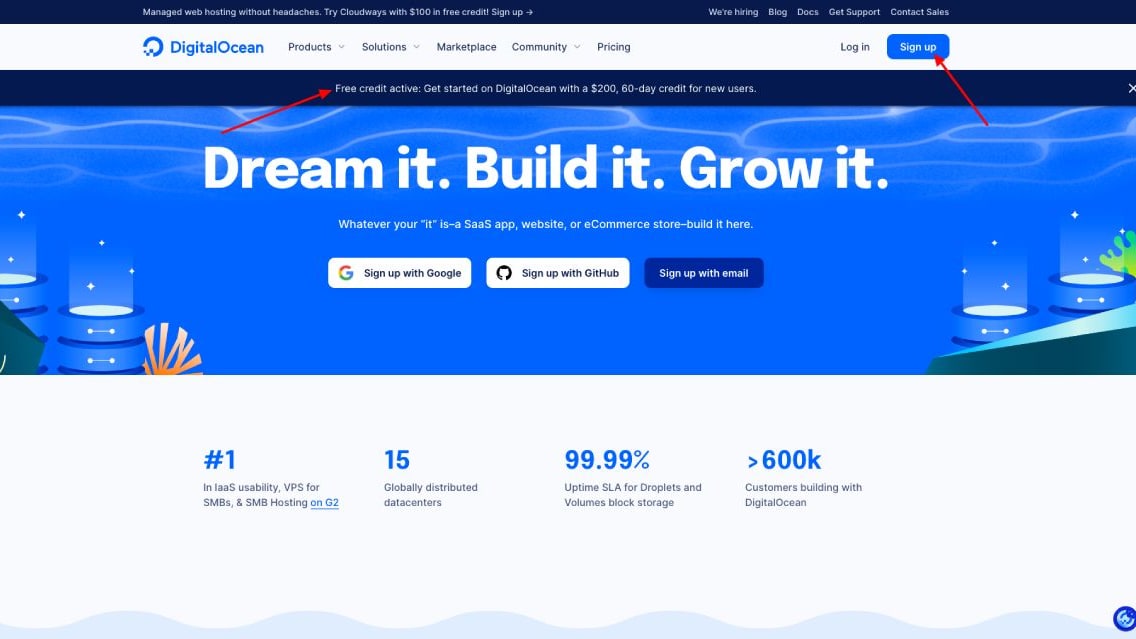
DigitalOcean's streamlined interface and straightforward setup processes grant users a more intuitive experience, simplifying tasks like server deployment and application hosting.
When it comes to ease-of-use, DigitalOcean unmistakably emerges as the frontrunner when pitted against Heroku. DigitalOcean's streamlined interface and straightforward setup processes grant users a more intuitive experience, simplifying tasks like server deployment and application hosting. This advantage significantly reduces the learning curve, making it an ideal choice for both beginners and experienced developers seeking efficiency.
In contrast, Heroku, while offering its own set of conveniences, can be somewhat more intricate to navigate. Ultimately, the choice between DigitalOcean and Heroku hinges on one's specific needs and familiarity with cloud platforms, with DigitalOcean excelling in providing a user-friendly environment.
Heroku Offers Superior Automatic Scaling than DigitalOcean

Heroku stands out in its ability to seamlessly auto-scale applications to effectively manage sudden surges in traffic, a pivotal capability that guarantees your application's responsiveness during peak usage.
Heroku stands out in its ability to seamlessly auto-scale applications to effectively manage sudden surges in traffic, a pivotal capability that guarantees your application's responsiveness during peak usage. This indispensable functionality streamlines operations, offering a hassle-free experience during high-demand instances.
In contrast, DigitalOcean, while offering scalability via its Flexible Droplets, doesn't provide the same level of automation and simplicity as Heroku. The process involves more manual intervention and configuration, making it less intuitive for users looking for a more automated solution. Choosing between Heroku and DigitalOcean hinges on your specific requirements and your comfort level with automation in scaling applications.
Both Heroku and DigitalOcean Excel in Container Support

DigitalOcean offers a Kubernetes-based platform that automates the deployment and scheduling of applications across cloud servers, delivering unmatched control and operational efficiency.
Heroku and DigitalOcean are both renowned for their robust container support capabilities. Heroku enables users to harness the power of Docker containers, providing flexibility and control over their application environments. On the other hand, DigitalOcean offers a Kubernetes-based platform that automates the deployment and scheduling of applications across cloud servers, delivering unmatched control and operational efficiency.
Whether you prioritize the containerization flexibility offered by Heroku or the finely-tuned orchestration capabilities of DigitalOcean, both platforms cater to a wide range of container requirements. They enhance the deployment and management of your applications, allowing you to choose the solution that aligns best with your specific needs and preferences.
DigitalOcean Offers Better Database Management than Heroku

DigitalOcean stands out with its comprehensive selection of fully managed databases, including MySQL, PostgreSQL, and Redis. This robust offering not only relieves your tech teams of the onerous management tasks but also elevates the overall performance of your applications.
DigitalOcean stands out with its comprehensive selection of fully managed databases, including MySQL, PostgreSQL, and Redis. This robust offering not only relieves your tech teams of the onerous management tasks but also elevates the overall performance of your applications.
On the other hand, Heroku also furnishes scalable data services through its managed database add-ons; however, it falls short when compared to DigitalOcean's extensive array of supported database formats. DigitalOcean's database diversity provides a broader spectrum of options for users, ensuring a tailored solution for their specific needs, while Heroku may require users to work within more limited database choices for certain applications.
Heroku Provides Better Collaboration Tools while DigitalOcean Excels in Hosting and Storing
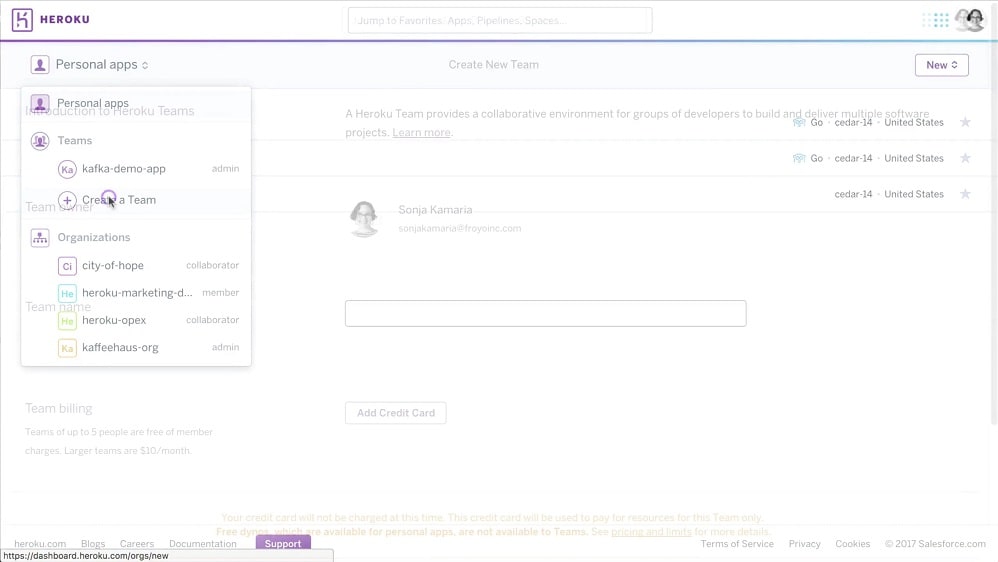
Heroku offers an array of collaboration features, including team management and access controls, designed to support expansive development teams tackling complex projects
Heroku offers an array of collaboration features, including team management and access controls, designed to support expansive development teams tackling complex projects. In contrast, DigitalOcean shines as a top-notch platform for effortless and secure cloud-based data hosting and accessibility.
When choosing between the two, your decision hinges on your primary focus – collaboration with extensive team functionalities provided by Heroku, or the secure and reliable data hosting and storage capabilities offered by DigitalOcean. Both platforms cater to distinct needs, making it crucial to align your choice with the specific requirements of your project and team.
DigitalOcean’s Load Balancing is Superior Compared to Heroku’s

DigitalOcean's load balancers efficiently distribute incoming traffic across Droplets, ensuring that high-volume requests are handled seamlessly.
DigitalOcean's load balancers efficiently distribute incoming traffic across Droplets, ensuring that high-volume requests are handled seamlessly. This not only enhances your application's performance but also bolsters its availability and resilience.
In contrast, Heroku's auto-scaling feature is adept at load management but lacks a dedicated load balancing feature akin to DigitalOcean. The absence of such a specialized load balancing mechanism may affect Heroku's ability to evenly distribute traffic and maximize resource utilization, making DigitalOcean an attractive choice for applications that demand robust load balancing capabilities to maintain optimal performance even during traffic surges.
Heroku’s Impressive Integration Ecosystem Outperforms DigitalOcean’s

Heroku excels in integration opportunities thanks to its extensive array of pre-built add-ons, offering developers a marketplace brimming with hundreds of services such as data stores and monitoring tools
Heroku excels in integration opportunities thanks to its extensive array of pre-built add-ons, offering developers a marketplace brimming with hundreds of services such as data stores and monitoring tools. These readily-integrated third-party services streamline development efforts, permitting entrepreneurs to concentrate on their core products.
DigitalOcean's integration capabilities rely primarily on manual setup and advanced customization. While it's feasible to achieve a high degree of integration with various tools and services, most necessitate hands-on configuration. For individuals with technical proficiency or access to dedicated development resources, DigitalOcean provides enhanced flexibility in creating precisely tailored environments. However, if you prioritize swift and effortless integrations, Heroku might be the more suitable choice.
08 Heroku vs DigitalOcean: Which is the best for your business?
Heroku is the best tool for you if:
- You want a platform that streamlines app deployment and scales effortlessly, removing infrastructure management complexities.
- You require built-in features, like database integration and third-party services, to enhance your app development workflow.
- You need automatic scaling and load balancing to handle traffic spikes without manual intervention, ensuring a seamless user experience.
- Simplicity and convenience are vital to you, allowing you to focus on coding rather than server administration tasks.
- Your priority is rapid, hassle-free development starts, making Heroku the perfect choice for your projects.
 You want a platform that streamlines app deployment and scales effortlessly, removing infrastructure management complexities.
DigitalOcean is the best tool for you if:
- You seek a cloud provider with straightforward pricing and a developer-friendly approach to deploying and managing virtual servers.
- Your projects demand scalable infrastructure, and you want to customize server configurations to suit specific requirements.
- You prioritize robust documentation and a strong community for support, making DigitalOcean a great fit for your needs.
- You're focused on containerization with Kubernetes or Docker, as DigitalOcean offers seamless integration and orchestration capabilities.
- You value a platform that simplifies cloud infrastructure management, enabling you to efficiently develop and deploy your applications.
09 Alternatives to Heroku & DigitalOcean

Google Cloud (GCP)
Used by 11911 members
$2,000 in credits for 1 year if you never raised funds // $350,000 in credits for 2 years if you did
Save up to $350,000

AWS Activate
Used by 6251 members
Up to $100,000 in credits or 20-50% off your monthly spend through an AWS partner (must be spending $100+/month)
Save up to $300,000

Railway
Used by 1208 members
$240 credit on Hobby plan for 1 year
Save up to $240

Vercel
Used by 271 members
10 Promotions on Application Development and Cloud Storage software
Heroku and DigitalOcean are great tools, but Secret offers promo codes with discounts on over 2240+ different SaaS solutions. New deals are added regularly, helping you save money on your online subscriptions. Get access to codes for other Application Development and Cloud Storage software you might want to purchase

Credits for OpenAI - ChatGPT
$1,000 in credits across OpenAI's models through OpenRouter

OVHcloud coupon
€10,000 in credits for 1 year

Retool free credits
1 year free on the monthly Team or Business plan

Hostinger promo code
Additional 10% off on all 12/24/48-monthly plan purchases

Promo code for bolt.new
20% off all plans for the first 3 months

Cloudways promotion
30% off for 3 months

Promo codes for Auth0
1 year of the B2B Professional plan free

GoDaddy coupon code
1st year .com domain purchase for $11.99

Mobbin discount
20% off for 1 year on the Pro plan

Promo code Google Drive
20% off Standard plans for 1 year
Start saving on the best SaaS
Secret has already helped tens of thousands of startups save millions on the best SaaS like Microsoft Teams, Google Workspace & many more. Join Secret now to buy software the smart way.