


Choosing between Gemini API and OpenAI is more than a comparison of "which model is smarter". Ultimately, it's a product decision, which will determine your latency budget, cost per resolved task, ability to support multimodal input, and the speed at which you can deliver a stable AI feature for your roadmap, and ultimately avoid transforming your roadmap into an "evaluation science" project.
In this article, I'll be comparing Gemini API versus OpenAI as a SaaS team would use these technologies to build assistants, automation, and AI-UX that are reliable in production. If you're looking to reduce spend on AI tools, you can begin with the Gemini API promo code and $300 credit and keep an eye on the OpenAI promo code page for future offers.
- 01 Gemini API vs OpenAI - ChatGPT: overview
- 02 What's the difference between Gemini API and OpenAI - ChatGPT?
- 03 Gemini API pros and cons
- 04 OpenAI - ChatGPT pros and cons
- 05 Gemini API compared to OpenAI - ChatGPT
- 06 OpenAI - ChatGPT compared to Gemini API
- 07 Features comparison
- 08 Gemini API vs OpenAI - ChatGPT: Which is the best for your business?
- 09 Alternatives to Gemini API & OpenAI - ChatGPT
- 10 Promotions on AI Writing software
- 11 Gemini API vs OpenAI - ChatGPT: Conclusion
Start saving on the best SaaS
Secret has already helped tens of thousands of startups save millions on the best SaaS like Microsoft Teams, Google Workspace & many more. Join Secret now to buy software the smart way.

01 Gemini API vs OpenAI - ChatGPT: overview
OpenAI and Gemini API have some similarities as they both provide the best ways to include generative AI in a variety of applications and use cases, such as building real product features, developing customer service chatbots, content management systems, development tools and company assistant software. While there may be similar functionality (text, structure, embedding) or architecture (e.g., APIs, models, etc.) to both, their natural fit into your overall application design decisions will differ.
Gemini API is primarily a multimodal interface that is designed to scale, supports text and/or image and/or vision, and other modalities; it has multiple model options and generally fits well with architectures using Google's technology stack. The on-ramp to Gemini API is often lower-cost when credits are available, which makes it an attractive option.The current offer highlighted on our deal page is a Gemini API credit.
OpenAI is the de facto standard for many SaaS companies because it has the largest amount of engineering talent (and therefore engineers) who think about applications using the same style of prompts. In addition, the company provides a large array of pre-built evaluation harnesses, agent frameworks, production recipes, etc. The most important advantage of OpenAI is that it allows teams to ship a robust assistant much faster than other APIs. Therefore, while the cost may seem higher, the time savings for many teams makes it easier to get started with OpenAI. For further information on pricing, please visit OpenAIs listed pricing page here.
Here’s the side-by-side comparison that matters when you’re making a build decision, not just a demo decision.

Enterprise posture (security and reliability)
Both target production use. The real difference is procurement fit, Google-cloud-aligned governance versus a more vendor-neutral operational approach.

Gemini API
OpenAI - ChatGPT
Model selection flexibility
Gemini offers multiple models tuned for different throughput and cost profiles. OpenAI also offers tiers, but teams may consolidate to fewer go-to models.
Gemini API
OpenAI - ChatGPT
Customer reviews and market sentiment
Gemini is often praised for productivity gains and multimodal direction. OpenAI is praised for frequent iteration and strong general-purpose performance.
Gemini API
OpenAI - ChatGPT
Multimodal inputs (text plus image, and more)
Gemini is typically chosen when multimodality is a core workflow. OpenAI is strong too, but teams often evaluate depth and cost per modality.
Gemini API
OpenAI - ChatGPT
Long-context document workflows
Gemini tends to feel natural for long documents and mixed inputs. OpenAI can do it, but may require more chunking and orchestration discipline.
Gemini API
OpenAI - ChatGPT
Agent and tool-calling patterns
OpenAI often wins on ecosystem maturity for tool calling and agent recipes. Gemini supports structured flows, especially inside Google-first stacks.
Gemini API
OpenAI - ChatGPT
Code assistance and developer workflows
OpenAI is widely adopted for coding copilots and agentic developer tasks. Gemini is competitive, particularly when code is part of multimodal pipelines.
Gemini API
OpenAI - ChatGPT
Pricing plan clarity and cost control
Gemini’s credit-driven ramp can lower initial cost, while OpenAI provides granular model pricing and optimization options like cached input and batch.
Gemini API
OpenAI - ChatGPT
Ease of use (shipping quickly)
OpenAI usually feels easier due to community patterns and integrations. Gemini becomes very straightforward when your organization already runs on Google tooling.
Gemini API
OpenAI - ChatGPT
Customer support
In both cases, support quality depends on your tier and contract. The best mitigation is strong evaluations, monitoring, and guardrails, so support is not your safety plan.
Gemini API
OpenAI - ChatGPT
02 What's the difference between Gemini API and OpenAI - ChatGPT?

Gemini API's interface supporting multimodal workflows
Gemini API
Infinite AI possibilities
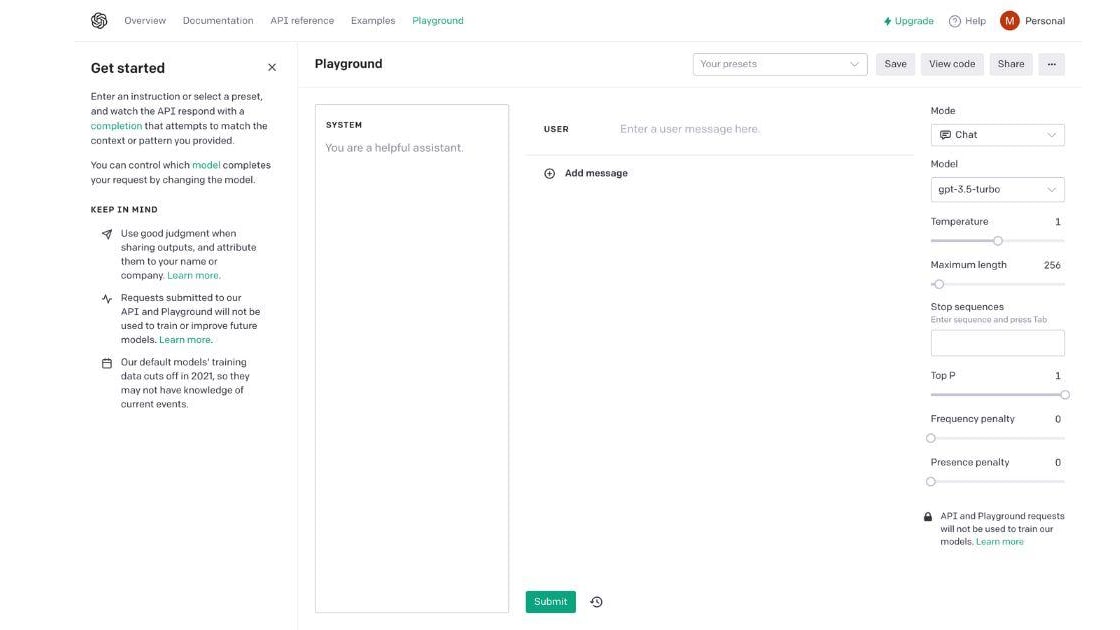
OpenAI's interface is focused on structured prompts and tool orchestration
OpenAI - ChatGPT
OpenAI’s platform offers a suite of advanced AI tools designed to empower businesses, researchers, and developers, including ChatGPT, a state-of-the-art conversational model that enhances interactions and facilitates intelligent communication.
If your roadmap is going to include things such as screenshots and/or document and images, or multi-modal analysis, Gemini will typically reduce your architecture complexity because the multi-modal story is central (versus) incidental.
There isn't necessarily anything in the OpenAI offering that provides a competitive advantage based on a single feature. It's really the operational momentum that exists today around using OpenAI - how to evaluate prompts, how to call tools, how to create layered safety checks, how to use caching and batching to make cost predictions, and how to instrument an assistant so you can debug it if/when users report it said something weird.
Additionally, the official pricing page is very transparent to help you plan and benchmark your application.
Gemini can also be beneficial for companies looking to perform aggressive benchmarking without burning their budget on Day 1. It’s recommended to do proper vendor selection and then replay a representative sample of your actual prompts (including failures) against both platforms. Credits allow the experiment to be larger and more truthful.
That’s exactly why the Gemini API $300 credit offer can materially change early decision-making.
03 Gemini API pros and cons
What are the advantages of Gemini API?
- Multimodal workflows without duct tape, if your UX involves screenshots, images, or mixed media, Gemini often lets you keep context unified. That means fewer brittle pipelines that call model A and then model B.

- Long-document processing, Gemini is frequently evaluated for long-context tasks where chunking becomes an accuracy tax. Less chunking usually means fewer retrieval artifacts and more coherent outputs.
- Google-stack alignment, for Google Cloud-first organizations, governance, identity, and billing controls can feel more native. Operationally, that can be worth as much as raw model capability.
- Cost-friendly prototyping, credits reduce the friction of doing evaluation the right way, A/B tests, regression sets, and multimodal trials. The Gemini API free credit is designed for that phase.
- Good fit for production scaling, Gemini’s positioning emphasizes scalability and secure performance, which matters once usage becomes spiky and customer-facing.
What are the disadvantages of Gemini API?
- Fewer default community recipes, many frameworks and examples still assume OpenAI first, so your team may spend more time translating patterns and tooling.

- Model choice can become a hidden project, multiple models are great, but you’ll need a clear routing strategy, which model for which endpoint, fallbacks, and cost ceilings.
- Portability constraints, if you’re trying to stay cloud-agnostic, a Google-aligned architecture can create migration friction later, even if it’s the right call now.
- Multimodal means harder evaluation, once images enter the loop, your test harness must level up, golden sets with visual inputs, OCR edge cases, and UI variability.
- Support depends on tier, like most enterprise-facing platforms, the real support experience may require specific plans or agreements.
Compare Gemini API to other tools


Vertex AI vs Gemini API

04 OpenAI - ChatGPT pros and cons
What are the advantages of OpenAI - ChatGPT?
- Fastest path to a strong assistant, for text-first copilots, OpenAI often gets you to good enough for production with fewer iterations and less glue code.
- Ecosystem maturity, monitoring, evaluation tooling, agent patterns, and integration examples are widely available. That reduces the time you spend solving already-solved problems.
- Strong general-purpose performance, OpenAI is typically chosen when one model family must cover many tasks, support, content, extraction, reasoning, and workflow automation.
- Cost levers exist, cached input, batch processing, and clear per-token pricing allow serious optimization work.
- Developer familiarity, hiring and onboarding is easier when many engineers already know how to build with OpenAI-style APIs and patterns.
What are the disadvantages of OpenAI - ChatGPT?
- Costs can spike with multi-step agents, the expensive part is often not a single call, it’s retries, tool loops, long outputs, and verbosity you did not ask for.
- Text-first bias for many teams, OpenAI is great at multimodality too, but many organizations still adopt it primarily for text, then retrofit multimodal later.
- Vendor lock-in via patterns, over time, prompts, evaluation baselines, and orchestration become tailored. Switching later is possible, but it is rarely painless.
- Governance fit varies, if your security posture is deeply standardized around Google Cloud controls, operational alignment might be less straightforward than Gemini.
- Support is tier-dependent, as with most providers, meaningful SLAs and dedicated help are usually enterprise-level.
Compare OpenAI - ChatGPT to other tools


Claude AI (Anthropic) vs OpenAI - ChatGPT

OpenAI - ChatGPT vs Anthropic AI

Microsoft Copilot vs OpenAI - ChatGPT

Perplexity AI vs OpenAI - ChatGPT

Midjourney vs OpenAI - ChatGPT

Hugging Face vs OpenAI - ChatGPT
05 Gemini API compared to OpenAI - ChatGPT
Gemini API will make the most sense when multimodality and long context are not edge cases but instead your primary differentiator in how users interact with the AI. When your users expect the AI to see the same things as they do (interfaces, screenshots, diagrams), and also to reason through long instructions or documents, Gemini can feel like a much more unified platform.
OpenAI has a lot going for it when you need to build a simple assistant in a hurry; especially when your product is primarily text-based and you want to take advantage of the vast amount of production experience and integration points available to you.
Is Gemini API better than OpenAI - ChatGPT?
 Is Gemini API better than OpenAI - ChatGPT?
Gemini API is better than OpenAI if your application's primary workflows are multimodal and you want to avoid an architecture that is a collection of disparate calls designed to achieve a common goal. If you're building a workflow that includes "analyze this screenshot", "follow these steps" and finally create a structured "action plan", Gemini typically provides a more streamlined way of accomplishing this.
However, OpenAI may still outperform Gemini on certain types of assistant UX and for teams that already have a significant amount of experience using OpenAI tools. Ultimately, if your product's differentiation is in its ability to understand multiple modalities, Gemini can provide the most direct route to a solidified solution.
What is Gemini API best used for?
Gemini API is best used for features where multimodal understanding is the center of the user story, screenshot analysis, document plus image extraction, Q&A over mixed media, and interfaces that blend visual evidence with text requirements.
It’s also a strong option when you want to run a serious benchmark without immediately paying for every experiment. The API free credit for gemini makes it easier to test wide prompt suites, not just a handful of happy-path examples.
Can Gemini API replace OpenAI - ChatGPT?
You can replace OpenAI with Gemini for all of your production use cases if you are mainly doing generative, extractive or output of structured data; and you do discipline yourself about evaluating what the model is producing. The migration effort does not require you to change the endpoint(s) you call; it requires you to rebuild your acceptance test suite and adjust your prompts so that they produce expected results given the new failure modes of the Gemini API.
Replacement becomes difficult for you when you have built a significant amount of your application around first agent patterns as described by OpenAI and you have developed a large amount of implicit knowledge in your prompts, tools and evaluation baselines.
Is Gemini API cheaper than OpenAI - ChatGPT?
Gemini will likely be less expensive during the under-estimated phase that most teams experience when using the Gemini API (the benchmarking and iterative phase). As credits will greatly reduce the costs associated with learning, and most of the token spend occurs before shipping, the value proposition of the Gemini API is particularly compelling for teams that want to focus on building their applications without the added expense of having to learn how to optimize their model usage. Gemini API deal page is designed for that on-ramp.
What makes a lower cost in steady state depends on how much data you are processing in terms of size, verbosity, retries and/or how deep your agents are going into that data. I find that the best way to measure cost is by the number of successful tasks per dollar spent, with the cost based on actual log files versus some theoretical amount of tokens per second.
Is there a better AI Writing software than Gemini API?
Better can be defined as getting to a traditional Assistant Experience faster, and supporting Copilot, Internal Bot, Writing Workflows, etc. then the most direct competitor will be OpenAI, due to the larger mature Ecosystem, and reusable production patterns for more MLOps.
Better can also mean, more control over the Ecosystem, and a more open Ecosystem if you're willing to take on more of the MLOps surface area, teams are looking at platforms such as HuggingFace.
More options? Check out Gemini API’s alternatives page.
Is Gemini AI risky?
Gemini AI is just as risky as any other LLM platform, hallucinating confidently-sounding responses, attempting to inject malicious user input, accidentally exposing sensitive data via logging, etc... Engineering (input sanitation, strong PII handling, retrieval grounding, automated regression testing) is the way to mitigate risk, not "wishful thinking".
The teams which are most likely to burn are those that go into production without sufficient observability. How will you know what prompted this response, what evidence did Gemini retrieve to support its response, and which guardrail(s) were triggered? Regardless of the provider you are using you cannot possibly fly by the seat of your pants.
06 OpenAI - ChatGPT compared to Gemini API
OpenAI is generally the best choice when you require a highly leveraged general-purpose platform to work well across multiple workflows (chat, extraction, reasoning, tool calling, and content creation). A good example would be a team looking for a familiar API surface and reliable production recipes.
Gemini's advantage comes from being the strongest counter-weight when your product is inherently multimodal, or you desire tighter integration with the Google ecosystem. When you're focused on delivering quickly and you're working in a predominantly text-based environment; OpenAI is often viewed as the fastest route.
Is OpenAI - ChatGPT better than Gemini API?
Yes, OpenAI is better than Gemini API when your focus is providing the highest level of quality and speed of delivery for text based applications, and/or when you prefer to utilize a broad ecosystem of integrated frameworks and practical debugging patterns.
Gemini has an advantage when it comes to multimodal and long context workflows. However, if your primary roadmap is to develop a copilot that can consistently resolve tasks, then OpenAI may provide less friction to development.
What is OpenAI - ChatGPT best used for?
You should use OpenAI for customer facing assistants, internal copilots, and agentive automation where you have a requirement for producing consistent structured output and robust reasoning across complex and unstructured real world inputs. Additionally, OpenAI is a good fit for SaaS providers who want a single provider to handle multiple tasks without optimizing too early in their product life cycle.
Can OpenAI - ChatGPT replace Gemini API?
Gemini can be replaced by OpenAI for a lot of text first workloads (especially where multi-modal requirements occur infrequently), the migration process will typically be based on quality assurance, replay your real traffic, compare outputs and make sure safety and formatting constraints are still met.
If your core user experience is based on multi-modal understanding and long context coherence, the replacement process will often require a more complex pipeline. It is usually better to run both providers with one optimized for multi-modality and the other for assistant ux.
Is OpenAI - ChatGPT cheaper than Gemini API?
While costs are often dependent upon how you're utilizing the services, OpenAI will likely save you money when working with short workflows, short inputs, short outputs, lower retry rates, and fewer agent loops.
Gemini will be more cost-effective in the beginning of your development process because you can utilize credits for experimentation and therefore keep the initial spend down. Therefore, it's reasonable to begin with the Gemini API credit offer.
Is there a better Application Development software than OpenAI - ChatGPT?
The answer depends upon what you're trying to optimize. If you're looking for an alternative that's frequently compared to OpenAI for quality and performance of assistants and agents, many teams have started evaluating Anthropic's Claude models.
Also, You can look into our OpenAI alternatives page.
Does Gemini AI use OpenAI?
No, Gemini and OpenAI are two independent companies using different model families and infrastructures. Any products that mention both are typically built by the product team with a multi-provider routing layer for redundancy, cost savings, or capability routing; not because Gemini is dependent upon OpenAI.
Using a dual-provider strategy for your own product could provide a competitive advantage if you invest time in evaluating the options and building out the routing logic. Alternatively, you'll create a maintenance overhead that quietly eats away at your engineering resources over time.
07 Features comparison
Gemini API Excels for Unified Multimodal Workflows
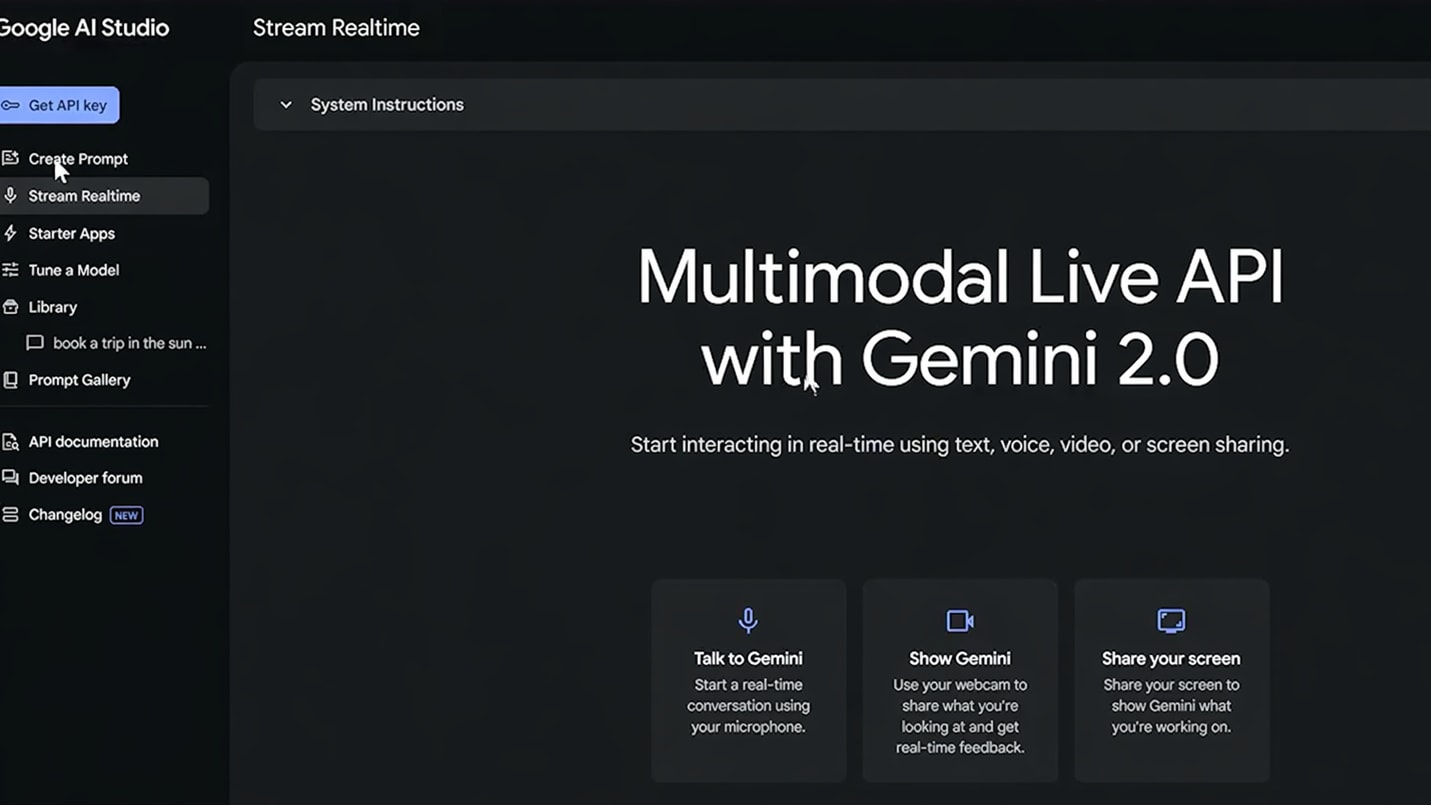
Gemini's live API handling text, voice, and visual inputs in one workflow
If you're creating multimodal products, think of understanding the screenshot, interpreting the diagram, extracting entities from the scanned document etc., then Gemini API feels like it was designed for these tasks. Architecturally speaking, you can maintain all of the user's evidence and intent within one cohesive context instead of having to stitch multiple services together.
Multimodal systems can break down in subtle ways. With every additional step (OCR Service, Vision Model, then LLM), there's an additional opportunity for drift, formatting loss, or silent failures. Reducing that surface area is important to reducing failure points. A single, unified multimodal workflow will reduce the number of places where failures can occur, Gemini API credit deal makes the evaluation phase far less constrained.
Gemini API Is a Strong Fit for Long-Context Document Processing
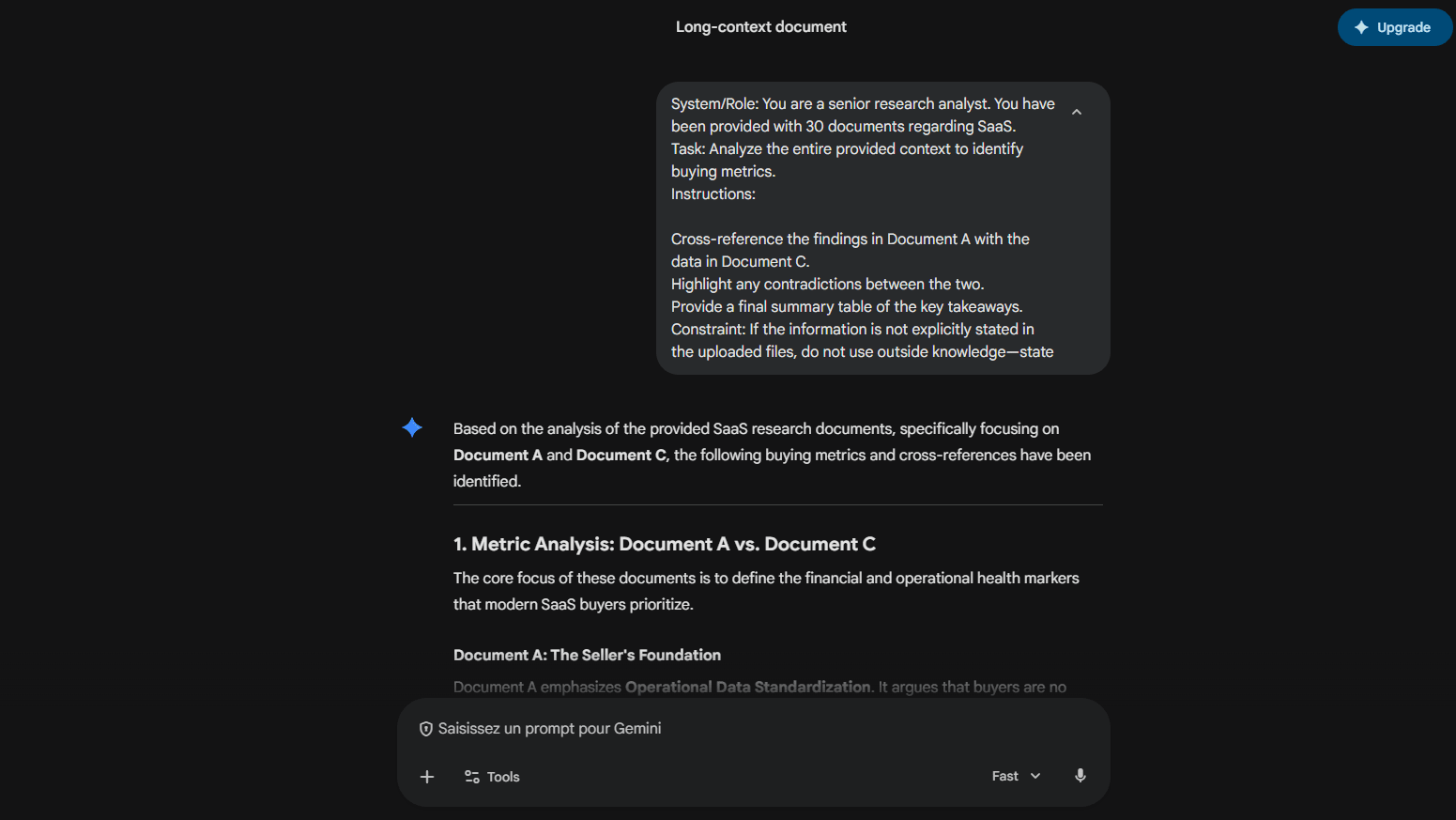
Gemini processing long-context documents in a single workflow
When developing an AI feature that needs to process large documents (e.g., policies, contracts, specification, KB exports), fragmentation becomes a major concern. While chunking can help mitigate some of this fragmentation, it also creates its own set of problems such as missing dependencies, conflicting summary statements, and retrieval blind spots that are typically only revealed once a product enters production.
Gemini is typically chosen for long-context based workflows primarily because they reduce the amount of times you'll have to compress or lose contextual information. This can significantly improve the overall coherence of a response, particularly when a user asks additional questions that rely upon previously discussed portions of the document.
While OpenAI can also perform well on long-document based systems, the standard architecture for OpenAI-based systems tends to rely more on retrieval, chunk tuning and careful prompt compression. Therefore, if you'd prefer a simpler architecture that requires fewer components for products that involve a high volume of document processing, Gemini is generally the better choice.
OpenAI Often Wins for Tool-Calling Agents in Real SaaS Workflows

OpenAI's agent coordinates APIs with step-by-step reasoning
More AI agents fail due to poor workflow orchestration rather than the ability of models to generate content. Most agents fail because tools are returning incomplete information; there are many different APIs; and an intelligent assistant will need to remain aware of the current state of the business to provide meaningful responses to requests.
To achieve this level of intelligence, the OpenAI environment has developed a number of best practices that have proven useful for tool-calling, retry mechanisms and output structure. These best practices will result in a much faster time-to-market and reduce debugging challenges significantly. When developing agents that interact with SaaS applications (i.e., CRM's, issue refund services, etc.) these established practices are far more valuable than the theoretical capabilities of either model.
Gemini may be ideal for agents that require both multimodal input processing and/or deep document comprehension; however, if your primary requirement is to develop agents to orchestrate SaaS tools, then OpenAI will likely represent the most straightforward development path.
OpenAI Is Usually the Easier Choice for Coding-Centric Copilots

OpenAI analyzes logic, bugs, and edge cases in real time
For products targeted toward developers, including PR review bots, test generators, codebase explainers, OpenAI is typically the first choice for similar reasons that OpenAI is popular within other communities; i.e., it is very integrated into the workflows of many modern developers. The increased popularity and therefore quicker adoption rates, availability of example prompts, known-good prompt patterns and the ease of finding qualified personnel all contribute to a faster time-to-market for evaluating a proof-of-concept.
The practical advantage is simply speed of iteration. With OpenAI, you can quickly establish an evaluation framework, evaluate changes to code, and execute structured code tasks without having to spend weeks establishing a custom framework and methodology for doing so.
Gemini can still be an attractive option for developer-focused copilot agents when code tasks include multimodal inputs (screenshots of errors, diagrams, logs), etc. However, for purely coding-focused copilots, OpenAI is generally considered the safe default.
Gemini API Can Be More Cost-Effective Early (Pricing Plan)

Gemini API pricing tiers for free credits and scalable usage
Early on in development, most of your token usage will be for experimentation, test cases, edge case testing, regression suite testing, and evaluation runs that are not going to be shipped to customers , all of those things consume a lot of tokens. That's why credits can help.
With the Gemini API $300 free credits, You can test with actual usage, as well as for how long a user will continue to utilize the application, by testing against normal user behaviors and using your actual cost per success (as well as how much a "success" costs). OpenAI has provided very detailed public pricing information and also includes many ways to optimize performance while running in production. The best way to compare the two is to develop a benchmark harness using credits from each provider, then compare them on actual log data.
OpenAI Often Feels More Plug-and-Ship (Ease of Use)

OpenAI's playground is simple to use for rapid prompt testing and development
Ease of use is often associated with having a clean and simple interface. Ease of use is really how quickly your team will be able to deploy a new feature, so it works as intended under real-world user stress. For me at least, OpenAI seems to offer a more "plug and play" experience for ease of use due to a large amount of existing implementation knowledge, and pre-built evaluation sets, and structured ways to create prompts, loop agents, and implement safety standards.
I think this makes it easier for teams like mine, who are small SaaS teams, to take advantage of this ecosystem in terms of less dead ends to explore, less need to completely re-write an orchestration.
When I say "equally easy" for Gemini to operate with my team, I am saying this because if we were going to be building multimodal features, we would likely be leveraging our Google first nature to operate, therefore operational synergy would help us more than the familiarity of a community.
Customer Support Is a Draw, Your Monitoring Strategy Matters More
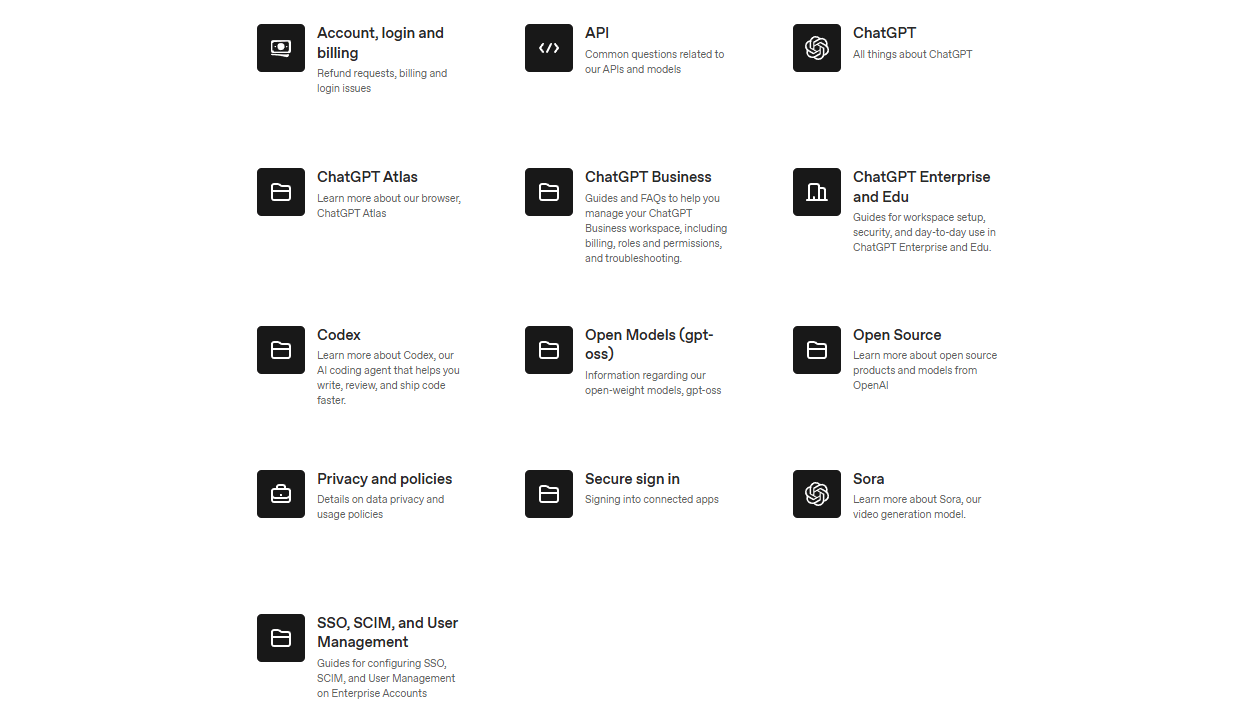
OpenAI's help center provides structured documentation and resources
While both vendors offer solid support, support quality has more to do with what your plan is, what your spending level is, and what types of agreements you have entered into with the vendor. You do not want your reliability to be dependent on someone else opening a ticket.
What will protect your product is the instrumentation of your application, including prompt and version tracking, retrieval evidence logging, automated regression testing, and clearly defined fallbacks when the model is unsure. Once you have this in place, vendor support becomes a nice to have vs. a life line.
If you're planning on scaling a customer facing assistant, make sure to invest in these items from the beginning. This will make the difference between a controlled system and a haunted system.
08 Gemini API vs OpenAI - ChatGPT: Which is the best for your business?
Gemini API is the best tool for you if:
- You’re building multimodal UX where images or screenshots are first-class inputs.
- Your product depends on long documents and you want to avoid aggressive chunking.
- You’re operationally aligned with Google’s ecosystem and want simpler governance.
- You want to benchmark widely and cheaply using the Gemini API credits offer.
- You need a scalable platform posture for production workloads with real concurrency.
 You’re building multimodal UX where images or screenshots are first-class inputs.
OpenAI - ChatGPT is the best tool for you if:
- You want the fastest path to a high-quality text-first assistant.
- You rely on established agent and tooling patterns and want maximum ecosystem leverage.
- You’re building a general-purpose copilot across many tasks, support, writing, and reasoning.
- You value predictable optimization levers, cached input, batch, and transparent pricing guidance.
- Your team already has OpenAI prompt baselines and evaluation infrastructure.
09 Alternatives to Gemini API & OpenAI - ChatGPT

Replit
Used by 568 members

OpenArt
Used by 328 members
15% off monthly plans for 1 year
Save up to $100

Claude AI (Anthropic)
Used by 137 members
$1,000 in credits across Anthropic's models through OpenRouter's API
Save up to $1,000

Z.ai
Used by 62 members
$500 in API credits
Save up to $500
10 Promotions on AI Writing and Application Development software
Gemini API and OpenAI - ChatGPT are great tools, but Secret offers promo codes with discounts on over 2250+ different SaaS solutions. New deals are added regularly, helping you save money on your online subscriptions. Get access to codes for other AI Writing and Application Development software you might want to purchase

QuillBot discount code
30% off the annual Premium plan

Retool discounts
1 year free on the monthly Team or Business plan

Grammarly free credits
20% off monthly or annual plans for 1 year

Credits for bolt.new
20% off all plans for the first 3 months
Claude AI (Anthropic) discount
$1,000 in credits across Anthropic's models through OpenRouter's API

Auth0 promo
1 year of the B2B Professional plan free

Babbel coupon code
55% off for 1 year

Mobbin promo code
20% off for 1 year on the Pro plan

Winston AI deal
30% off monthly or annual plans for 1 year

Lovable coupon
15% off annual Pro and Business plans
11 Gemini API vs OpenAI - ChatGPT: Conclusion
Gemini API is the "pragmatic" choice for multi-modal products or those requiring long context; Open AI is the "pragmatic" choice for launching a top-of-the-line text assistant as soon as possible. Both will likely be the best option, but only if you use them within an appropriate architecture and have the appropriate operational model.
Recommendation
Stop arguing in the abstract and start running benchmarks (i.e., run through real requests), replay actual requests, evaluate the quality of task completion, identify failure modes, and determine the cost per successful request. Choose the provider that wins in your real environment, and not the one that performs well in a demo.
If you would like to limit your early spend, launch with the Gemini API deal, and for OpenAI, check the OpenAI deals page to be notified when an offer becomes available.
Start saving on the best SaaS
Secret has already helped tens of thousands of startups save millions on the best SaaS like Microsoft Teams, Google Workspace & many more. Join Secret now to buy software the smart way.