


The process of authenticating users has changed from a simple check box to include the option to log in, then ship your application. Today, authentication becomes a product feature of your application. This can affect both the user experience (frictionless sign-in) and conversion rates as well as your company's overall security posture and ability to sell to enterprises, implement multi-factor authentication, detect anomalies and implement Single Sign-On (SAML/SSO) and/or architecture (where does identity live? How do you enforce permissions?). In short, the choice of an authentication platform is typically "just" authentication.
In this comparison, I will explain the differences between Auth0 (a dedicated identity platform), and Supabase (a complete backend platform with included Auth). I will discuss what each platform is truly optimized for, what you gain, what you lose in terms of day-to-day engineering, and which platform appears to be the better safe-bet based upon your roadmap.
- 01 Auth0 vs Supabase: overview
- 02 What's the difference between Auth0 and Supabase?
- 03 Auth0 pros and cons
- 04 Supabase pros and cons
- 05 Auth0 compared to Supabase
- 06 Supabase compared to Auth0
- 07 Features comparison
- 08 Auth0 vs Supabase: Which is the best for your business?
- 09 Alternatives to Auth0 & Supabase
- 10 Promotions on Security software
- 11 Auth0 vs Supabase: Conclusion
Start saving on the best SaaS
Secret has already helped tens of thousands of startups save millions on the best SaaS like Microsoft Teams, Google Workspace & many more. Join Secret now to buy software the smart way.

01 Auth0 vs Supabase: overview
Beyond that, however, there are many areas where Auth0 and Supabase diverge; this includes post-login functionality, enterprise SSO (Single Sign-On) requests, how tokens are managed, multi-tenancy complexities, role-based access control (RBAC), lifecycle operations, audit logs, organizational management, and migration processes.
Auth0 specializes in being an "identity layer" you can use within your existing tech stack. As such, Auth0 is centered around industry standards (OAuth and OIDC) to facilitate enterprise integration, configurable authentication flows, and general "identity-as-infrastructure" concerns (such as security against attacks and MFA). Auth0's pricing model and product packaging are based upon monthly active user (MAU) counts and focus on providing an organization or enterprise-level Identity and Access Management (IAM) experience through various options including organizations, RBAC, and enterprise-level add-ons. You can find more information by checking the Auth0 pricing and plan details, which outline all available plans.
Supabase is an end-to-end development platform that includes Postgres, APIs, Storage, Edge Functions, Realtime, and Auth as a native module. A key point of interest is that it allows you to have one developer experience from start to finish in your application development process; therefore, you can get your idea to production faster than using other platforms. If you expect to be working with corporate customers at some time, Supabase has Enterprise Single Sign-On (SSO) via SAML for each project. The use of Enterprise Single Sign-On is turned off by default and will need to be enabled on a per project basis.
Now, let’s put the most decision-driving features side by side.

Integrations ecosystem
Auth0 is designed to integrate across heterogeneous stacks and enterprise IdPs. Supabase integrates well in modern workflows, but it’s not an IAM hub.

Auth0
Supabase
Customer reviews
Both are widely respected. Auth0 is praised for enterprise IAM maturity. Supabase is praised for speed, simplicity, and its batteries-included approach.
Auth0
Supabase
Pricing plan clarity
Auth0 is MAU-driven and feature-tiered. Supabase mixes per-project pricing with usage limits. The cheaper choice depends on what you’re scaling, identity or backend.
Auth0
Supabase
Authentication methods, social, passwordless, passkeys
Auth0 has broader IAM depth, connections, extensibility, security controls. Supabase covers core app auth well, especially when paired with its backend stack.
Auth0
Supabase
Enterprise SSO for end-users, SAML
Supabase supports SAML SSO for projects, but Auth0 is more enterprise-first in how it approaches identity providers, org models, and governance.
Auth0
Supabase
Customization of login flows
Auth0’s Actions-based extensibility is purpose-built for complex policies. Supabase can be customized, but you typically implement more logic in your app or backend.
Auth0
Supabase
MFA and security posture
Auth0 offers plan-based MFA depth and IAM-grade protections. Supabase can be secured strongly, but you often own more of the security plumbing.
Auth0
Supabase
Authorization strategy, RBAC, orgs, policies
Auth0 is strong for identity-layer RBAC and org modeling. Supabase can be extremely powerful when you drive authorization from Postgres and data policies.
Auth0
Supabase
Developer experience
Supabase often feels more cohesive for full-stack builds. Auth0 is excellent too, but its flexibility can add configuration overhead in advanced scenarios.
Auth0
Supabase
Customer support
Auth0 is frequently adopted for enterprise expectations, support, SLAs, governance. Supabase’s support scales by plan and is strong for product-led teams.
Auth0
Supabase
02 What's the difference between Auth0 and Supabase?

Auth0's modern authentication flow
Auth0
An easy-to-implement, adaptable authentication and authorization platform
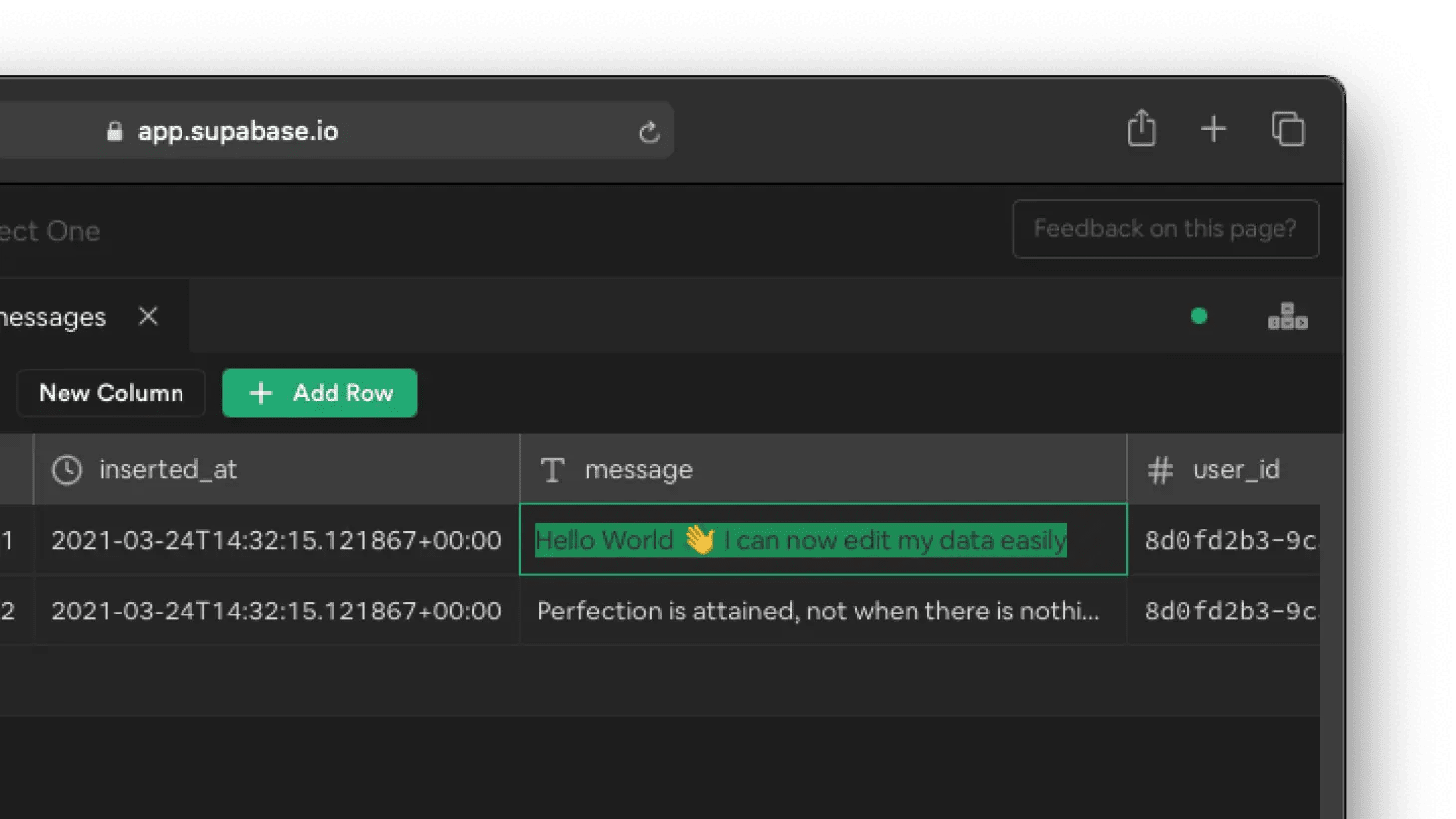
Supabase combines authentication with a built-in database and backend
Supabase
Supabase is an open source backend platform built on Postgres that gives developers authentication, databases, file storage, edge functions, and real-time infrastructure in one connected stack.
Auth0 and Supabase are both used for authentication and identity management but serve different needs. A simple way to look at this is Auth0 is for Identity and Supabase is a Product Platform. If you need to manage Identity (across environments and/or customers) then Auth0 has the most robust feature set. If you have a core business that is to develop an application that will use a server (backend), then you should be looking at Supabase to get you up and running faster than having to string multiple services together.
When using Auth0 you are purchasing a mature Identity Access Management (IAM) layer, configured login flows, standardized tokens for all users, enterprise level connectors, and tiered security controls. In addition to the Identity features Auth0 has promoted their developers towards creating "Actions" (the new single extensibility layer) and deprecating Rules and Hooks, which is an important consideration when you inherit older Auth0 tenants or legacy code. If you’re planning to update your implementation, the Auth0 guide to migrate from Rules to Actions is an essential resource.
When using Supabase you are purchasing an integrated stack in which authentication is a first class component of the stack as well as Postgres. The reason this matters is that how you authorize users often becomes a data problem (who can view or edit which rows of data; under what constraints related to tenants; with what default permissions of least privilege). In addition to providing SAML 2.0-based single sign-on for enterprise use within projects, Supabase also provides operational patterns such as account linking edge cases, but these may need to be managed by your application and would likely differ from those of a dedicated identity access management (IAM) provider. This is particularly relevant when working with Supabase SAML SSO for projects, where custom logic may still be required depending on your setup.

Auth0
An easy-to-implement, adaptable authentication and authorization platform
1 year of the B2B Professional plan free
Save up to $20,000
03 Auth0 pros and cons
What are the advantages of Auth0?
- Enterprise-ready identity patterns: Auth0 is built for the moment your sales team hears “We need SSO.” It’s designed around identity providers, organizations, and governance rather than just app logins.

- Deep extensibility with Actions: When you must inject logic into the authentication pipeline, risk checks, entitlement enrichment, step-up auth, Actions give you a structured way to do it without duct-taping your app.
- Strong security feature tiers: MFA, attack protection, and audit-oriented capabilities are packaged like an IAM product, useful when your security posture becomes part of your brand promise.
- Stack-agnostic by design: Auth0 is comfortable in polyglot environments, multiple frontends, multiple APIs, mixed cloud footprints, and evolving architecture.
- Clear identity cost model, MAU-centric: If your backend footprint is already handled elsewhere, paying for identity as a dedicated line item can be simpler to reason about than bundling it into a larger platform bill.
What are the disadvantages of Auth0?
- Can be overkill for simple apps: If your roadmap is basic consumer sign-in with minimal enterprise requirements, you may spend time configuring a system you don’t fully need yet.

- Cost can rise with enterprise features: As you add enterprise connections, higher MFA tiers, and more governance, Auth0 can shift from tool to infrastructure investment.
- Migration considerations for legacy setups: Teams inheriting older tenants might need to modernize extensibility, for example, migrating Rules to Actions, to align with current best practices.
- You still need the rest of the stack: Auth0 doesn’t ship your database, storage, or edge compute. If you’re trying to minimize vendors early, Auth0 won’t solve that by itself.
- Identity-layer lock-in is real: The more business logic you embed into Auth0’s pipeline, the more careful you must be about portability and long-term maintenance.
Compare Auth0 to other tools


OneLogin vs Auth0


Clerk vs Auth0

Auth0 vs Okta

Stytch vs Auth0
04 Supabase pros and cons
What are the advantages of Supabase?
- One cohesive platform: Supabase shines when you want auth, data, storage, and server-side compute to live in one ecosystem, fewer integration seams, faster iteration.
- Postgres-first architecture: This is not a detail, it’s a strategy. You can model tenants, memberships, entitlements, and audit trails in a relational system that your whole team understands.
- Fast path from prototype to production: You can go from idea to working product without designing an IAM architecture up front, which is often the right trade for early-stage teams.
- Enterprise SSO available via SAML: Supabase Auth supports SAML 2.0 SSO for projects, which can unlock B2B deals without forcing an immediate switch to a dedicated IAM vendor.
- Developer ergonomics: The platform tends to feel approachable because the mental model is consistent, auth users map naturally to your backend data and policies.
What are the disadvantages of Supabase?
- Identity is not the only focus: Supabase is optimizing across many product surfaces. Auth is strong, but it won’t always match the breadth of an IAM specialist.
- Enterprise SSO has boundaries: Supabase’s enterprise SSO for projects is SAML-based, and you may need extra engineering for tricky enterprise workflows, like identity linking for existing accounts.
- Security is powerful but demands rigor: When you drive authorization from data policies, the upside is precision. The downside is that a misconfiguration can become a serious exposure.
- Architecture coupling: Supabase is easiest when you lean into its platform. If you later want to swap out major pieces, the migration cost can be non-trivial.
- Less IAM governance out of the box: If you need IAM-grade auditability and enterprise administration patterns everywhere, you might end up building admin tooling yourself.
05 Auth0 compared to Supabase
Auth0 is your safer bet in cases where authentication is an important part of your codebase, you require enterprise single sign-on (SSO), you have a very complicated ecosystem for identity providers, or your security expectations go beyond what you would normally see in production.
Auth0 is a dedicated identity platform, which means all of its abstractions, admin model, and feature roadmap are focused on achieving identity and access management (IAM) goals.
Supabase is your pragmatic bet in cases where you need to ship, you’re creating a product, the backend matters just as much as the identity, and you’d prefer not to have to integrate five different vendors into your application.
If you grow out of the built-in authentication of Supabase, you can always implement Auth0 as the identity layer of your application without having to rewrite your entire backend.
Is Auth0 better than Supabase?
 Is Auth0 better than Supabase?
Auth0 is your better option when “better” refers to the depth of identity, multiple enterprise connections, advanced login policies, strong multi-factor authentication options, and the ability to centralize all of your identity logic across multiple applications and environments.
The day your customer requests SSO from you for B2B will be the day Auth0 pays for itself.
Supabase can be better for many teams because they optimize for momentum, fewer moving parts, fewer integration decisions, and a backend that feels cohesive.
But if identity is the constraint, especially for enterprises, Auth0 is usually the higher-confidence choice.
What is Auth0 best used for?
Auth0 is best used for products that must behave like a professional identity system, multi-tenant B2B SaaS products, products with different categories of users (administrators, customers, partners), or companies that expect to audit, govern, and negotiate identity within enterprise procurement cycles.
It’s also ideal when you operate more than one app or API and want a consistent token strategy, centralized policies, and predictable extensibility through actions rather than ad-hoc auth logic scattered across services.
Can Auth0 replace Supabase?
Yes, Auth0 may be able to replace the authentication layer of Supabase but will not replace its platform. A back-end platform such as Supabase offers all of the functionality needed by an application including data, storage, real-time messaging, and edge computing, while Auth0 is simply an identity layer. Therefore if you are using Supabase for your Postgres database, for file storage, for real-time messaging, or for edge functions, Autho will not provide this functionality.
However, many organizations have what we refer to as "hybrid" architectures that make use of the best-of-breed products available in order to create an environment that is scalable and cost-effective. An example of how to do this would be to continue to use Supabase as the place where your application has access to data and/or the platform, and then add Autho as the place where your application manages user identities at the enterprise level. This allows you to take advantage of both platforms without having to migrate from one complete platform to another in order to meet single sign-on (SSO) requirements.
Is Auth0 cheaper than Supabase?
In general, as a separate product Auth0 is more costly than the authorization bundled into the back-end platform, especially once you add on additional enterprise Identity Access Management (IAM) features. In addition, Autho's own pricing model is based upon "MAU" tiers and plan-based security capabilities, which provides clarity around costs, however the cost will grow rapidly as adoption grows. To help offset these costs, we also offer a promo code that can reduce the price of your Auth0 plan.
However, cost isn’t only subscription fees. If Auth0 prevents months of building, patching, and re-auditing authentication flows, particularly around SSO and MFA, you may find it cheaper in total engineering and security risk.
Is there a better Security software than Auth0?
If your definition of "better" is an enterprise Identity Access Management (IAM) breadth, Auth0 is still one of the top 5 (of many) most popular shortlists. On the other hand, better may be defined as better for your needs. For example, if you require a completely self-hosted, Open Source Identity Access Control Plane (IAM), then you should compare Keycloak. Additionally, if you want a developer first approach with a more opinionated flow that is primarily focused on Password-less, then you should evaluate other Developer-centric providers.
Ultimately, defining "better" as a measurable outcome such as faster time-to-implementation, greater conversion rates, lower security escalations, and/or easier enterprise procurement, rather than a generic list of features is the way to go.
Is OAuth 2.0 obsolete?
OAuth 2.0 is not obsolete; it is still foundational. The difference is that the industry has become more comfortable using safer defaults, the use of PKCE when necessary, better management of tokens, and more specific direction regarding flows that are dangerous in certain client types. In practice, modern identity platforms still communicate using OAuth and OIDC because that is how ecosystems interact.
A more useful question would be: how well will this platform help me avoid the pitfalls (footguns) of my application? You should look for guardrails regarding token lifetimes, refresh behavior, session invalidation, and secure-by-default SDK patterns, as these are the areas where real-world breaches tend to occur.
Auth0
An easy-to-implement, adaptable authentication and authorization platform
1 year of the B2B Professional plan free
Save up to $20,000
06 Supabase compared to Auth0
Supabase is a good default if you want a very small tight loop of "build tables", "secure data access", "implement authentication", "ship features", etc.
It's particularly compelling for products that are primarily about the data and where you want identity decisions based on how your Postgres table(s) are defined.
Auth0 is a more specialized identity service if your identity has become a product, or if you have enterprise SSO expectations and/or require more complex IdP configurations and central policy controls across all systems as they grow.
If you see a future that includes both, then using Supabase along with Auth0 could make sense.
Is Supabase better than Auth0?
While Supabase may be the best option when considering platform cohesiveness and speed of development, when it comes to IAM (Identity and Access Management) maturity or enterprise single sign on (SSO), Auth0 is typically a better option. If enterprise SSO is one of your short term goals, it will be more cost effective to use an IAM expert in this space, as well as reduce the amount of time spent in the long run, while implementing SAML in Supabase is supported, there are many more edge cases that you will most likely encounter with Enterprise Identity that you would rather not have to experience again through trial and error.
What is Supabase best used for?
Supabase works well as an option for groups creating contemporary applications that can use Postgres as a foundation; dashboard type software for SAAS companies; marketplace solutions for B2C or B2B; internal tools; and consumer based application solutions with live updates; and applications requiring solid data modeling and permissions.
If you're in the process of creating a "Frankenstack" (i.e., a solution created using a combination of various different components) then Supabase could be a good alternative because it provides a unified platform with the basics of how the individual components will operate together and its authentication capabilities (Auth) are built-in and therefore do not require an additional vendor negotiation.
Can Supabase replace Auth0?
Yes, Supabase can be used as a replacement for Auth0 for most applications that are not dealing with the advanced enterprise level Identity Access Management (IAM) governance. If your application has typical user authentication requirements such as email and password, social provider authentication, and simple role definitions, Supabase's Authentication feature can provide all the necessary functionality.
While Supabase can work in the Enterprise environment, specifically through SAML Single Sign On (SSO), there is a point at which it is likely not going to meet the customer's needs for advanced identity workflows, standardization of identity governance, and a centralized Identity and Access Management (IAM) control plane. At this point, Auth0 would likely continue to be a more viable Identity Center.
Is Supabase cheaper than Auth0?
You may feel that Supabase costs less in the short term as you are not buying only identity. You are purchasing a backend platform and Auth is one module of this backend. Additionally, if you would have purchased separate database hosting, storage, and server-side compute, then Supabase will also lower your vendor costs and reduce complexity at the same time.
Once identity becomes your bottleneck, it could still be the economically rational choice (especially if closing an enterprise deal sooner than expected or avoiding expensive rework on authentication), to use Auth0. It is essential to compare both total costs of shipping safely and operating safely, rather than only comparing the monthly bills.
Is there a better Application Development software than Supabase?
This depends on how you define "backend platform" for your organization. If you need maximum control over your cloud native applications, you may opt to go with a major cloud provider stack. If you need a database first experience, but with a variety of operational trade-offs, you may want to consider managed database platforms or other BaaS offerings.
To start your exploration of other options, here is a list of some curated tools of Supabase alternatives for backend and cloud development.
Is Supabase good for beginners?
Beginning developers will find Supabase very easy to use for building and shipping applications, assuming "beginner" means you wish to get something working (and deployed) without needing to create all of the individual pieces of the infrastructure on your own. The path of least resistance is provided by Supabase, which allows you to create models for your data in Postgres, include authentication mechanisms, secure access to the application, and ultimately deploy. With respect to getting your first production application up and running, using Supabase provides a much smaller amount of cognitive overhead than using multiple third party services.
However, the fact that Supabase's capabilities are built-in so closely to your data represents both a benefit and a drawback. While this means you have immediate access to many powerful tools and features, it also means you need to be very serious about how you manage permissions. Beginning developers may use Supabase successfully if they treat rules for authorizing users and separating environments as first class engineering tasks, rather than simply treating them as after thoughts.
07 Features comparison
Auth0 Provides More Structured Customization Through Actions

Extending authentication logic with Auth0 actions
Almost all authentication mechanisms fail when they encounter exceptional situations. In many cases, this is because you need to add entitlement information to your token, apply risk-based policy decisions, perform some sort of post login check, or simply normalize identity information across different identity providers. Auth0 offers an Actions framework designed specifically to help make logic like this both auditable and maintainable.
Supabase can absolutely support sophisticated flows, but the customization typically lives in your application code, your edge functions, or your database policies. That can be elegant, especially for data-centric authorization, but it’s a different operational model.
If you expect heavy auth pipeline logic, Auth0’s structured extensibility is often the cleaner long-term choice.
Auth0 Excels Ahead of Supabase for Enterprise Identity Depth

Enterprise access control and role-based permissions with Auth0
Enterprise identity is complex, especially when you are using multiple IdPs and have to implement a variety of different policies for customers. When it comes to implementing an onboarding process that meets all of your security requirements, which may be included as part of the contract terms with customers, this complexity can sometimes make it difficult to understand how to create and manage an enterprise identity system. The pricing structure and packaging of Auth0 is based around the concept of organizations and the level of control you would expect from an IAM (Identity Access Management) system, therefore making Auth0 better suited for creating and managing enterprise-level identity systems.
Supabase does support SAML SSO for projects, which is a serious capability and often enough for many B2B scenarios.
The difference is posture, Auth0 treats identity as the product, Supabase treats identity as one pillar in a broader platform. If you’re about to scale enterprise deals, that posture matters.
Auth0 Typically Wins on MFA and IAM-Grade Security Controls
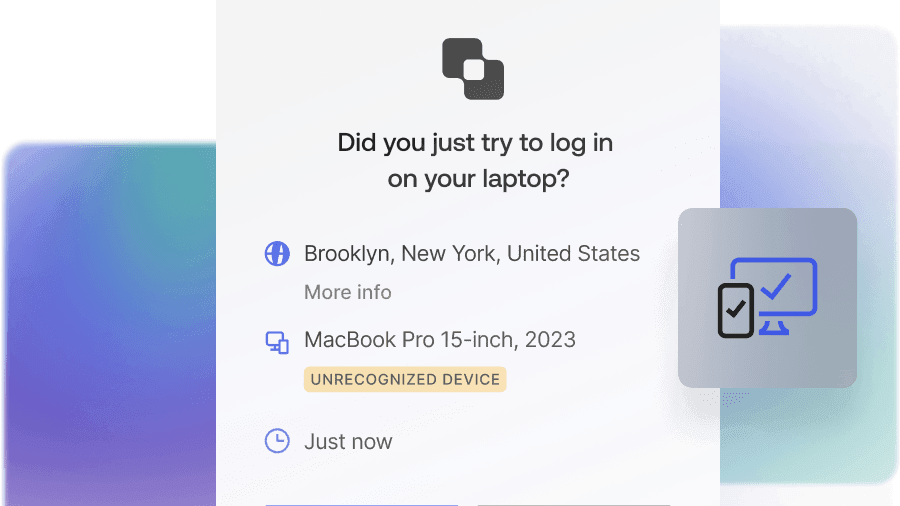
Multi-factor authentication and login verification with Auth0
While Supabase can also be implemented securely by combining strong database policies and disciplined application logic, Auth0 views security as a first order product domain. In addition to its robust support of various forms of MFA, Auth0 includes features such as attack protection and IAM related constructs that map directly to common Enterprise procurement terms and phrases.
This is important because it allows companies that have grown beyond the early stages of development and now find themselves being assessed by vendors and/or reviewed for compliance with government regulations to have a lower barrier to entry.
Again, this isn’t to say that Supabase is insecure; it’s just that Auth0 was built with the idea of making enterprise security predictable.
Supabase Authorization Can Be More Precise When It’s Data-Driven
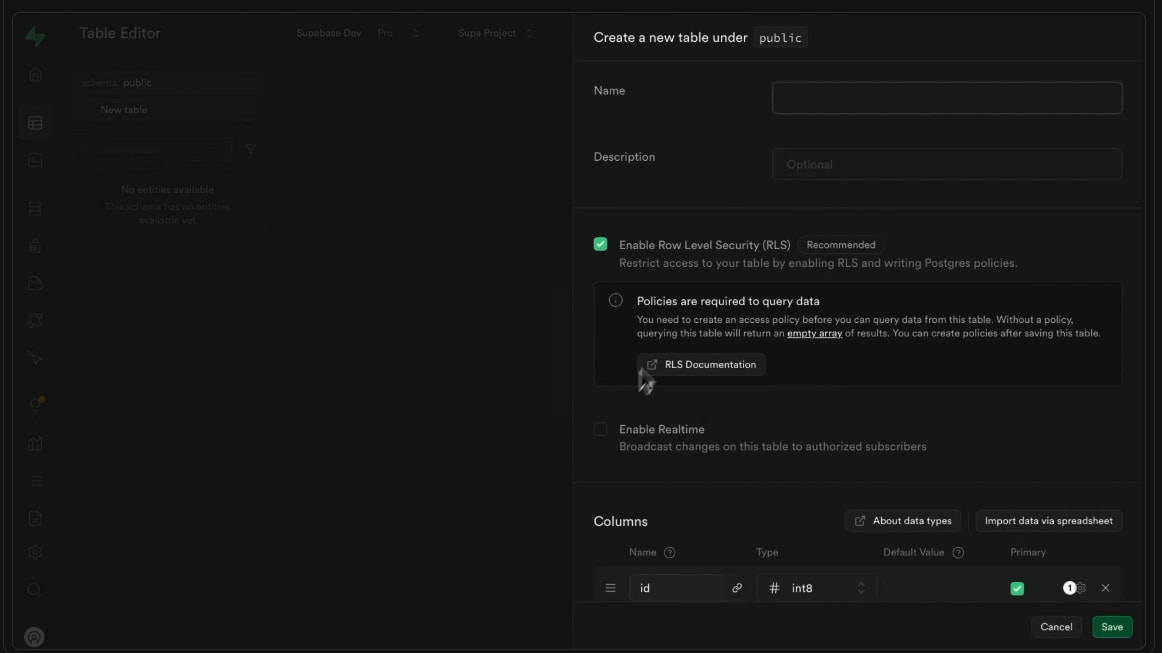
Data-driven authorization in Supabase
One of the advantages of using Postgres as the authority for all things related to tenant membership, entitlements, etc., is that the data can be easily queried to determine what a user is allowed to do. This approach moves authorization away from the scattered set of micro-service based checks and turns it into a simple query constraint.
While Auth0 can store roles and permissions, you will still need to enforce authorization within your API and your database. The key advantage that Supabase has here is that the platform will encourage you to think about enforcing authorization through data-driven constraints rather than just through an identity layer based role-based access control (RBAC). In the best case scenario, Supabase’s approach will be safer and easier to reason about if your development team is rigorous enough to follow through on the discipline of properly modeling and constraining the data.
In cases where the majority of your app’s complexity is centered around who should see which data, Supabase’s approach may actually offer a real advantage over identity-layer RBAC alone.
Supabase Is Often Easier to Use for Straightforward App Authentication

Simple authentication with Supabase
While Supabase will always be less flexible than Auth0 in terms of authentication options and configurations, for many developers, Supabase will be the better choice when it comes to simple authentication. Most users will only enable a handful of provider types, link their Auth instance to their database model, and apply permissions near the location of the data they're trying to protect. That's usually the simplest mental model for how an app should work for most development teams.
The trade-off of having more flexibility (and therefore, more "knobs" to turn) in terms of configuration is something that many developers will pay a premium to avoid. While this doesn't mean that Auth0 isn't capable of providing an extremely secure solution, it does mean that Auth0 will provide more options and therefore, more choices. For many developers, more choices means more complexity, and therefore, a higher chance of mistakes being made during the implementation process.
In other words, while Auth0 provides more choices and more options, Supabase is often the more streamlined option when it comes to the ease of use and simplicity of the implementation.
Supabase Outruns Auth0 for Full-Stack Shipping Speed

Build faster with Supabase's all-in-one full-stack platform
There are few platforms faster at shipping full stack applications than the integrated platform offered by Supabase. The application includes an authentication mechanism, a database, a storage mechanism, and all of the server side primitives within one operational context. This eliminates the opportunity for debug time and the amount of vendor "glue" code that would normally be required.
While Auth0 has the ability to get up and running very quickly, it does not provide a solution for the data layer or backend operations. Therefore, even though it can handle the identity piece, you will have to continue to make decisions on where you host, migrate, store data, how to define API's and other backend-related decisions that are provided through the Supabase platform in a single workflow.
As such, if your primary focus is speed-to-market and less so on advanced IAM capabilities, then Supabase is likely going to be the better option; if however, your primary concern is developing a mature identity management strategy, then Auth0 may be the better option.
Auth0 Usually Sets a Higher Baseline for Enterprise Support Expectations

Reliable authentication workflows with Auth0
Many companies are at a stop-the-world if the authentication does not work properly for their subsystems. Auth0 is most likely to be chosen due to its focus on enterprise identity, its predictable paths to support, planned-based capabilities and its mature Identity & Access Management (IAM) ecosystem.
The support for Supabase can be excellent, however, the support model is provided as part of a larger set of services from the platform. Teams who have high expectations for enterprise-level identity operations, will typically choose to use an IAM specialist for the authentication layer, although they may still continue to utilize Supabase for their back-end.
If the cost of having the auth layer down is existential for your company, choosing Auth0 as your provider for your authentication needs is probably a good way to mitigate that risk.
08 Auth0 vs Supabase: Which is the best for your business?
Auth0 is the best tool for you if:
- You sell B2B and need a clear path to enterprise SSO and identity governance.
- You expect complex identity provider setups, multiple IdPs, customer-specific policies, separate environments.
- You need a robust way to inject policy logic into the login pipeline, entitlements, step-up auth, risk checks.
- You want IAM-grade security features and a vendor posture aligned with enterprise procurement.
- You operate multiple apps and APIs and need a centralized, stack-agnostic identity layer.
 You sell B2B and need a clear path to enterprise SSO and identity governance.
Supabase is the best tool for you if:
- You want to ship a product quickly with a cohesive backend platform, DB, Auth, storage, compute.
- Your auth requirements are standard, and you’d rather avoid over-engineering identity early.
- Your authorization model is strongly data-driven, tenants, memberships, row-level constraints.
- You prefer fewer vendors and fewer seams to debug across environments.
- You want a platform that stays developer-friendly as you iterate and scale features.
Auth0
An easy-to-implement, adaptable authentication and authorization platform
1 year of the B2B Professional plan free
Save up to $20,000
09 Alternatives to Auth0 & Supabase

AWS Activate
Used by 6280 members
Up to $100,000 in credits or 20-50% off your monthly spend through an AWS partner (must be spending $100+/month)
Save up to $300,000

1Password
Used by 682 members
14 days free on 1Password Business
Save up to $48

Keeper Security
Used by 315 members
50% off personal and 30% off Business Starter for 1 year
Save up to $180

Rippling
Used by 140 members
3 months free
Save up to $2,500
10 Promotions on Security and Application Development software
Auth0 and Supabase are great tools, but Secret offers promo codes with discounts on over 2250+ different SaaS solutions. New deals are added regularly, helping you save money on your online subscriptions. Get access to codes for other Security and Application Development software you might want to purchase

Discount for Avast
50% off for 1 year

Retool offer
1 year free on the monthly Team or Business plan

Code for Cloudflare
$10,000 in credits for self-funded startups // $350,000 in credits funded startups

bolt.new discount code
20% off all plans for the first 3 months

McAfee free credits
$100 off your yearly subscription

Mobbin free credits
20% off for 1 year on the Pro plan

Deal for Surfshark
79% off and 2 months free on 2 year plans

Promo code Lovable
15% off annual Pro and Business plans

NordVPN discount code
60% off for 1 year or 74% off for 2 years

Google Cloud (GCP) promotion
$2,000 in credits for 1 year if you never raised funds // $350,000 in credits for 2 years if you did
11 Auth0 vs Supabase: Conclusion
When deciding between Auth0 or Supabase for your application, do not ask which offers better logins. Instead ask; where do I want my identity to reside in my overall system design? If you need your identity to support enterprise systems that are policy rich and capable of handling all the issues associated with Single Sign-On (SSO) in the wild, Auth0 is typically a safe choice for a longer term solution. As Auth0 is an Identity and Access Management (IAM) product, when authentication becomes a business issue rather than just a feature, this is where Auth0's value will show up.
If your main goal is to create a product with a reduced number of vendors involved, then Supabase may be the more effective choice, since Supabase views authentication as part of a complete, integrated backend platform. Further, if you encounter enterprise identity complexity issues at some point down the road, you will not have to replace your existing Supabase-based data platform, but rather layer a dedicated IAM provider on top of it.
If you wish to compare more ecosystems, you can review Supabase alternatives for backend platforms, or auth alternatives for identity providers.
Start saving on the best SaaS
Secret has already helped tens of thousands of startups save millions on the best SaaS like Microsoft Teams, Google Workspace & many more. Join Secret now to buy software the smart way.