


Choosing between Databricks and Snowflake is no “beauty pageant” of data tools; it’s your operating model. Are you building a technology-intensive data engineering platform that drives product development and machine learning (ML) initiatives? Or are you standardizing a governed analytics backbone that supports scale across all parts of your organization?
In this post, I will provide you a comparison of each in terms of real world workflows, data engineering capabilities, business intelligence (BI) concurrency, event-driven streaming, governance, and the mechanisms of how they bill and cost, so you may make an informed choice with purpose rather than intuition.
If you would like to review some offers while evaluating, please see our Databricks promo code to benefit some free credits or check the availability of an offer on the Snowflake deal page.
- 01 Databricks vs Snowflake: overview
- 02 What's the difference between Databricks and Snowflake?
- 03 Databricks pros and cons
- 04 Snowflake pros and cons
- 05 Databricks compared to Snowflake
- 06 Snowflake compared to Databricks
- 07 Features comparison
- 08 Databricks vs Snowflake: Which is the best for your business?
- 09 Alternatives to Databricks & Snowflake
- 10 Promotions on Cloud And Data Management software
- 11 Databricks vs Snowflake: Conclusion
Start saving on the best SaaS
Secret has already helped tens of thousands of startups save millions on the best SaaS like Microsoft Teams, Google Workspace & many more. Join Secret now to buy software the smart way.

01 Databricks vs Snowflake: overview
Both Databricks and Snowflake are used to convert raw, unorganized data into reliable business outcomes; however, each addresses the challenge in opposite ways.
Databricks is typically implemented as a lakehouse environment, where an organization can store, process and provide their data from one place (lake) along with notebooks, real-time streams and machine learning / artificial intelligence workloads. This is a "builder" environment which requires your team to have the necessary engineering disciplines and will reward your efforts with speed and capacity.
Snowflake is typically implemented as a cloud-based data warehousing solution, which is a fully-managed SQL-centric solution that provides scalable, governed analytics capabilities, and predictable production capabilities. For organizations needing to get to trusted reports quickly at scale and having multiple teams needing to consume the same set of curated data sets, Snowflake is often the quickest path to getting there.
Below is a high-level comparison table before we dive further into the day-to-day trade-offs.

Pricing plan
Both are consumption-based. Snowflake is often easier to forecast for warehousing, Databricks can be efficient when consolidating ETL, streaming, and ML on one platform.

Databricks
Snowflake
Customer support
Both offer enterprise-grade support tiers. The practical difference is where they help most, Snowflake in warehouse operations, Databricks in platform architecture and engineering patterns.
Databricks
Snowflake
Customer reviews
Users praise Snowflake’s smooth SQL analytics and manageability, and Databricks’ end-to-end engineering and ML flexibility. Satisfaction is usually tied to workload fit.
Databricks
Snowflake
Ease of use
Snowflake is simpler for SQL-first teams and governed BI. Databricks is powerful but multi-persona (DE, DS, ML), which increases configuration and learning overhead.
Databricks
Snowflake
Data engineering (ETL/ELT)
Databricks shines for large-scale transformations and pipeline engineering. Snowflake is excellent for ELT and SQL modeling, but less software engineering native out of the box.
Databricks
Snowflake
BI & SQL analytics
Snowflake is purpose-built for SQL analytics and high concurrency. Databricks SQL is strong, but BI-first teams often prefer Snowflake’s warehouse-centric operating model.
Databricks
Snowflake
Streaming / Real-time
Databricks is generally stronger for streaming pipelines and always-on processing. Snowflake can support near-real-time patterns, but it’s not typically the primary reason teams pick it.
Databricks
Snowflake
ML & AI workflows
Databricks is built for notebooks, experimentation, feature pipelines, and model operations. Snowflake supports ML via Snowpark and integrations, but often requires more tooling around it.
Databricks
Snowflake
Governance & security
Snowflake is widely used for governed warehouse patterns and secure sharing. Databricks can match it, but governance quality depends more on how you implement catalogs, permissions, and standards.
Databricks
Snowflake
Integrations & ecosystem
Both integrate broadly. Snowflake is a natural hub for BI and ELT ecosystems, Databricks is a natural hub for engineering and AI workloads across the lakehouse.
Databricks
Snowflake
02 What's the difference between Databricks and Snowflake?

Databricks is a platform for building and scaling data workflows
Databricks
From data to AI.

Snowflake is optimized for BI, reporting, and structured data
Snowflake
Snowflake is a cloud data platform that helps companies store, analyze, share, and build applications with data across AWS, Azure, and Google Cloud. It combines data warehousing, engineering, analytics, AI, and governance in one managed environment.
If you can take away only one item from what I've discussed, let me recommend that you consider the following: Snowflake is warehouse-first; Databricks is engineering and AI-first. Although both have some overlap, the way each platform defaults will dramatically change how teams work, how you govern your platforms, and how each type of cost hits you first.
Snowflake has its greatest advantage as an organization's "north star" for reliable SQL analytics, curated data sets, consistent performance, and easy-to-understand and apply governance policies for large-scale access. Therefore, Snowflake is typically best suited for organizations with analysts and business intelligence (BI) developers as the main users, and where concurrency -- i.e., multiple people simultaneously accessing the database -- is a must. Additionally, Snowflake's credit based consumption model and tools for managing costs provide a practical method to track and manage compute usage within a warehouse operating model, for instance, through separating work loads into different warehouses. To gain further insight into tracking compute consumption, refer to Snowflakes' documentation related to cost and credits.
Databricks typically wins in builder and data engineer-centric environments where there are complex transformations to ship, teams working with event or streaming data, as well as data scientists and ML engineers needing a tight feedback loop for experimentation through to production. When an organization splits their ETL, streaming, and machine learning processes across separate systems they will often incur double costs (compute costs and coordination costs). The bet of Databricks is that by unifying all of the above processes into a single lakehouse architecture, organizations can eliminate many of the hidden costs of using different systems, providing they define and enforce proper boundaries on workloads, permissions, and clusters.

Databricks
Used by 382 members
$21,000 in credits for 1 year
Save up to $21,000

Snowflake
Used by 279 members
$1,250 in credits
Save up to $1,250
03 Databricks pros and cons
What are the advantages of Databricks?
- Lakehouse flexibility for mixed workloads, Databricks is designed to run batch, streaming, analytics, and ML in one place. That’s invaluable when the same dataset must feed dashboards, features, and product logic without endless duplication.

- Streaming-native engineering patterns, for event-driven architectures, Databricks supports always-on processing styles that feel natural for engineering teams. It’s a strong fit for turning raw events into curated tables with low operational friction.
- ML and experimentation workflow depth, the notebook-centric workflow can be a genuine accelerator for DS teams. You iterate quickly, then harden the work into repeatable pipelines when it’s ready to ship.
- Performance potential on heavy transformations, when you’re dealing with complex joins, big backfills, or intricate feature engineering, the Spark-based execution model can deliver excellent throughput. It’s built for serious computation, not just reporting.
- Consolidation can reduce platform sprawl, if your current stack includes separate tools for ETL, streaming, notebooks, and ML ops, Databricks can simplify the architecture. Fewer platforms usually means fewer integration failure modes.
What are the disadvantages of Databricks?
- Steeper learning curve for SQL-only organizations, Databricks is not just a warehouse, and teams feel that immediately. If your users are mostly analysts, onboarding can take longer than with Snowflake.

- Cost discipline is not optional, flexible compute is a gift and a trap. Without chargeback or showback, workload isolation, and sensible defaults, costs can sprawl in ways that are hard to explain after the fact.
- More architectural decisions up front, workspace structure, permissions, data layout, and pipeline standards matter early. When those choices are sloppy, the platform can become noisy and inconsistent.
- BI-first experiences may require extra tuning, Databricks SQL can be excellent, but high-concurrency BI workloads often need deliberate sizing and configuration. Snowflake generally feels more turnkey for many dashboards and many users.
- Governance success depends on implementation quality, you can build a highly governed Databricks environment, but you have to build it. Snowflake’s warehouse-first model often makes governance feel more inherent.
04 Snowflake pros and cons
What are the advantages of Snowflake?
- Best-in-class SQL warehouse ergonomics, Snowflake is optimized for SQL analytics workflows and makes it easy to standardize how teams query and model data. That simplicity compounds when dozens of stakeholders rely on the platform.
- High concurrency for BI and self-serve analytics, Snowflake is often chosen specifically because dashboards remain responsive as usage scales. If adoption is a success metric, this matters more than benchmark bragging rights.
- Governance-friendly operating model, role-based access patterns and controlled sharing are core to the warehouse mindset. Teams can move faster with fewer security debates in every project.
- Operational manageability, Snowflake is designed so you spend less time thinking about infrastructure. For analytics-first organizations, that can free up bandwidth for modeling, quality, and adoption.
- Ecosystem gravity, many modern BI and ELT tools treat Snowflake as a first-class destination. If your stack is warehouse-centric, Snowflake typically integrates with minimal friction.
What are the disadvantages of Snowflake?
- Not always the cleanest path for end-to-end ML, Snowflake can support ML via Snowpark and integrations, but many teams still prefer dedicated ML platforms for the full experimentation-to-deployment lifecycle. That can increase system sprawl for AI-heavy roadmaps.
- Streaming isn’t the default superpower, near-real-time ingestion is possible, but low-latency stream processing often requires additional architectural components. If you’re truly event-driven, validate this early.
- Engineering-heavy transformations can feel less native, when pipelines look like software systems, custom libraries, complex logic, heavy compute, Snowflake may feel less builder-friendly than Databricks.
- Cost perception can become political, teams love simplicity, but finance teams love predictability. Consumption models still require governance, especially when many warehouses or serverless features proliferate.
- Warehouse-first mindset may clash with open-lake strategies, if your long-term plan is object storage plus open formats plus multiple engines, ensure Snowflake aligns with that strategy rather than forcing uncomfortable compromises.
Compare Snowflake to other tools


Confluent vs Snowflake

Snowflake vs AWS Activate

Snowflake vs Microsoft Azure
05 Databricks compared to Snowflake
Databricks' greatest strength is not "we can run SQL". It's that many organizations do not have one workload, they have an assortment of workloads - ingestion, transformation, streaming signals, experimentation, model serving, etc., all tied to the same core data assets.
In contrast, Snowflake is most compelling when you want the platform to behave like a disciplined utility, provide predictable SQL-based analytics, governed access, and a clean operational pattern that scales with adoption.
Is Databricks better than Snowflake?
 Is Databricks better than Snowflake?
When your critical path includes engineering throughput and AI delivery, Databricks will perform better. When you're creating feature pipelines, training workflows, or developing streaming-driven products, Databricks lakehouse approach minimizes context switching and removes the warehouse plus three sidecars architecture.
However, if you have an analytics first organization and you consistently find that your hardest work is being done outside of the warehouse (ETL complexity, real time pipelines, ML experimentation), then Databricks will likely be the more natural home for these workloads.
What is Databricks best used for?
Databricks is best at unifying data engineering and ML/AI workflows that utilize the same data foundations. It performs especially well in scenarios that require repeatable pipelines that flow from raw events to curated tables to features without duplicating data logistics through copy/paste methods.
Additionally, Databricks shines when scalability is defined as something greater than storage size (large backfills, complex transformations, compute heavy jobs) and distributed execution is the key to moving hours into days.
Can Databricks replace Snowflake?
Yes, if your definition of replace includes running analytics workloads from the same platform that runs your engineering and ML workflows. Databricks has capabilities to run SQL-based analytics and for many organizations, consolidation is a strategic benefit - fewer systems, fewer duplicated datasets, fewer mismatched definitions.
However, if your organization is primarily SQL-based and success is dependent upon massive BI concurrency with little to no tuning, Snowflake may remain a more straight forward warehouse backbone. Whether or not replacement is advisable will depend upon the identity of your primary users.
Is Databricks cheaper than Snowflake?
Databricks can be cheaper when it eliminates duplicate compute costs across different ETL, streaming, notebook, and ML environments. Practically speaking, cheap is derived from governance, workload isolation, sensible cluster defaults, and cost attribution that prevents runaway experimentation from becoming production spend.
If you would like to determine whether you can lower your costs while evaluating, begin with the Databricks deals and build a proof of value around your real workloads, not a toy dataset.
Is there a better Cloud And Data Management software than Databricks?
The best alternative to Databricks depends greatly upon the needs of your business. For example, if your world is primarily focused on Business Intelligence (BI) and SQL governance, then Snowflake could be a better option as it was engineered from the ground up for a warehouse operating model.
On the other hand, if your company has its sights set on a broader cloud platform strategy or direction, many teams are exploring adjacent ecosystems as well based on their existing investments in the form of network connectivity, Identity Access Management (IAM), and Data Services; to compare multiple alternatives at once, check the best Databricks alternatives.
Which is easier to learn, Databricks or Snowflake?
The easiest to learn will typically be Snowflake for SQL-first Analysts as it is warehouse-centric, has a clean mental model, separates responsibilities clearly, and there are fewer platform concepts to learn before one is able to produce something with it.
On the other hand, Databricks is generally easier to learn for Engineering and Data Science Teams as the platform aligns with how engineers build things (code, notebooks, jobs, etc.) with the added advantage of having a smaller number of tool sets to learn since it handles much of the lifecycle.

Databricks
Premium
From data to AI.
$21,000 in credits for 1 year
Save up to $21,000
06 Snowflake compared to Databricks
At its best, Snowflake is easy to use - if you want an analytics platform that can scale across your entire organization, and you don't need your data team to become part-time infrastructure managers, then Snowflake is likely the right choice. When adoptions grow, Snowflake’s warehouse model can handle the load.
While Databricks remains the most powerful builder platform for data and AI, Snowflake can make sense as a practical choice when the business needs a governed, high concurrency SQL foundation.
Is Snowflake better than Databricks?
The primary advantage of using Snowflake will be that you have a trusted source of reporting, self-serve analytics, and scalable governance. When most of your end-users are either analysts or other types of business stakeholders, I would say that Snowflake’s ease-of-use and operational clarity are hard to beat.
While Databricks can do analysis, Snowflake's warehouse lineage generally provides much faster company wide adoption, especially in an environment where consistency, security, and high concurrency are paramount and less important than flexibility of engineering.
What is Snowflake best used for?
The best use case for Snowflake is as a cloud-based data warehouse for the purposes of providing a reliable, consistent way to model your structured analytics data with strong governance; and then serve it to many users. A very good example of this is a successful deployment that has tens of thousands of dashboard queries per day that provide stable performance.
Additionally, when you want to manage costs and workloads in a manner that directly aligns to business units (i.e., warehouses, and credit usage, can be aligned to teams and use cases), Snowflake is a strong fit.
Can Snowflake replace Databricks?
Snowflake can replace Databricks if your workload portfolio is primarily warehousing and SQL transformations, and if you have modest machine learning requirements (and/or are utilizing a separate, specialized machine learning stack). In fact, a warehouse plus external machine learning stack is a perfectly valid architecture for many organizations.
However, if you require streaming-first pipeline capabilities and a tight feedback loop between features and models, Snowflake will typically become Snowflake + additional tooling, which can still work - however, it should not be confused as being an architecture that consolidates multiple platforms.
Is Snowflake cheaper than Databricks?
When utilized strictly as a warehouse, Snowflake can be cheaper than Databricks when your workloads are contained within a single area and your governance is in place to prevent warehouse sprawl. Additionally, Snowflake can be cheaper organizationally as it reduces the amount of time spent managing the complexity of your platform.
When evaluating competing proposals, begin by looking at Snowflake promo code available and run a workload-based comparison, same data, same concurrency target, same SLA expectations.
Is there a better Cloud Storage software than Snowflake?
If your approach is engineering-focused, includes real-time/streams, has multiple transformation paths, or will be used for Production Machine Learning, then Databricks is generally considered a better option since it's built as a single platform for both data and AI (unlike Snowflake that was first built as a warehouse).
If you wish to consider other options available in the larger market space, you can search for other options on our selection of best Snowflake alternatives.
Why are Databricks growing faster than Snowflake?
People may believe Databricks is expanding faster due to the fact that the market perception has moved from "analytics modernization" to "data for AI." Databricks is perceived as a single platform for both data engineering and the delivery of AI, which aligns well with the enterprise goals of utilizing proprietary data within their models and/or agents.
While comparisons of growth are potentially misleading since the two companies report different metrics and sell to overlapping, yet not the same customer base; the best approach for choosing one versus the other will be based upon what workloads you have, and not on who wins the decade headline battle.

Snowflake
Premium
One cloud platform for analytics, AI, and applications
$1,250 in credits
Save up to $1,250
07 Features comparison
Snowflake Excels Ahead of Databricks for User-Friendliness in SQL-First Teams

Snowflake's intuitive SQL experience for data teams
Databricks is generally the cleaner choice when machine learning is not a side project but is a product capability, experimentation, feature pipelines, training and deployment patterns need to be consistent, repeatable, and as close to the data as possible.
Snowflake can support machine learning through Snow Park and connections; and it can be very strong when models are primarily trained using curated warehouse data and executed in an analytics driven pace. However many teams are still adding outside machine learning platforms to support the complete lifecycle of their models, thus increasing the number of systems they are responsible for governing.
If AI delivery speed and ownership of all aspects of the process matter then Databricks will generally be the stronger choice. For analytics driven machine learning and governed scoring using only curated data then Snowflake can be a suitable solution.
Databricks Wins for Complex Data Engineering and Heavy Transformations
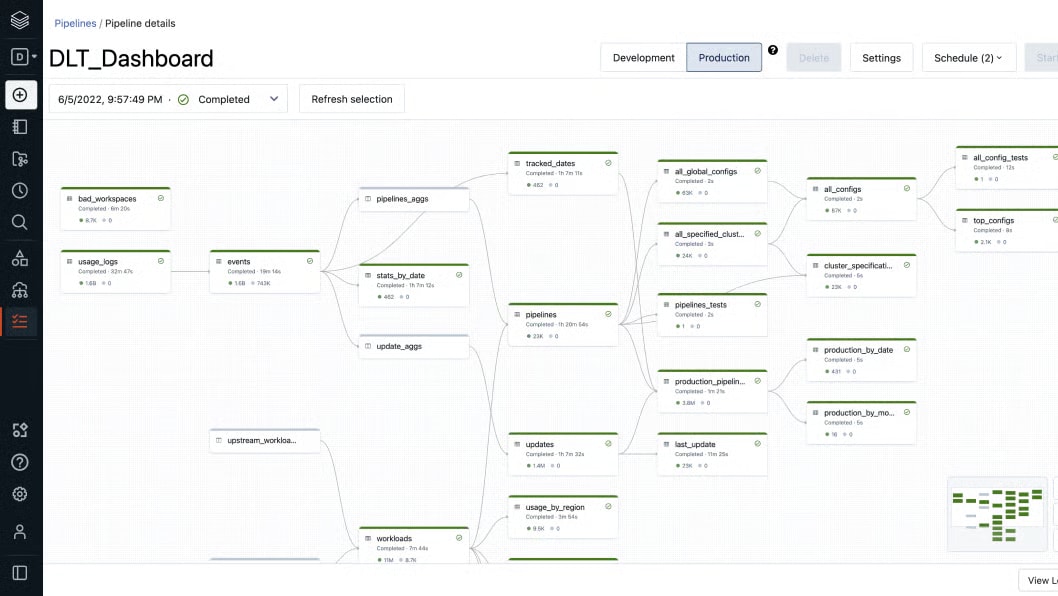
Build complex data pipelines and transformations on Databricks
Databricks is strongest when you have complex transformations, intricate joins, heavy back fills, custom logic, and compute intensive enrichment. Databricks is a builder platform that rewards engineering rigor with speed and flexibility.
Snowflake is great for SQL driven ELT and standardizing transformations, particularly if your data is in a warehouse friendly format. When your pipelines start to look like software development projects, teams often want the more robust engineering environment Databricks offers.
If your primary constraint is complex transformation and pipeline development, Databricks will generally be the better choice. If your transformations are primarily SQL based models used to feed BI, Snowflake is often simpler and sufficient.
Snowflake Leads for BI Concurrency and Warehouse-First Analytics
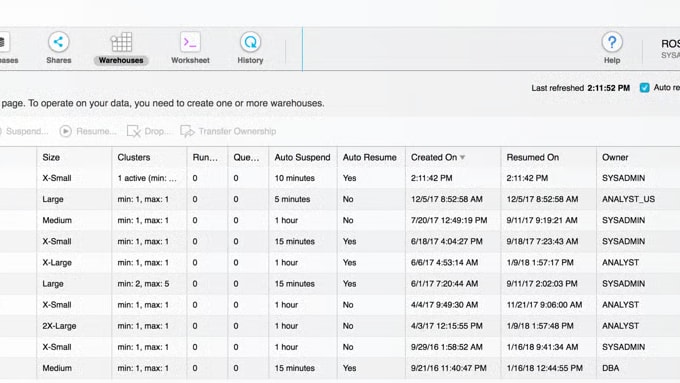
You only pay for what you use on Snowflake
Snowflake is designed to deliver analytics at scale, specifically when many people are querying at the same time. If your executive dashboards slow down during peak hours, you don't have a performance issue, you have a credibility issue.
Databricks can deliver BI workloads, but the best results occur when there is intentional configuration of SQL warehouses and a disciplined workload plan. In other words, it can achieve the goal, but it requires more from you operationally.
If BI is your primary workload and concurrency is your pain point, Snowflake generally offers the most ergonomic experience. If BI is important, but not your largest workload, Databricks' broader platform value can offset this advantage.
Databricks Pulls Ahead for Streaming and Event-Driven Architectures

Databricks is built for real-time data and streaming pipelines
If your data arrives continuously, product events, payments, telemetry, Databricks tends to feel more natural. Streaming is not an afterthought, it’s part of the platform’s identity, which makes it easier to design fresh data pipelines without bolting on a separate processing engine.
Snowflake can do near-real-time patterns, but the typical Snowflake-first architecture is still warehouse-centric, land data, transform with SQL, and serve analytics. That’s perfect for many companies, but it’s not the same as building a streaming-first data product.
When low-latency transformation is a requirement, Databricks is often the safer bet. When near-real-time simply means frequent updates for BI, Snowflake remains highly competitive.
Databricks Outclasses Snowflake for ML & AI Workflows

Databricks is built for end-to-end machine learning and AI workflows
If your data comes in continuously, product events, payments, telemetry, etc., Databricks tends to be more natural. Streaming is not an after thought, it is part of the Databricks identity, which makes it easier to create new data pipelines using streaming data without having to bolt on another processing engine.
Snowflake can create near real time patterns, but a traditional Snowflake first architecture is warehouse centric, land data, transform with SQL, and provide analytics. While that is fine for many organizations, it does not equal creating a streaming first data product.
When low latency transformation is required, Databricks is generally the safer bet. When near real time simply means that the BI data is updated frequently, Snowflake remains highly competitive.
Snowflake Generally Feels More Turnkey for Governance and Controlled Sharing
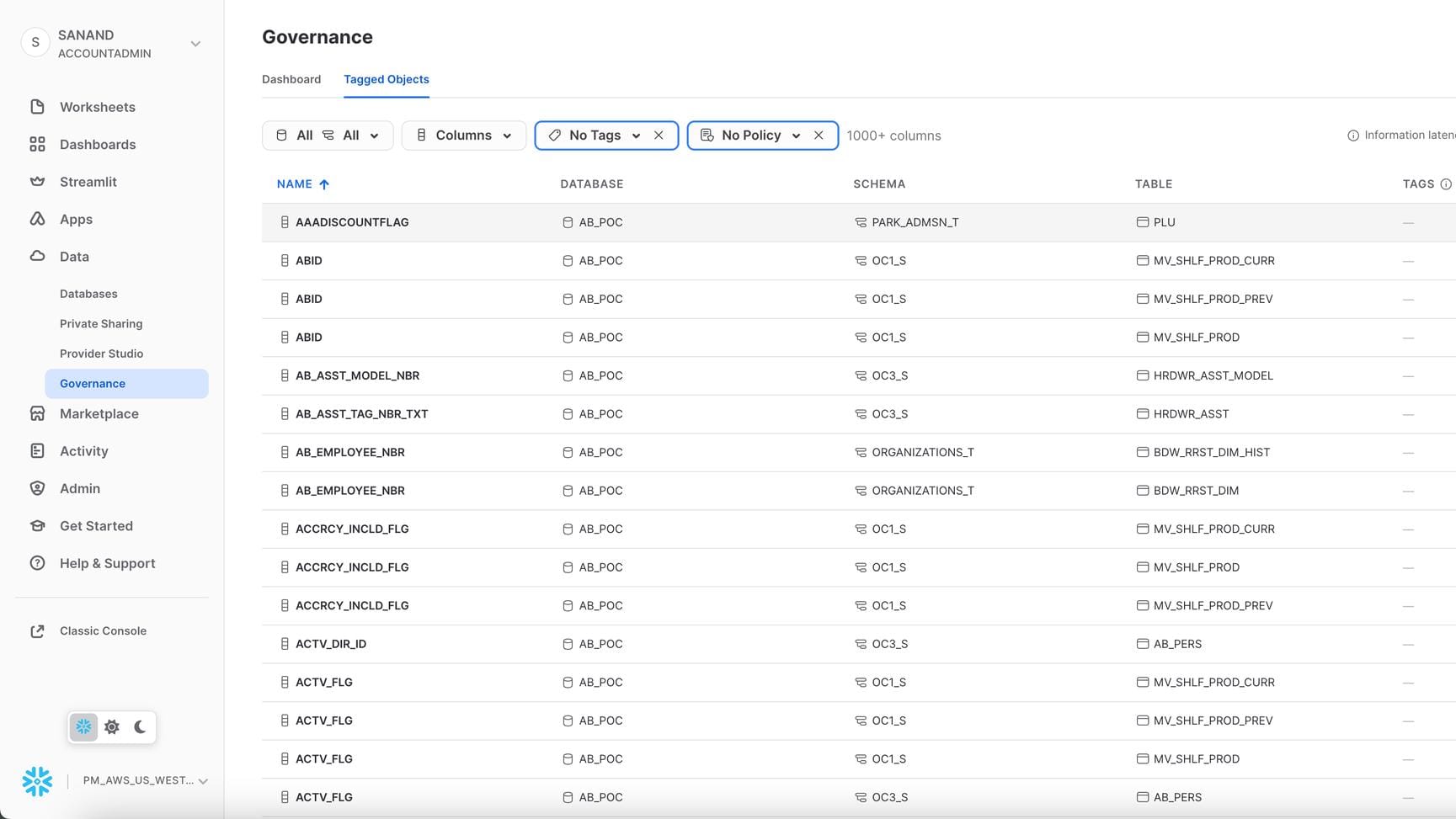
Simple, structured governance and data sharing with Snowflake
Snowflake's warehouse first model makes governance seem organic, access patterns are clearer, and operational boundaries are easier to describe to auditors and stakeholders. When multiple business units require controlled access to data, this clarity is a big advantage.
While Databricks governance can be just as effective, it is more dependent upon the quality of implementation, catalog organization, permission assignments, and workspace boundaries. This is not a weakness, it is the price of flexibility.
If you want governance with the least amount of customization, Snowflake will likely be the better option. If you want a common governance framework for engineering and AI/ML assets, Databricks can be the better long term platform, assuming you implement it with discipline.
Integration Ecosystems, Snowflake Fits Analytics Hubs, Databricks Fits Builder Platforms
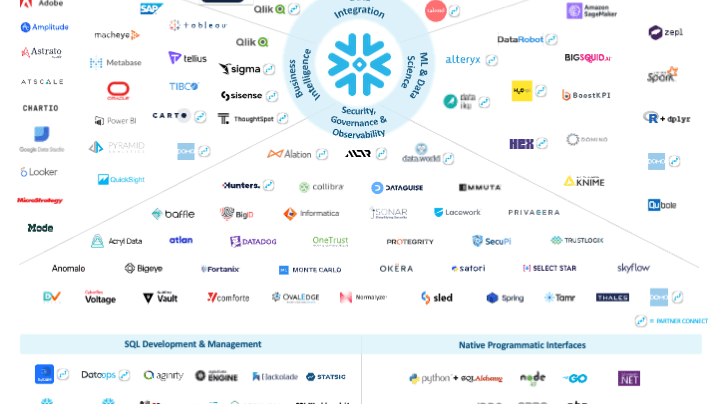
Snowflake's central hub for analytics and BI ecosystems
Snowflake is commonly the central point for analytics stacks, BI tools, ELT connectors, and modeling workflows integrated directly into the warehouse as the source of truth by default, therefore reducing the integration friction.
Databricks is commonly the central point for builder stacks, engineering pipelines, notebooks, AI/ML workflows, and custom processing. Databricks is less concerned with "connect everything to the warehouse" and more concerned with "build everything close to the data".
If your ecosystem is BI centric, Snowflake will generally be the smoother hub. If your ecosystem is engineering and AI/ML centric, Databricks will generally become the more strategic anchor.
08 Databricks vs Snowflake: Which is the best for your business?
Databricks is the best tool for you if:
- You need one platform for data engineering, streaming, and ML and AI workflows.
- Your pipelines are complex and compute-intensive, not just SQL transformations.
- You’re building data products where freshness and features directly affect the end-user experience.
- Your team prefers code-centric workflows with notebooks, jobs, and reusable engineering patterns.
- You want to reduce tool sprawl and centralize compute under a single governance model.
 You need one platform for data engineering, streaming, and ML and AI workflows.
Snowflake is the best tool for you if:
- Your main objective is governed SQL analytics and broad BI adoption.
- You need high concurrency for dashboards and self-serve analytics.
- You want a highly managed warehouse operating model with clear boundaries.
- Your organization is primarily analyst-led and standardized on SQL workflows.
- You prioritize controlled access and secure sharing across teams and stakeholders.
Databricks
Used by 382 members
$21,000 in credits for 1 year
Save up to $21,000
Snowflake
Used by 279 members
$1,250 in credits
Save up to $1,250
09 Alternatives to Databricks & Snowflake

Google Cloud (GCP)
Used by 11946 members
$2,000 in credits for 1 year if you never raised funds // $350,000 in credits for 2 years if you did
Save up to $350,000

mongoDB
Used by 909 members
$500 in credits for 1 year
Save up to $500

Google Analytics

Microsoft Power BI
10 Promotions on Cloud And Data Management software
Databricks and Snowflake are great tools, but Secret offers promo codes with discounts on over 2250+ different SaaS solutions. New deals are added regularly, helping you save money on your online subscriptions. Get access to codes for other Cloud And Data Management software you might want to purchase

AWS Activate promo code 2026
Up to $100,000 in credits or 20-50% off your monthly spend through an AWS partner (must be spending $100+/month)

Hostinger discounts
Additional 10% off on all 12/24/48-monthly plan purchases
mongoDB free credits
$500 in credits for 1 year

Discount for Cloudways
30% off for 3 months

Promo codes for Mixpanel
1 year free

GoDaddy discount
1st year .com domain purchase for $11.99

Microsoft for Startups discount code
$5,000 credit for 6 months

Deal for Google Drive
20% off Standard plans for 1 year

Promo code Microsoft Azure
$5,000 in credits for 6 months if you didn't raise funds // Up to $150,000 in credits for 2 years if you did

Promo code Internxt
87% off lifetime plans
11 Databricks vs Snowflake: Conclusion
Databricks and Snowflake are both very powerful tools. However, each of these platforms will favor different types of habits in terms of what is done in how long it takes. Databricks has advantages when building real time data pipelines (aka) for machine learning use cases, or if you simply need one place to build and ship projects. Snowflake has an advantage when trying to get as many people using analytics across your company as possible by allowing you to do so in a warehouse-first manner. My suggestion is to evaluate them based on what type of workloads you have the most of and who your end-users are, (i.e.) business intelligence and analyst users are likely to prefer Snowflake while builders and developer-centric organizations are likely to prefer Databricks.
If you are in the middle of evaluating which tool you may choose first, take a look at the deal pages of each to help reduce the number of experiments you have to do to find out which product fits best for your needs, whether it’s Databricks deal or Snowflake deal.
Start saving on the best SaaS
Secret has already helped tens of thousands of startups save millions on the best SaaS like Microsoft Teams, Google Workspace & many more. Join Secret now to buy software the smart way.