


When it comes to selecting a domain registrar, it seems like an easy task, however, when you have to quickly update DNS, retrieve a domain that has already expired, or explain to your finance department why the "cheaper" domain now costs a premium upon renewal, then you may be in trouble with your registrar, which could cost you time and/or damage your reputation.
In this article, I will provide you with my review and comparison of Namecheap and Porkbun as domain registrars; pricing mechanisms (renewals) and the pricing thereof, WHOIS privacy, DNS tools, security and customer service.
Additionally, if you would like to check on the most up-to-date offerings prior to making a commitment, you can do so by visiting Namecheap promo code page and checking the availability on Porkbun discount code page.
- 01 Namecheap vs Porkbun: overview
- 02 What's the difference between Namecheap and Porkbun?
- 03 Namecheap pros and cons
- 04 Porkbun pros and cons
- 05 Namecheap compared to Porkbun
- 06 Porkbun compared to Namecheap
- 07 Features comparison
- 08 Namecheap vs Porkbun: Which is the best for your business?
- 09 Alternatives to Namecheap & Porkbun
- 10 Promotions on Domain Management software
- 11 Namecheap vs Porkbun: Conclusion
Start saving on the best SaaS
Secret has already helped tens of thousands of startups save millions on the best SaaS like Microsoft Teams, Google Workspace & many more. Join Secret now to buy software the smart way.

01 Namecheap vs Porkbun: overview
Both Namecheap and Porkbun provide solutions to essentially the same problems as well, they register and host your domains, assist in renewal of those domains, assist in transfer of those domains and allow you to have a control panel where you are able to configure your dns which enables your website, email, etc. to function.
Namecheap is the "one-stop-shop" or the "full service" registrar. In addition to providing a variety of domain name registration services, Namecheap offers a wide array of web-related services including email services, SSL certificates, web hosting, etc. This provides a one stop shopping experience and allows users to have a consistent brand experience. However this also creates an opportunity for Namecheap to offer additional services and options which may be beneficial to some users; however for many users, this may create unnecessary complexity and additional cognitive burden when simply trying to make a simple configuration change such as editing a txt record.
Porkbun is the "domain first" registrar. With a focus on providing clean pricing, including essential services (as permitted by ICANN) and clean dns tools that do not attempt to sell you something at every turn, Porkbun is perceived as a more straightforward solution than Namecheap.
Below is a comparison of the two registrars based on their individual features.

Transfers and domain operations
Both support standard transfer flows. Porkbun’s positioning and UX are heavily optimized for registrar operations rather than cross-selling other web products.

Namecheap
Porkbun
Customer reviews
Builder communities often praise Porkbun for price clarity and low upsell pressure. Namecheap has huge adoption and many positives, but more complaints about checkout noise.
Namecheap
Porkbun
Pricing plan
Porkbun tends to be more “all-in” and predictable, Namecheap can be very competitive, but the best prices often depend on promos and add-ons.
Namecheap
Porkbun
DNSSEC
Both support DNSSEC depending on TLD and setup. Porkbun offers DNSSEC toggles on its nameservers, Namecheap documents supported and unsupported TLDs for DNSSEC.
Namecheap
Porkbun
Renewal price predictability
Porkbun explicitly aims to keep renewals consistent with regular pricing, reducing sticker shock. Namecheap’s renewals can vary more by extension and bundle choices.
Namecheap
Porkbun
Ease of use
Porkbun’s interface is tighter for domain-only work. Namecheap is usable, but its broader product ecosystem can add extra clicks and decision points.
Namecheap
Porkbun
DNS management
Both cover standard records (A/AAAA/CNAME/TXT/MX). Porkbun highlights Cloudflare-powered DNS, bulk management, API access, and DNSSEC as part of its free DNS toolkit.
Namecheap
Porkbun
WHOIS privacy
Porkbun includes free WHOIS privacy for participating domains and enables it by default. Namecheap’s privacy availability can depend on the TLD and configuration.
Namecheap
Porkbun
Email forwarding
Both can handle basic email forwarding for domain owners. Namecheap is stronger if you want to buy mail products from the same vendor, not just forward.
Namecheap
Porkbun
Customer support
Porkbun highlights human support via chat, email, and phone, with quick turnaround. Namecheap’s support is widely available, but experiences can vary by issue type and volume.
Namecheap
Porkbun
02 What's the difference between Namecheap and Porkbun?
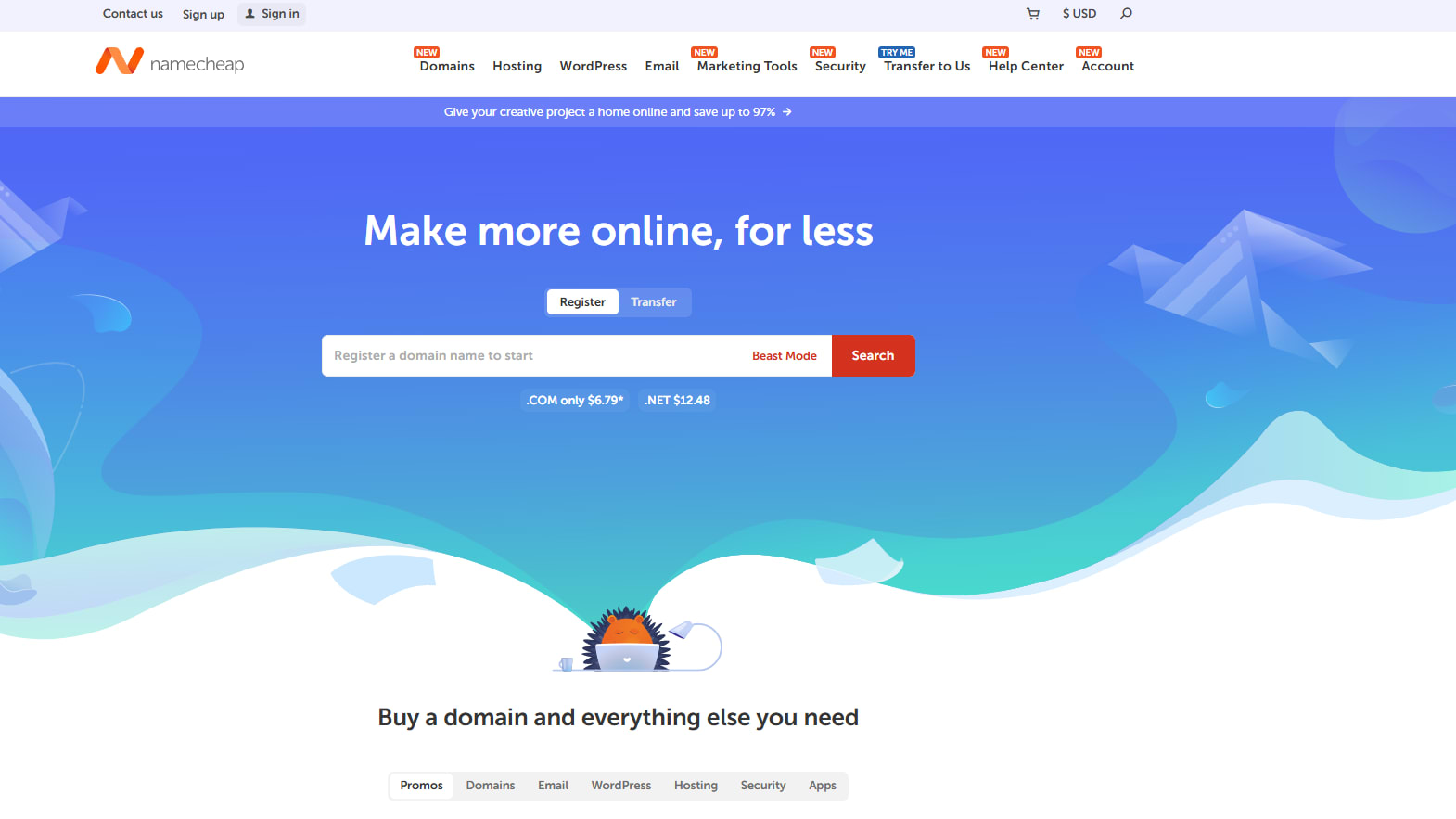
Namecheap's all-in-one ecosystem
Namecheap
Domains and hosting made easy

Porkbun's clean, no-nonsense domain experience
Porkbun
Porkbun is a user-friendly domain registrar known for its affordable pricing, easy-to-use platform, and a quirky, fun vibe. Whether you're looking for a .com, .net, or creative TLDs like .design or .ninja, Porkbun makes the process of searching, purchasing, and managing domains hassle-free.
Namecheap is a registrar that is part of an overall ecosystem of web-products. Therefore, in addition to being able to purchase a domain from them, you have a product catalog including email services, SSL products, website hosting packages and many more. While it can be nice to have all of your needs met by a single vendor, the drawback is that managing your domains may feel slightly "impure" as there is a wider array of choices available within their storefront and therefore the interface has been built to try to steer you towards these choices.
Porkbun on the other hand is very limited in what they offer compared to Namecheap. Their value proposition is that the registrar should be completely boring, however in the best way possible. This means that the pricing for Porkbun is completely transparent. It is easy to edit your DNS settings and renew your domains quickly using the control panel offered by Porkbun. Additionally, Porkbun offers a set of standard features that reduce the amount of small decisions you will have to make, such as offering free WHOIS privacy for the domains that qualify for the service and enabling the privacy service by default. However, Porkbun does inform you which Top Level Domains cannot provide privacy due to rules at the Registry level.
Both registrars do not have a "Free Plan", similar to a SaaS model, since domains are assets and therefore must be purchased. The actual question you must consider is the Total Cost of Ownership for each registrar. This would include registration costs, renewal costs, the cost of privacy, and whether or not you will be charged for additional services that you do not require. If you are creating a brand that you believe will exist for a long time and therefore will own domains for extended periods of time, I would recommend prioritizing low renewal rates and simple domain operations over large discounts for your first year of operation.

Namecheap
Domains and hosting made easy
Additional 10% off domain registration / 65% off Shared hosting packages for 1 year
Save up to $13
03 Namecheap pros and cons
What are the advantages of Namecheap?
- Broader web stack in one account, if you want domains plus email, SSL, or basic hosting without stitching vendors together, Namecheap’s catalog is legitimately convenient.

- Good fit for “many small sites” operations, agencies and builders managing multiple client domains often appreciate having a familiar, centralized dashboard and billing setup.
- Solid DNS fundamentals, editing A/AAAA/CNAME/TXT/MX records is straightforward, which covers the majority of real-world tasks like app verification and email routing.
- Security baseline is strong, you can use account protections (like 2FA) and standard registrar controls (locks) to reduce the risk of hijacks and unauthorized changes.
- Promotions can be aggressive, if you’re registering many domains at once (brand defense, campaign domains), first-year promos can materially reduce upfront spend.
What are the disadvantages of Namecheap?
- Renewal math can be less friendly, the “cheap” impression is often driven by promos. For long-held domains, renewal pricing and add-ons are where costs accumulate.

- Upsell-heavy user journeys, if you prefer minimal checkout friction, the extra offers and product prompts can feel like sand in the gears.
- More product surface area than some teams need, when your hosting and email stack live elsewhere, the extra catalog can become distraction rather than value.
- DNSSEC support is conditional, DNSSEC depends on TLD and nameserver choices. Namecheap documents supported and unsupported cases, so you may need to validate your exact setup.
- Not optimized for domain ops speed, if you’re constantly adding verification TXT records or moving subdomains, a domain-first UX can be measurably faster.
04 Porkbun pros and cons
What are the advantages of Porkbun?
- Free WHOIS privacy where allowed, Porkbun states it includes WHOIS privacy for participating domains and turns it on by default, reducing spam exposure without extra fees.
- Cloudflare-powered DNS management, Porkbun explicitly positions its DNS as powered by Cloudflare and includes bulk management, API access, and DNSSEC features in its DNS tooling.
- Lower upsell pressure, the experience is more focused on domains, which keeps the workflow clean when you just want to buy, renew, transfer, or edit DNS.
- DNSSEC enablement is straightforward, Porkbun provides documentation for enabling DNSSEC on its nameservers, which is valuable if you care about DNS integrity.
- Support positioning is very human, Porkbun emphasizes human support via chat, email, and phone, and publicly describes expected responsiveness and availability.
What are the disadvantages of Porkbun?
- Less of a bundled suite, if you want a registrar that also sells a wide set of web products (hosting tiers, business email stacks, and so on), Porkbun is more domain-centric.
- Not every TLD can have privacy, Porkbun is transparent that certain extensions cannot support WHOIS privacy due to registry policies, important, but still a limitation for some buyers.
- Enterprise governance may be limited, larger organizations sometimes need deeper role-based controls and reporting than a domain-first registrar typically prioritizes.
- Some compliance workflows are DIY, Porkbun notes it does not provide an official ownership certificate, which can matter if a bank or agency asks for formal proof.
- Not always cheapest on every extension, Porkbun is often strong on total value, but you should still compare your specific TLD portfolio rather than assume.
05 Namecheap compared to Porkbun
While Namecheap's advantage as a convenient option (one-stop-shop for breadth) could be a benefit to organizations still developing their tech stacks, this advantage would come at the cost of reduced operational clarity, which is Porkbun's strength.
Is Namecheap better than Porkbun?
 Is Namecheap better than Porkbun?
Yes, Namecheap is better if purchasing a domain will enable you to check off all the other web services needed by your organization (email, ssl, etc.) with a single provider; therefore saving your organization both time and resources to coordinate multiple providers.
Feature for feature, Porkbun usually wins out in terms of price transparency and simple domain operations. However, if your definition of "success" is having only one vendor, one account and needing access to all the different types of web service needs, then namecheap may be the better business decision.
What is Namecheap best used for?
For organizations that have a familiar Namecheap registrant but would like a feel of the "ecosystem", Namecheap is best suited as it has all your domain plus optional add-ons in one dashboard. Additionally, Namecheap provides a useful solution for Agencies/Founders running many small websites and requiring them to manage all their websites and billing through a single central location.
If you are just starting out and do not want to make vendor decisions at this time, Namecheap allows you to go from registering your first domain to having a functional web site with minimal additional purchases.
Can Namecheap replace Porkbun?
Yes. Namecheap can be used in place of Porkbun for all the typical registrar functions; registration/renewal, DNS control, transfers and basic security options.
The only costs associated with replacing Porkbun with Namecheap is related to your workflows. You are going from a domain-only experience to a broader store front experience. If you are sensitive to operational friction and/or "upsell" issues then you may notice some differences in how you operate within your workflow.
Is Namecheap cheaper than Porkbun?
At the time of initial registration, Namecheap could be the least expensive; especially during promotion periods. When purchasing large amounts of domains for brand protection or as part of a campaign to launch new products, those promotions can make a difference.
However, over the life of a domain, it is generally easier for Porkbun to be the less expensive option simply due to the simplicity of their pricing model (including renewals, and included services).
If you are making a rational decision based on price, you need to calculate the total cost of owning each domain over a period of at least 2-3 years, rather than looking at only your initial payment for that domain. You can also check the Namecheap promo code for an Additional 10% off domain registration or/and 65% off Shared hosting packages for 1 year.

Is there a better Domain Management software than Namecheap?
Yes. It depends on what "better" means to you. If you're looking for less sales pressure at check-out, cleaner pricing, and a more domain-first control panel, Porkbun is often cited by users as one of the best domain registrar alternatives.
If you are looking for superior DNS performance and security as part of an overall edge stack, it may also be worth exploring infrastructure-based solutions.For example, Cloudflare DNS is widely recognized as a high-performance DNS platform, though choosing it as a registrar is a separate decision. For a broader list, explore the best Namecheap alternatives.
Why is Namecheap so cheap?
One reason that Namecheap may feel "cheap" is that it has a marketing practice of using very low prices (the "introductory" price) for domain name registrants who register a popular TLD in order to attract those registrants to its platform. This is a legitimate way to market; once a customer registers a domain name with Namecheap, they tend to continue to use Namecheap as their registrar for years (or at least until the domain name registration expires), and so while it might seem like a very aggressive pricing model at first glance, the reality is that most people do continue to renew their names through the same registrar every year.
The takeaway from this is quite straightforward. If you're looking at a product or service that's priced very low initially, don't assume that it will be the same when you go to renew. Instead evaluate the price that you'll pay to renew, what TLDs have privacy restrictions on them, and whether there are any add-ons that you will need to purchase in addition to your domain name registration. In short, the only way to avoid being sucked into the "cheap now, expensive forever" pricing trap is to look beyond the initial price and think about what the total cost of the product or service will be over time.
Namecheap
Domains and hosting made easy
Additional 10% off domain registration / 65% off Shared hosting packages for 1 year
Save up to $13
06 Porkbun compared to Namecheap
Porkbun is ideal for individuals treating their domain names as infrastructure; they look for reliability, predictable pricing, and tools that are quick to use. It is a good fit for the modern stack where hosting, email, and security exist independently in a variety of different services, and all the registrar does is properly route and hold your domain name.
Although Namecheap is still a competitive option, especially if you prefer a single account platform, if you are looking for a registrar with the least amount of frills, Porkbun may seem cleaner.
Is Porkbun better than Namecheap?
Better when you value an easy-to-use interface for managing your domains, fewer up-sell opportunities, a user experience that is centered around your domain name, and price that you can easily predict. Especially useful when you have more than one domain and you perform regular DNS work, such as setting TXT records, configuring sub-domain routing, and performing service migrations.
Also, Porkbun has a number of "included" essential features. For example, Porkbun openly discloses that it provides free WHOIS privacy protection for eligible domains, thereby reducing the cost and associated risks for many domain name registrants.
What is Porkbun best used for?
The best use for Porkbun is to register and maintain your domain names with minimal hassle while managing your DNS cleanly. If you're using applications such as Google Workspace, Microsoft 365, Shopify, or a managed hosting provider, you will likely be spending the majority of your time adding a few records, and then allowing everything else to remain static.
This is exactly why Porkbun's focused user experience and its set of included features tend to provide a welcome change from other registrars.
Can Porkbun replace Namecheap?
Yes. Porkbun can replace Namecheap for the primary function of a registrar (registering, renewing, transferring, and basic DNS and security functions).
If you rely on Namecheap for additional web products, hosting tiers, paid email products, etc., you would need to find a new provider for these products. However, if Namecheap is simply providing registrar services for you, switching to Porkbun should be relatively simple.
Is Porkbun cheaper than Namecheap?
Yes, frequently; in addition to being able to budget renewals and include essential features (as opposed to initial discount offers), because Porkbun clearly states that renewals will be priced at the same as the price of regular registration for a domain name, and therefore allows budgeting to occur across a portfolio of domains.
Porkbun may lose the price battle on an initial promo for Namecheap, but it would depend upon how many years you are going to purchase your exact TLD set. If you want to see current deal context, check if your are eligible for a Namecheap’s discount code.
Is there a better Domain Management software than Porkbun?
A "better" domain registrar could mean one of two different ways; you are likely looking for either a broader set of services (which Namecheap is likely to provide) or advanced infrastructure level DNS features and performance (in which case you might want to look at a DNS provider).
If your main concern is finding an alternative registrar, take a closer look at other registrars by checking the best Porkbun alternatives and shortlist based on your workflow, domain-only operations, portfolio size, or governance requirements.
Is Porkbun the best domain provider?
Many people will find Porkbun to be their best option because it focuses on the less glamorous yet essential aspects of the process, such as the transparent cost of registration, the provision of WHOIS privacy wherever possible, and the ability to easily create a robust yet flexible DNS solution. The fact that its DNS service is specifically marketed as being powered by Cloudflare is a positive indicator of its resiliency and high speed capabilities.
However, it may not be the best for those who are looking for a single registrar that they can also use as their primary web services marketplace. If this is your case, then you may want to consider using a broad-platform registrar in order to take advantage of bundling multiple services into one transaction and having the ability to centrally manage your vendors.
07 Features comparison
DNSSEC, Both Support It, But Porkbun Makes It Feel Less Intimidating
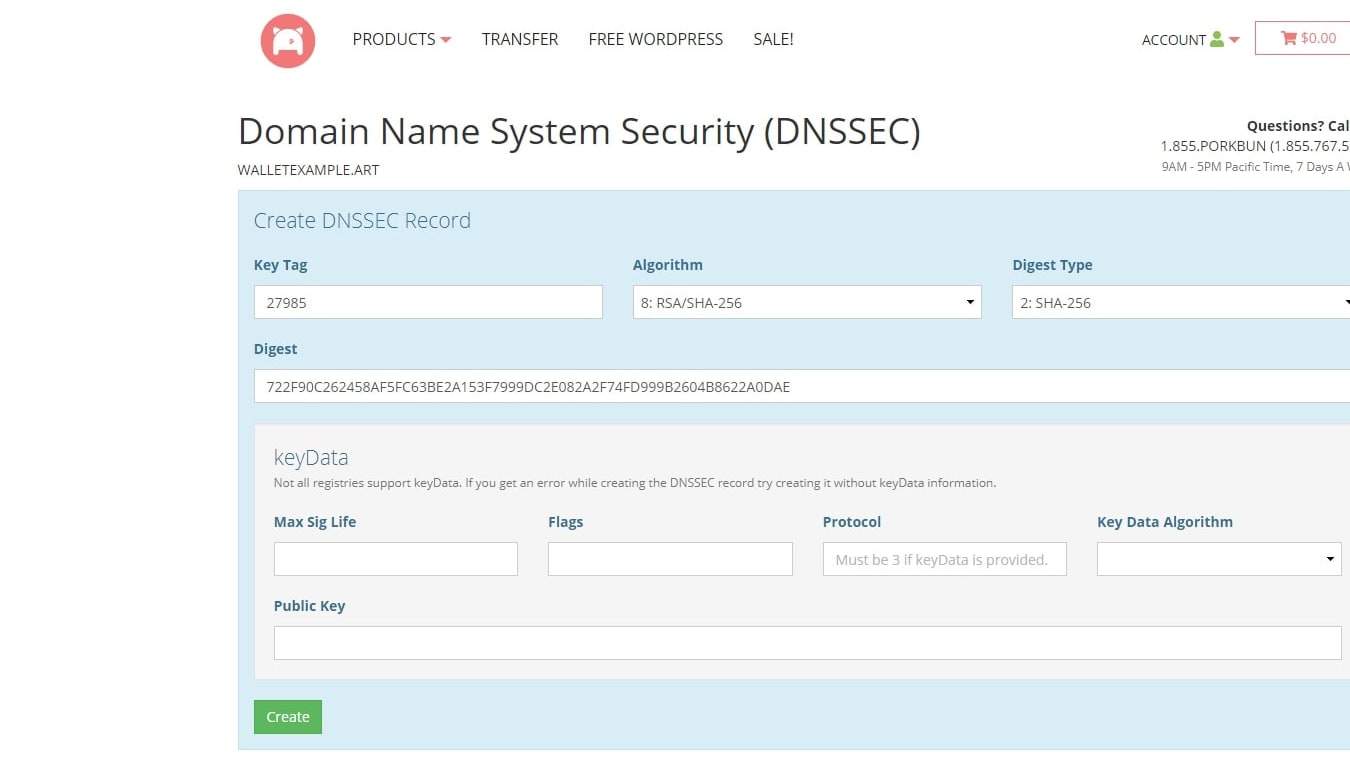
Porkbun makes DNSSEC accessible
When you're looking at a feature like DNSSEC (Domain Name System Security Extensions) - a feature that ensures the integrity of your domains - you will likely be unaware of this until you become aware of its importance to the integrity of your domains; At that point, it will be a serious "checkbox" in terms of protecting your domains. The process of enabling DNSSEC on the nameservers of Porkbun makes it easier to protect your domains by providing a clearly defined way of turning on DNSSEC protection on the nameservers of Porkbun.
Although Namecheap does support DNSSEC in some supported scenarios and offers documentation to assist in identifying which nameservers and top level domains (TLDs) are enabled with DNSSEC or not, if you're using a combination of both nameservers and TLDs that do support DNSSEC, this documentation is helpful in verifying your edge cases.
While namecheap has a better support organization due to its scale and years of operation supporting registrars, and while namecheap is able to provide a similar customer support experience to that of porkbun - the customer support experience provided by Porkbun is generally more responsive. If you're security-conscious, and you want the simplest way possible to enable DNSSEC protection and verify that the protection is working, I would recommend that you choose porkbun.
Porkbun Pulls Ahead on Pricing Predictability, Especially Renewals
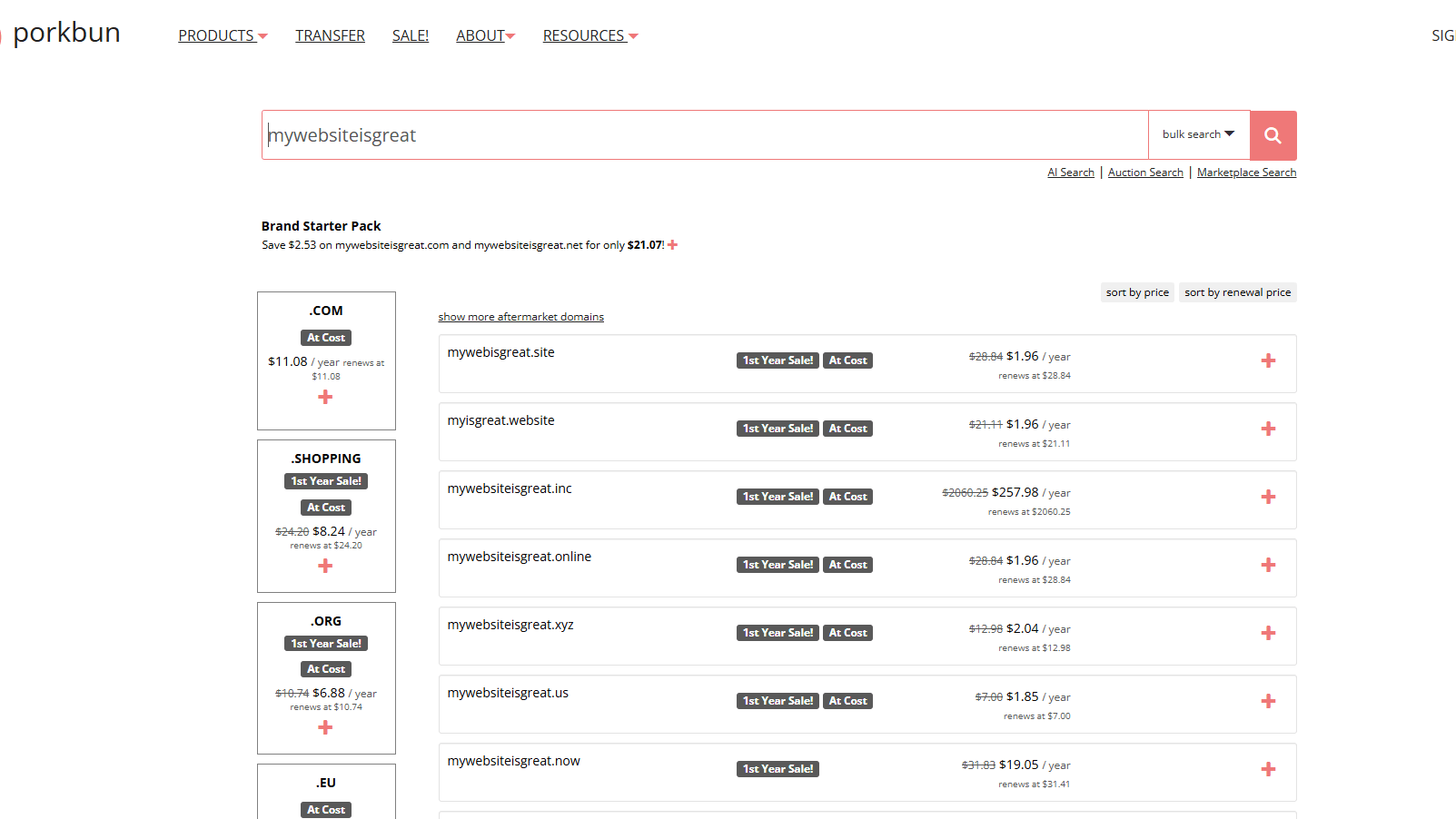
Porkbun's transparent pricing
Renewal is where domain prices are either won or lost; not at checkout. It's great to have a discount in your first year of registration (marketing expense), but it is easier for Registrars to "play" with this number since it's a one-time marketing expense.
Porkbun has taken the position of having renewal prices consistent with their normal registration price as such they make it simpler to plan portfolios for Brand Defense purposes, especially when an organization owns multiple domains for the same purpose.
Although, Namecheap can also be very good value, depending on the TLD(s) you are interested in, and how long you renew for; you will need to do your homework on what is best for your organization over a multi-year period and not just a single renewal invoice.
Porkbun Is More Frictionless for Ease of Use, Domain-Only Teams

Straightforward domain management on Porkbun
You will be logging into your registrar dashboard for two reasons: to verify your domain by adding a TXT record, to update your CNAME, to modify your MX records, or to approve a transfer. All these actions have high costs associated with errors.
Porkbun's domain-first (domain-only) team usually has less clutter, fewer diversions, and faster navigation to those settings you need, which reduces your operational risk, as there is less chance that the UI will direct you to other product options that are not relevant to your needs.
While Namecheap is also easy to navigate, the larger product store front makes it sometimes harder to make just one small change to your DNS, than you would expect.
Porkbun’s Cloudflare-Powered DNS Is a Real Operational Advantage

Cloudflare-powered DNS on Porkbun
A registrar is either a quiet ally or a continuing source of headaches when it comes to DNS management. By openly marketing their DNS as powered by Cloudflare, and including features such as bulk management and API access, Porkbun provides features that are particularly valuable to users who manage multiple domains or automate updates to their DNS.
While Namecheap's DNS is sufficient for most uses, especially those with simple setups, Porkbun's position is stronger because they tie DNS reliability to a widely known DNS infrastructure provider.
If your use case is DNS critical, i.e., SaaS onboarding, transactional email deliverability, multi-region routing, etc., then Porkbun's DNS story is compelling.
Porkbun Wins on WHOIS Privacy Defaults and Clarity
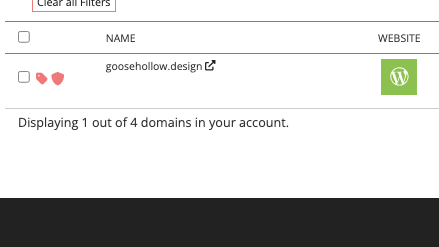
Built-in WHOIS privacy on Porkbun
For most founders, WHOIS privacy is not a nice to have feature, it is a defense mechanism against spammers, scrapers and social engineers attempting to contact domain owners via the public WHOIS database. As stated on its website, Porkbun includes free WHOIS privacy for participating domains and it is generally enabled by default. This is both cost effective and safer by design.
Namecheap can offer WHOIS privacy as well, however, the actual user experience may vary depending upon the specific extension and the path taken through the product flow.
There is a key difference that is worth mentioning; some TLDs require publicly available registrant information. Porkbun clearly states this limitation on its privacy web pages, so you do not assume something that is not true.
Namecheap Is Stronger for Registrar Plus Add-Ons Under One Roof

Extend your Namecheap domain with built-in services
f you want to purchase a domain and immediately associate additional services such as email, SSL, or hosting with that domain from the same provider, then Namecheap's breadth is the advantage. Namecheap can act as a compact web stack marketplace and reduce the amount of time you spend researching and comparing different service providers.
While Porkbun can provide basic services, such as forwarding, it does not function as a full-fledged suite vendor. Its strength lies in being a registrar, not a suite of services.
This represents the traditional tradeoff between the ecosystem convenience provided by Namecheap and the domain-focused operational efficiency offered by Porkbun.
Customer Support, Porkbun’s Human-First Positioning Resonates

Porkbun's support and FAQs are ready to assist you
The support from your registrar is very important when there is a problem with a domain that needs to be resolved such as during a transfer, DNS updates are not being properly propagated, or the renewal period for a domain is rapidly approaching. When these types of problems occur, you want a support team that understands how domains work and can respond quickly.
In addition to emphasizing human support through chat, email and telephone, porkbun also openly communicates with customers regarding response time. This emphasis on communicating with customers openly about response times helps to create an expectation among customers regarding response times, which is what most customers expect when they have a problem with their domain.
As a larger registrar than porkbun, Namecheap has a longer history of operating a support organization for registrars, and therefore has an advantage over porkbun. However, as a result of the large number of customers that namecheap has, the quality of the support may vary based on the type of support needed and the queue that the request is placed into.
08 Namecheap vs Porkbun: Which is the best for your business?
Namecheap is the best tool for you if:
- You want a registrar that also offers a broader menu of web products, email, SSL, hosting, in the same account.
- You’re managing many small sites and prefer centralized billing and vendor consolidation.
- You’re registering domains in bulk and want to take advantage of strong introductory pricing when available.
- You value a familiar brand with a long track record in the registrar space.
- You don’t mind a more storefront-style experience to access extra services quickly.
 You want a registrar that also offers a broader menu of web products, email, SSL, hosting, in the same account.
Porkbun is the best tool for you if:
- You want predictable multi-year costs and dislike renewal surprises.
- You prefer a clean, domain-first UX for fast DNS edits, renewals, and transfers.
- You want WHOIS privacy included by default where the TLD allows it.
- You care about robust DNS tooling and like the idea of Cloudflare-powered DNS management.
- You want minimal upsell pressure and a registrar that stays focused on registrar fundamentals.
Namecheap
Domains and hosting made easy
Additional 10% off domain registration / 65% off Shared hosting packages for 1 year
Save up to $13
09 Alternatives to Namecheap & Porkbun

Hostinger
Used by 1580 members
Additional 10% off on all 12/24/48-monthly plan purchases
Save up to $144

GoDaddy
Used by 737 members
1st year .com domain purchase for $11.99
Save up to $1,000

Bluehost

101domain
10 Promotions on Domain Management software
Namecheap and Porkbun are great tools, but Secret offers promo codes with discounts on over 2190+ different SaaS solutions. New deals are added regularly, helping you save money on your online subscriptions. Get access to codes for other Domain Management software you might want to purchase

Discount for Squarespace
Additional 10% off across all plans

WordPress.com promo code
30% off all monthly plans

Shopify discounts
$1/month for the first 3 months + 25% off annual plans

Promo codes for Jimdo
50% off for 1 year
Hostinger promotion
Additional 10% off on all 12/24/48-monthly plan purchases
GoDaddy discount code
1st year .com domain purchase for $11.99

Credits for Cloudflare
$5,000 in credits for self-funded startups // $250,000 in credits funded startups
11 Namecheap vs Porkbun: Conclusion
When you are looking for a single vendor that will handle domain registration as well as provide a basic web service (DNS etc.) then Namecheap may be the best option, particularly if you are in need of speed and do not wish to build out your "stack" piece by piece with different vendors. Remember however to make purchases from vendors that have good long term renewal costs as well as any additional services you will use over time, and not just because they look good at year 1.
When you value being able to work with a registrar that is specific to the task of providing domain services and feel like it provides a clear, transparent, and a user experience designed specifically for domains; then Porkbun may be the way to go. As an example, free WHOIS privacy wherever available, DNS services provided through Cloudflare and a domain-centric User Experience all contribute to an overall experience that has the potential to save you time each month, without you even realizing it.
Before you decide, I recommend checking the current offers and calculating a multi-year total for your key domains. You can start with the Namecheap deal page and the Porkbun deal page, then choose the registrar that stays compelling after the promo dust settles.
Start saving on the best SaaS
Secret has already helped tens of thousands of startups save millions on the best SaaS like Microsoft Teams, Google Workspace & many more. Join Secret now to buy software the smart way.