


Managing subscription billing can be complex, yet crucial for the success of subscription-based businesses. Chargebee and Stripe are two prominent players in this arena. Both offer a range of features aimed at simplifying subscription management, from flexible billing options to robust reporting capabilities.
However, choosing between Chargebee and Stripe requires careful consideration of your business needs and priorities. To aid in your decision-making process, we've compiled a detailed comparison of their features below. This comparison will highlight the strengths and weaknesses of each platform, allowing you to make an informed choice that aligns with your specific requirements and goals.
- 01 Chargebee vs Stripe: overview
- 02 What's the difference between Chargebee and Stripe?
- 03 Chargebee pros and cons
- 04 Stripe pros and cons
- 05 Chargebee compared to Stripe
- 06 Stripe compared to Chargebee
- 07 Features comparison
- 08 Chargebee vs Stripe: Which is the best for your business?
- 09 Alternatives to Chargebee & Stripe
- 10 Promotions on Payments software
Start saving on the best SaaS
Secret has already helped tens of thousands of startups save millions on the best SaaS like Microsoft Teams, Google Workspace & many more. Join Secret now to buy software the smart way.

01 Chargebee vs Stripe: overview
Chargebee and Stripe are leading contenders in the realm of subscription billing management, each boasting its own unique strengths designed to cater to diverse business needs.
Chargebee is renowned for its comprehensive subscription management features. It offers a robust platform for handling subscription billing, invoicing, revenue recognition, and dunning management. Meanwhile, Stripe provides a powerful payment processing infrastructure with a focus on flexibility and scalability. It offers seamless integration options, extensive developer tools, and support for a wide range of payment methods.
To assist you in choosing the ideal subscription billing solution for your business, let's delve into the Chargebee vs. Stripe comparison. This comparison will elucidate the key differences and strengths of each platform, empowering you to make an informed decision that aligns perfectly with your business requirements.

Reporting
Both offer comprehensive reporting tools, but Chargebee's analytics are particularly tailored for subscription businesses, while Stripe's are more generalized.

Chargebee
Stripe
Mobile payments
Stripe excels with its advanced mobile payment capabilities and SDKs. Chargebee offers mobile payment solutions but with more limited functionality.
Chargebee
Stripe
Customer Support
Chargebee is known for proactive support and a comprehensive knowledge base. Stripe provides solid support but can be slower to respond due to higher query volumes.
Chargebee
Stripe
Ease of Use
Chargebee has a steep learning curve with its extensive feature set, while Stripe is celebrated for its developer-friendly API and straightforward UI.
Chargebee
Stripe
API flexibility
Chargebee's API is robust for subscription management, but Stripe's API is more versatile, covering a broader range of payment scenarios.
Chargebee
Stripe
Customer Reviews
Both platforms are well-regarded in the industry, with Chargebee being praised for its flexible billing cycles and Stripe for its seamless payment processing.
Chargebee
Stripe
Global reach
Stripe has a more global presence, supporting more currencies and payment methods worldwide compared to Chargebee.
Chargebee
Stripe
Pricing Plan
Chargebee offers a pay-as-you-go model which can become expensive as volume grows, whereas Stripe offers competitive rates with discounts at scale.
Chargebee
Stripe
Security
Both tools offer strong security features, including PCI compliance and encryption. They are trusted by businesses for keeping payment data secure.
Chargebee
Stripe
Integrations
Chargebee integrates with major SaaS applications like Salesforce and Xero. Stripe boasts a wide range of integrations, especially in e-commerce, like Shopify and WooCommerce.
Chargebee
Stripe
02 What's the difference between Chargebee and Stripe?
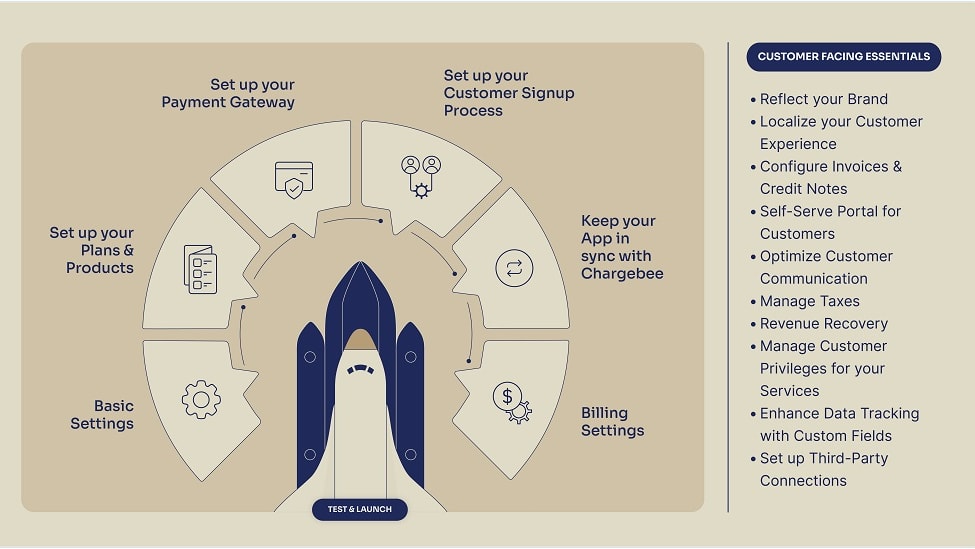
Chargebee is dedicated to providing a comprehensive subscription management solution, prioritizing features such as flexible billing models, automated invoicing, revenue recognition, and dunning management.
Chargebee
Billing and subscription management for SaaS B2B

Stripe primarily focuses on payment processing, offering a scalable platform with extensive developer tools and support for various payment methods.
Stripe
Stripe is a payment solution for ecommerce websites. It can be easily integrated to your website or app, and allows you to accept your customers' payments.
Chargebee and Stripe are prominent players in the realm of subscription billing management, yet they diverge in their primary focus and functionalities. One of the key distinctions between the two platforms lies in their core emphasis.
Chargebee is dedicated to providing a comprehensive subscription management solution, prioritizing features such as flexible billing models, automated invoicing, revenue recognition, and dunning management. It caters to businesses of all sizes with its robust set of tools, aiming to streamline the complexities of subscription billing processes for various industries and verticals.
In contrast, Stripe primarily focuses on payment processing, offering a scalable platform with extensive developer tools and support for various payment methods. While Stripe does offer subscription billing capabilities, its primary focus is on providing a seamless and secure payment experience, emphasizing flexibility and customization options for businesses to integrate payment processing seamlessly into their platforms.
Another notable difference between Chargebee and Stripe lies in their approach to customer support. Chargebee offers dedicated customer support across all its plans, including ticket support, chat support, and expert services. In comparison, Stripe primarily provides support through its extensive online documentation, developer resources, and community forums, with limited direct support options available.
Furthermore, there are disparities in the free plan limitations between the two platforms. While Chargebee offers a free plan, Stripe does not. However, Stripe's pricing model is transparent, with transaction fees applied to each successful payment processed through its platform, allowing businesses to pay for what they use without being tied to a fixed subscription plan.

Chargebee
Used by 364 members
Free access to the Performance plan until your first $1M in billing
Save up to $7,188

Stripe
Used by 7943 members
$500 in credits
Save up to $500
03 Chargebee pros and cons
What are the advantages of Chargebee?
- Comprehensive subscription management: Chargebee offers a wide range of features for subscription management, including flexible billing models, automated invoicing, dunning management, and revenue recognition. This makes it a one-stop solution for businesses looking to streamline their subscription billing processes.

- Integration capabilities: Chargebee seamlessly integrates with a variety of third-party tools and platforms, such as CRM systems, payment gateways, accounting software, and marketing automation tools. This ensures compatibility with your existing tech stack and enables a smooth workflow across different business functions.
- Scalability: Chargebee is designed to scale with your business, accommodating growth and expansion without requiring significant changes to your subscription management processes. It offers flexible pricing plans and features that can adapt to the evolving needs of your business as it grows.
- Robust reporting and analytics: Chargebee provides detailed reporting and analytics capabilities, allowing you to gain insights into your subscription metrics, revenue trends, customer behavior, and more. This data-driven approach empowers informed decision-making and helps optimize your subscription business for success.
- Dedicated customer support: Chargebee offers dedicated customer support across all its plans, including ticket support, chat support, and expert services. This ensures that you have access to assistance whenever you need it, helping you resolve any issues or challenges effectively.
What are the disadvantages of Chargebee?
- Learning curve: Due to its extensive feature set and customization options, Chargebee may have a steeper learning curve for users who are new to subscription management software. It may require some time and effort to fully understand and utilize all its capabilities effectively.

- Cost: While Chargebee offers a range of pricing plans to suit different business needs, some users may find the cost of subscription management software to be prohibitive, especially for smaller businesses or startups operating on a tight budget.
- Limited customization: Despite its flexibility, Chargebee may have limitations in terms of customization, especially for highly specialized or unique subscription models. Some businesses may find it challenging to tailor Chargebee to their specific requirements without extensive customization efforts.
- Dependency on third-party integrations: While Chargebee integrates with a variety of third-party tools and platforms, businesses may become dependent on these integrations for certain functionalities. Any disruptions or changes to these integrations could potentially impact the overall performance of Chargebee.
- Customer service response time: While Chargebee does offer dedicated customer support, some users may experience longer response times during peak periods or when dealing with complex issues. This could lead to delays in resolving issues or obtaining assistance when needed.
04 Stripe pros and cons
What are the advantages of Stripe?
- Simple integration: Stripe offers a user-friendly interface and extensive documentation, making it easy to integrate payment processing into websites, mobile apps, and other platforms. Its developer-friendly tools and APIs allow for seamless integration with minimal coding effort.
- Global reach: Stripe supports payments in over 135 currencies and offers extensive international coverage, allowing businesses to accept payments from customers around the world. It also provides support for various payment methods, including credit/debit cards, digital wallets, and local payment methods.
- Scalability: Stripe is designed to scale with your business, accommodating growth and handling high transaction volumes without compromising on performance or reliability. It offers customizable solutions for businesses of all sizes, from startups to enterprise-level organizations.
- Advanced fraud prevention: Stripe provides robust security features, including advanced fraud detection tools and machine learning algorithms, to help protect against fraudulent transactions. It also offers 3D Secure authentication and other security measures to enhance payment security and reduce chargeback risks.
- Developer tools and community: Stripe offers a wide range of developer tools, libraries, and resources to help developers build and customize payment solutions. It also has an active developer community and provides regular updates and improvements to its platform based on user feedback.
What are the disadvantages of Stripe?
- Transaction fees: While Stripe's pricing is transparent and straightforward, it does charge transaction fees for each successful payment processed through its platform. These fees can vary depending on factors such as the country, currency, and payment method used, which may impact the overall cost for businesses.
- Payout timing: Stripe's payout schedule may not be suitable for all businesses, as it typically takes several days for funds to be transferred to a bank account. This delay in payouts could pose cash flow challenges for businesses that require immediate access to funds.
- Limited customer support: Stripe primarily offers customer support through email and chat, with phone support available only to users on higher-tier plans. While its documentation and online resources are extensive, some users may find the lack of direct phone support to be a drawback, especially when dealing with urgent issues.
- Complexity for non-technical users: While Stripe's developer tools are powerful and flexible, they may be overwhelming for non-technical users or businesses without dedicated developer resources. Setting up and configuring payment processing may require technical expertise, which could be a barrier for some businesses.
- Regulatory compliance: Stripe's compliance requirements, such as Know Your Customer (KYC) and Anti-Money Laundering (AML) regulations, may vary depending on the region and industry. Ensuring compliance with these regulations can be time-consuming and may require additional resources and expertise.
Compare Stripe to other tools


Stripe vs Airwallex

Stripe vs Brex

Stripe vs Square Point of Sale

Stripe vs Shopify

Melio vs Stripe

Stripe vs PayPal
05 Chargebee compared to Stripe
Chargebee and Stripe are both leading solutions in the realm of subscription billing management. Chargebee offers comprehensive subscription management features, including flexible billing models, automated invoicing, and revenue recognition. It caters to businesses of all sizes with its robust set of tools.
Meanwhile, Stripe focuses primarily on payment processing, providing a scalable platform with extensive developer tools and support for various payment methods. While both platforms excel in their respective areas, the choice between Chargebee and Stripe ultimately depends on the specific needs and priorities of your business, whether it's comprehensive subscription management or seamless payment processing.
Is Chargebee better than Stripe?
 Is Chargebee better than Stripe?
Determining whether Chargebee is superior to Stripe hinges on your business's unique requirements. If your primary need revolves around managing complex subscription models, Chargebee emerges as the more suitable option due to its specialization in subscription billing and a wide array of features tailored for diverse billing scenarios.
On the other hand, Stripe stands out for businesses that prioritize payment processing efficiency, offering a robust platform designed to handle various payment options with ease, alongside powerful developer tools for customization.
What is Chargebee best used for?
Chargebee is best used for businesses that rely on subscription-based revenue models. It offers comprehensive subscription management features, including flexible billing options, automated invoicing, dunning management, and revenue recognition. Chargebee is particularly beneficial for businesses looking to streamline their subscription billing processes, scale their operations, and optimize revenue generation.
With its robust set of tools and customizable solutions, Chargebee empowers businesses to efficiently manage their subscription billing lifecycle, from acquisition to retention. Whether you're a SaaS company, e-commerce store, or any other subscription-based business, Chargebee provides the tools and capabilities needed to succeed in today's competitive market landscape.
Can Chargebee replace Stripe?
While Chargebee and Stripe serve overlapping functions in the realm of online payments, they fulfill different primary roles. Chargebee specializes in subscription management, offering features like flexible billing, automated invoicing, and revenue recognition.
On the other hand, Stripe primarily focuses on payment processing, providing a scalable platform with developer-friendly tools. While Chargebee integrates seamlessly with Stripe for payment processing, it doesn't replace it. Instead, Chargebee complements Stripe by enhancing subscription management capabilities. Thus, while Chargebee can't replace Stripe entirely, it augments its functionalities, making them a powerful combination for businesses seeking comprehensive subscription management solutions.
Is Chargebee cheaper than Stripe?
Determining whether Chargebee is cheaper than Stripe depends on various factors such as business size, transaction volume, and specific requirements. Chargebee’ pricing model typically operates on a subscription-based pricing model, offering various plans tailored to different business needs.
Stripe, on the other hand, charges transaction fees for each successful payment processed through its platform, in addition to any applicable subscription fees for optional features. While Chargebee may offer competitive pricing for subscription management, businesses should carefully compare the costs of both platforms based on their individual circumstances and priorities to determine which solution provides the best value for their needs.
Is there a better Payments software than Chargebee?
While Chargebee offers comprehensive subscription management features, it's crucial to explore alternative software options that may better align with your business's specific requirements.
There are several notable alternatives to Chargebee in the subscription billing management space. Some of these include Stripe Billing, Recurly, Zuora, and Rebilly.
Choosing the right subscription billing software depends on factors such as your business's size, industry, scalability needs, and desired features. However, if you prioritize a solution known for its flexibility, scalability, and extensive integration options, Chargebee may indeed be the ideal choice for your subscription management needs.

Chargebee
Premium
Billing and subscription management for SaaS B2B
Free access to the Performance plan until your first $1M in billing
Save up to $7,188
06 Stripe compared to Chargebee
Stripe and Chargebee are both prominent players in the realm of online payments and subscription management, but they serve different primary functions. Stripe primarily focuses on payment processing, providing a scalable platform with developer-friendly tools and support for various payment methods.
In contrast, Chargebee specializes in subscription management, offering features such as flexible billing, automated invoicing, and revenue recognition. While Stripe excels in providing a seamless payment experience, Chargebee enhances subscription management capabilities.
Is Stripe better than Chargebee?
Deciding if Stripe is better than Chargebee depends on your business's specific needs. Stripe shines for companies seeking a streamlined, developer-friendly payment processing solution. Its platform excels in handling transactions with a variety of payment methods, making it ideal for businesses looking to simplify their payment infrastructure.
Conversely, Chargebee is the go-to for organizations requiring sophisticated subscription management features. If your priority lies in the intricacies of managing subscriptions, including billing flexibility and automation, Chargebee might be your preferred choice.
What is Stripe best used for?
Stripe is best used for businesses seeking a robust and scalable platform for online payment processing. With its developer-friendly tools and extensive documentation, Stripe enables seamless integration of payment functionality into websites, mobile apps, and other digital platforms. It supports a wide range of payment methods and currencies, making it suitable for businesses with diverse customer bases.
Stripe's advanced fraud prevention measures and security features ensure transaction security and minimize chargeback risks. Whether you're a small startup or a large enterprise, Stripe provides the infrastructure and support needed to facilitate secure and efficient online payments, driving business growth and customer satisfaction.
Can Stripe replace Chargebee?
While Stripe excels in online payment processing, it doesn't directly replace Chargebee's comprehensive subscription management functionalities. Chargebee specializes in managing subscription billing cycles, offering features like flexible billing models, automated invoicing, and revenue recognition.
While Stripe can handle subscription payments, it lacks the robust subscription management tools provided by Chargebee. Instead, Stripe and Chargebee often complement each other, with businesses integrating both platforms for a complete subscription billing solution. Therefore, while Stripe can handle certain aspects of subscription billing, it's not a direct replacement for Chargebee's specialized subscription management capabilities.
Is Stripe cheaper than Chargebee?
Determining whether Stripe is cheaper than Chargebee depends on various factors such as business size, transaction volume, and specific requirements. Stripe’s pricing models primarily charges transaction fees for each successful payment processed through its platform, in addition to any applicable subscription fees for optional features.
Chargebee, on the other hand, operates on a subscription-based pricing model, offering various plans tailored to different business needs. While Chargebee may offer competitive pricing for subscription management, businesses should carefully compare the costs of both platforms based on their individual circumstances and priorities to determine which solution provides the best value for their needs.
Is there a better Payments software than Stripe?
When assessing software options, it's essential to explore alternatives to Stripe that may better align with your business's unique needs.
Several noteworthy alternatives exist within the realm of online payment processing, including PayPal, Square, Braintree, and Authorize.Net.
Choosing the right payment processing software depends on factors such as transaction volume, business model, desired features, and integration capabilities. However, if you prioritize a platform known for its reliability, scalability, and developer-friendly tools, Stripe might indeed be the optimal choice for your online payment processing needs.

Stripe
Premium
Manage your online payments
$500 in credits
Save up to $500
07 Features comparison
Chargebee and Stripe are Equally Adept in Subscription Billing Capabilities
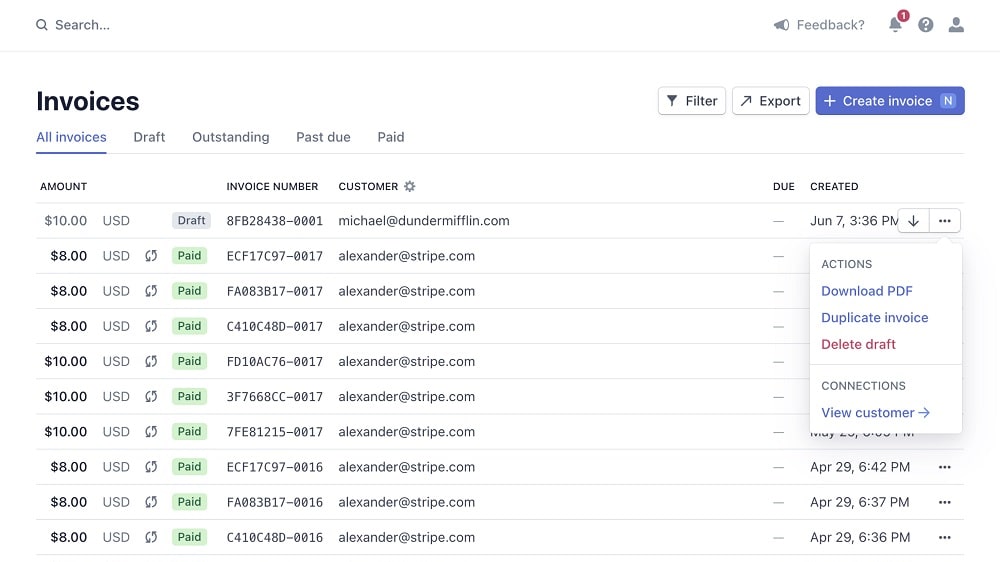
For instance, they both enable businesses to set up recurring billing for subscription-based services, customize billing frequencies, and offer trial periods to attract and retain customers.
Both Chargebee and Stripe excel in subscription billing capabilities, offering a range of features to accommodate diverse business needs. For instance, they both enable businesses to set up recurring billing for subscription-based services, customize billing frequencies, and offer trial periods to attract and retain customers.
Additionally, both platforms support flexible plan configurations, allowing businesses to tailor subscription offerings to individual customer preferences. Therefore, in terms of subscription billing functionality, businesses can rely on both Chargebee and Stripe to effectively manage their subscription-based revenue streams and optimize customer retention strategies.
Stripe Outranks Chargebee in International Payment Support and Global Expansion

Stripe allows businesses to accept payments in multiple currencies and automatically handles currency conversions, simplifying transactions for customers worldwide.
Stripe's extensive international support capabilities give it an edge over Chargebee for businesses seeking to expand globally. For example, Stripe allows businesses to accept payments in multiple currencies and automatically handles currency conversions, simplifying transactions for customers worldwide.
Additionally, Stripe provides access to localized payment methods, such as Alipay and WeChat Pay in China, and supports compliance requirements for various countries, ensuring smooth international transactions. In contrast, Chargebee's international support features are not as explicitly highlighted, making Stripe the preferred choice for businesses with aspirations of global expansion and seamless cross-border payment processing.
Stripe Surpasses Chargebee in User-Friendliness with its Intuitive Interface

Stripe distinguishes itself for its user-friendly interface, offering a straightforward setup process and intuitive navigation.
Stripe distinguishes itself for its user-friendly interface, offering a straightforward setup process and intuitive navigation. Its dashboard provides a clear overview of transactions, allowing users to monitor payments with ease. Additionally, Stripe's extensive documentation and developer resources streamline integration for businesses of all sizes. For instance, integrating Stripe into an e-commerce platform like Shopify requires minimal technical expertise, enabling merchants to start accepting payments swiftly.
Chargebee, while robust in subscription management, may present a steeper learning curve for users due to its complex features and configuration options. Hence, for businesses prioritizing simplicity and ease-of-use, Stripe emerges as the preferred choice over Chargebee.
Chargebee Excels Ahead of Stripe in Automated Recurring Payment Management for B2B SaaS Growth

Chargebee automates subscription upgrades, downgrades, and proration calculations, ensuring accurate billing and minimizing errors.
Chargebee's automated recurring payment management sets it apart from Stripe by reducing unintentional churn and simplifying complex payment scenarios. For instance, Chargebee automates subscription upgrades, downgrades, and proration calculations, ensuring accurate billing and minimizing errors. This automation eliminates the need for manual intervention or custom development, saving businesses time and resources.
Additionally, Chargebee's dunning management automates payment retries and communicates with customers about failed payments, reducing involuntary churn. For B2B SaaS businesses seeking efficient payment processes and sustained growth, Chargebee's automation capabilities provide a significant advantage over Stripe.
Chargebee Outperforms Stripe in Automated Dunning Management for Enhanced Revenue Recovery
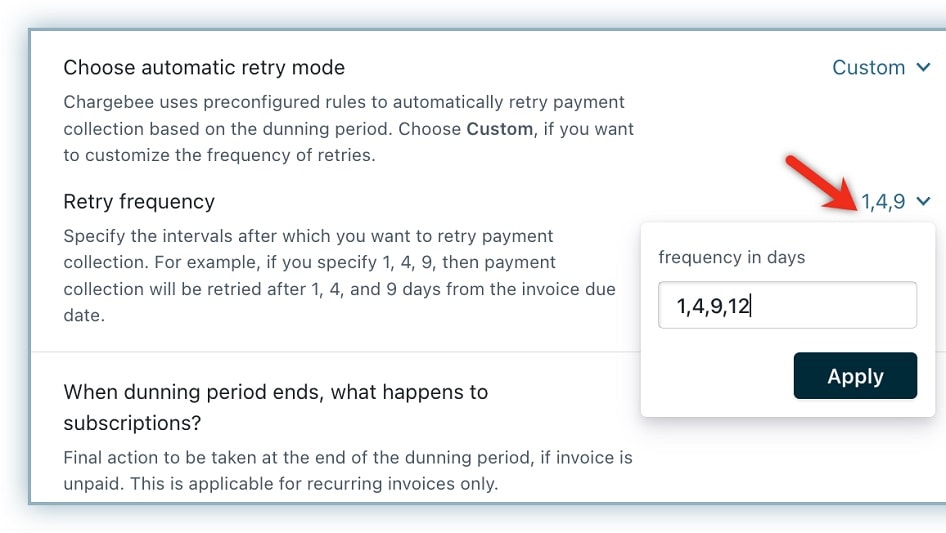
Chargebee automates payment retries, sends personalized email reminders, and adjusts subscription statuses based on payment outcomes, ensuring uninterrupted revenue streams for businesses.
Chargebee's automated dunning management feature sets it apart from Stripe by efficiently recovering failed payments and minimizing churn. For example, Chargebee automates payment retries, sends personalized email reminders, and adjusts subscription statuses based on payment outcomes, ensuring uninterrupted revenue streams for businesses.
In contrast, Stripe lacks a comparable dunning management feature, leaving businesses vulnerable to revenue loss from failed payments. Therefore, for businesses prioritizing revenue recovery and churn reduction, Chargebee emerges as the superior choice over Stripe due to its robust automated dunning capabilities.
Stripe Outweighs Chargebee in Comprehensive Analytics and Reporting Capabilities
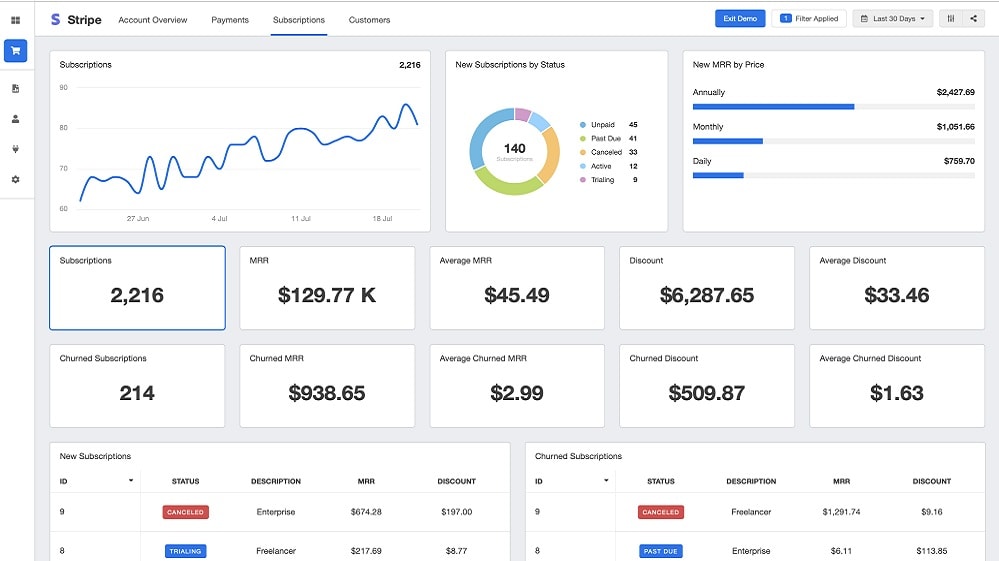
For instance, Stripe provides in-depth analysis of customer behavior, such as churn rates, customer lifetime value, and retention metrics.
Stripe outshines Chargebee in analytics and reporting, offering detailed insights beyond transaction volumes and revenue. For instance, Stripe provides in-depth analysis of customer behavior, such as churn rates, customer lifetime value, and retention metrics. This enables businesses to gain a deeper understanding of their payment data and make informed decisions to optimize revenue streams.
Moreover, Stripe offers customizable reporting tools that allow businesses to generate tailored reports based on specific metrics or timeframes. With its robust analytics capabilities, Stripe provides businesses with valuable insights to drive strategic growth and maximize profitability, setting it apart from Chargebee in this aspect.
Stripe Outshines Chargebee in Integration Flexibility Across Diverse Platforms

For instance, Stripe seamlessly integrates with accounting software such as QuickBooks, facilitating streamlined financial management for businesses.
Stripe's integration capabilities outshine Chargebee's due to its extensive compatibility with a wide range of platforms. For instance, Stripe seamlessly integrates with accounting software such as QuickBooks, facilitating streamlined financial management for businesses. Moreover, Stripe's integration with communication tools like Slack enhances collaboration and communication within teams. Notably, Stripe's API allows for integration with advanced CRM systems like Salesforce, empowering businesses to leverage customer data efficiently.
While Chargebee also offers integrations, Stripe's adaptability across diverse platforms makes it the preferred choice for businesses seeking seamless integration solutions tailored to their specific needs.
08 Chargebee vs Stripe: Which is the best for your business?
Chargebee is the best tool for you if:
- Your business demands intricate subscription management capabilities, such as customizable billing cycles, prorated charges, and seamless upgrades or downgrades between different subscription tiers.
- You need advanced automation for invoicing and dunning processes, aiming to minimize manual effort while ensuring accuracy and compliance in your financial operations.
- You're looking for detailed analytics and reporting features that provide deep insights into your revenue, customer churn, and subscription metrics to inform strategic decisions.
- You require a solution that integrates effortlessly with a wide range of third-party applications, including CRMs, accounting software, and customer support tools, enhancing your ecosystem's functionality.
- Your company values a platform that offers flexible pricing plans and scalability, allowing you to start small but easily expand as your business grows and your needs evolve.
 Your business demands intricate subscription management capabilities, such as customizable billing cycles, prorated charges, and seamless upgrades or downgrades between different subscription tiers.
Stripe is the best tool for you if:
- You prioritize a seamless, efficient payment processing system that supports a wide array of payment methods globally, including credit cards, digital wallets, and international currencies.
- Your development team requires a highly customizable platform with extensive APIs and documentation, enabling deep integration into your existing systems for a tailored payment experience.
- You need a solution that offers real-time fraud detection and robust security measures to protect your transactions and customer data against online threats and fraud.
- You are looking for a platform that supports both one-time payments and recurring billing with ease, making it suitable for a variety of business models and payment scenarios.
- Your business benefits from a straightforward, pay-as-you-go pricing model without the need for long-term contracts or hidden fees, providing transparency and flexibility in managing costs.
Chargebee
Used by 364 members
Free access to the Performance plan until your first $1M in billing
Save up to $7,188
Stripe
Used by 7943 members
$500 in credits
Save up to $500
09 Alternatives to Chargebee & Stripe

Shopify
Used by 2440 members
$1/month for the first 3 months + 25% off annual plans
Save up to $2,734

GoCardless
Used by 181 members
Waived fees for the first 90 days
Save up to $140

Apphud
Used by 138 members

Maxio (ex. Chargify)
Used by 75 members
10 Promotions on Payments software
Chargebee and Stripe are great tools, but Secret offers promo codes with discounts on over 2230+ different SaaS solutions. New deals are added regularly, helping you save money on your online subscriptions. Get access to codes for other Payments software you might want to purchase

Airwallex deal
2% uncapped cashback on corporate cards

Memberstack promo code 2026
50% off for 6 months

Promo code for Stripe Atlas
$50 off for the incorporation of your company

Qonto promo code 2026
2 months free on the Basic and Smart plans

Melio promotion
Get a $200 gift card on your first payment of $500
GoCardless free credits
Waived fees for the first 90 days

Razorpay coupon code
First $50,000 in transactions free

Deal for Cacheflow
The Startup Accelerator Plan for $5,000

Brex discounts
50,000 points for $100,000 deposits in Brex business accounts

SumUp discount code
10% off 1st purchase
Start saving on the best SaaS
Secret has already helped tens of thousands of startups save millions on the best SaaS like Microsoft Teams, Google Workspace & many more. Join Secret now to buy software the smart way.