


Cloud computing services are fundamental to modern businesses' digital infrastructure, enabling efficient data storage, application deployment, and scalable computing resources. Choosing the right cloud provider is crucial for maximizing performance, minimizing costs, and achieving business objectives.
In this comparison, we explore two leading cloud platforms—DigitalOcean vs Google Cloud. By examining their features, pricing models, and scalability options, you can make an informed decision to meet your organization's specific needs and propel your digital initiatives forward. Let's delve into the details and find out which cloud solution is the perfect fit for your business.
- 01 DigitalOcean vs Google Cloud (GCP): overview
- 02 What's the difference between DigitalOcean and Google Cloud (GCP)?
- 03 DigitalOcean pros and cons
- 04 Google Cloud (GCP) pros and cons
- 05 DigitalOcean compared to Google Cloud (GCP)
- 06 Google Cloud (GCP) compared to DigitalOcean
- 07 Features comparison
- 08 DigitalOcean vs Google Cloud (GCP): Which is the best for your business?
- 09 Alternatives to DigitalOcean & Google Cloud (GCP)
- 10 Promotions on Cloud Storage software
Start saving on the best SaaS
Secret has already helped tens of thousands of startups save millions on the best SaaS like Microsoft Teams, Google Workspace & many more. Join Secret now to buy software the smart way.

01 DigitalOcean vs Google Cloud (GCP): overview
DigitalOcean and Google Cloud are two prominent players in the realm of cloud computing services, each with its own set of strengths tailored to different user requirements.
DigitalOcean is renowned for its simplicity and developer-centric approach. It offers straightforward cloud solutions suitable for startups and small to medium-sized businesses, with an emphasis on ease of use and transparent pricing. On the other hand, Google Cloud stands out for its robust infrastructure and extensive range of services. It caters to enterprises and large-scale organizations with complex computing needs, offering high performance, scalability, and advanced technologies such as AI and machine learning.
Now, let's delve into the DigitalOcean vs. Google Cloud comparison to help you make an informed decision when selecting the right cloud computing platform for your specific requirements.

Positive reviews
Both platforms receive strong reviews for their scalability and reliability. DigitalOcean is often praised for its simplicity and developer-friendly approach, while Google Cloud is recognized for its advanced features and infrastructure.

DigitalOcean
Google Cloud (GCP)
Customer support
DigitalOcean provides solid documentation and community support, but some users may find their direct support options limited. Google Cloud offers comprehensive support with various tiers, including 24/7 phone support for higher-tier plans.
DigitalOcean
Google Cloud (GCP)
Ease of use
DigitalOcean is known for its user-friendly interface and ease of setup, making it a favorite for smaller teams. Google Cloud offers powerful services but with a steeper learning curve, although its interface has improved over time.
DigitalOcean
Google Cloud (GCP)
Compute options
DigitalOcean's Droplets are easy to use and sufficient for most use cases, but they lack the variety of options that Google Cloud provides with its Compute Engine, Kubernetes Engine, and other specialized VM options.
DigitalOcean
Google Cloud (GCP)
Network services
DigitalOcean provides basic networking features like VPCs and load balancers, suitable for most applications. Google Cloud's networking capabilities are more extensive, including a global fiber network, CDN, and advanced network services.
DigitalOcean
Google Cloud (GCP)
Security
DigitalOcean has made significant improvements in security, but Google Cloud's security offerings are among the industry's most robust, with cutting-edge protection and compliance certifications.
DigitalOcean
Google Cloud (GCP)
Global reach
DigitalOcean's data centers cover key global locations, which is often enough for many businesses. Google Cloud boasts a vast network of data centers worldwide, offering significant advantages in terms of reach and performance.
DigitalOcean
Google Cloud (GCP)
Storage solutions
DigitalOcean offers Spaces and Volumes, which are simple and easy to integrate. Google Cloud excels with a broader range of storage services like Persistent Disks, Cloud Storage, and Filestore, catering to more diverse needs.
DigitalOcean
Google Cloud (GCP)
Pricing plans
DigitalOcean offers straightforward pricing with predictable flat-rate plans that appeal to small and medium-sized businesses. Google Cloud has a more complex pricing structure with a pay-as-you-go model that might be less predictable but can be cost-effective at scale.
DigitalOcean
Google Cloud (GCP)
Integrations
DigitalOcean integrates well with tools like GitHub and Slack, focusing on the needs of developers. Google Cloud provides extensive integrations across Google services and third-party solutions, including advanced AI and machine learning tools.
DigitalOcean
Google Cloud (GCP)
02 What's the difference between DigitalOcean and Google Cloud (GCP)?

DigitalOcean's Pricing Structure Allows You to Choose the Products & Solutions You Need
DigitalOcean
Cloud Computing Platform

Google Cloud's Pricing Calculator Gives You an Estimate of the Cost of the Products You Require
Google Cloud (GCP)
Google Cloud helps you accelerate your business transformation by giving you the cloud services you need.
When comparing DigitalOcean and Google Cloud, both platforms offer powerful cloud computing solutions tailored to different user needs and preferences. DigitalOcean is renowned for its simplicity and developer-friendly interface, making it an ideal choice for startups and small to medium-sized businesses looking for straightforward cloud solutions. On the other hand, Google Cloud stands out for its robust infrastructure and extensive suite of services, catering to enterprises and large-scale organizations with complex computing requirements.
One of the key differences between DigitalOcean and Google Cloud lies in their pricing models and offerings. DigitalOcean is known for its transparent and predictable pricing, with a focus on affordability and simplicity. It offers a range of pricing plans with fixed monthly rates, making it easy for users to budget and scale their resources as needed. In contrast, Google Cloud provides a more flexible pricing structure, with options for pay-as-you-go pricing and various discounts based on usage volume and commitment.
Another significant difference between DigitalOcean and Google Cloud is the level of scalability and performance they offer. While DigitalOcean is suitable for smaller workloads and applications, Google Cloud excels in handling large-scale workloads and demanding computing tasks. With its extensive network of data centers and cutting-edge technologies like AI and machine learning, Google Cloud provides unmatched performance and scalability for mission-critical workloads.
Additionally, DigitalOcean and Google Cloud differ in terms of their ecosystem and integrations. DigitalOcean offers a curated set of services and integrations, focusing on simplicity and ease of use. In contrast, Google Cloud provides a comprehensive ecosystem with extensive integrations with other Google services and third-party platforms, offering users a wide range of options for building and deploying innovative solutions.

Google Cloud (GCP)
Premium
Cloud services by Google
$2,000 in credits for 1 year if you never raised funds // $350,000 in credits for 2 years if you did
Save up to $350,000
03 DigitalOcean pros and cons
What are the advantages of DigitalOcean?
- Simplicity: DigitalOcean is known for its user-friendly interface and straightforward setup process. It's designed to be easy to use, making it accessible for developers of all skill levels.

- Affordability: DigitalOcean offers competitive pricing with transparent and predictable billing. It's particularly cost-effective for small to medium-sized businesses and startups looking to manage their cloud infrastructure without breaking the bank.
- Scalability: DigitalOcean provides scalable cloud solutions that allow businesses to easily adjust their resources based on demand. Whether you're launching a new project or experiencing sudden growth, DigitalOcean makes it simple to scale up or down as needed.
- Documentation and community: DigitalOcean offers comprehensive documentation and a vibrant community of developers, making it easy to find resources, tutorials, and support when needed. This fosters learning and collaboration among users.
- Performance: DigitalOcean's infrastructure is built on high-performance servers and SSD-based storage, ensuring fast and reliable performance for your applications and websites.
What are the disadvantages of DigitalOcean?
- Limited service offering: Compared to larger cloud providers like AWS or Google Cloud, DigitalOcean has a more limited range of services and features. While it covers the essentials well, it may lack some advanced functionalities required by larger enterprises.

- Less global reach: DigitalOcean has fewer data center locations compared to some of its competitors, which may result in higher latency for users in certain regions.
- Limited support options: DigitalOcean's support options are primarily community-driven, with limited availability for direct support. While there is a vast amount of documentation and community forums available, businesses may find the lack of dedicated support options challenging for critical issues.
- Complex networking features: DigitalOcean's networking features are relatively basic compared to some other cloud providers. Businesses with complex networking requirements may find DigitalOcean's networking capabilities limiting.
- Less enterprise focus: DigitalOcean primarily targets small to medium-sized businesses and startups, so its services may not be as tailored to the needs of large enterprises with complex requirements and regulatory compliance needs.
Compare DigitalOcean to other tools


DigitalOcean vs Linode


OVHcloud vs DigitalOcean

DigitalOcean vs Microsoft Azure

DigitalOcean vs AWS Activate

Heroku vs DigitalOcean

Scaleway vs DigitalOcean
04 Google Cloud (GCP) pros and cons
What are the advantages of Google Cloud (GCP)?
- Scalability: Google Cloud offers virtually unlimited scalability, allowing businesses to easily scale their infrastructure and resources up or down based on demand. This makes it ideal for handling unpredictable workloads and sudden spikes in traffic.
- Global infrastructure: Google Cloud operates one of the largest and most advanced networks of data centers worldwide. With data centers strategically located across the globe, businesses can achieve low-latency access to their applications and services from virtually anywhere in the world.
- Advanced technologies: Google Cloud leverages cutting-edge technologies such as artificial intelligence (AI), machine learning (ML), and data analytics to empower businesses with powerful insights and capabilities. From advanced data processing to predictive analytics, Google Cloud's suite of tools enables businesses to innovate and stay ahead of the competition.
- Integrated ecosystem: Google Cloud seamlessly integrates with other Google services such as Google Workspace, Google Analytics, and Google Maps, providing businesses with a cohesive ecosystem for building and deploying cloud-native applications. This integration simplifies development and enhances productivity by leveraging familiar tools and services.
- Security and compliance: Google Cloud prioritizes security and compliance, offering robust security features and certifications to protect businesses' data and infrastructure. With advanced security controls, encryption, and compliance certifications such as SOC 2 and ISO 27001, Google Cloud provides businesses with peace of mind knowing their data is secure and compliant with industry standards.
What are the disadvantages of Google Cloud (GCP)?
- Complexity: Google Cloud's extensive suite of services and advanced features can be overwhelming for beginners and small businesses. The platform's complexity may require a steep learning curve and significant investment in training and expertise to fully leverage its capabilities.
- Cost: While Google Cloud offers competitive pricing, the cost of using certain services and resources can add up quickly, especially for businesses with large-scale deployments or high-demand workloads. Managing costs and optimizing resource usage requires careful planning and monitoring to avoid unexpected expenses.
- Support: Google Cloud's support options may be limited compared to some other cloud providers. While Google offers various support plans, including community forums, documentation, and paid support packages, businesses may find the level of support insufficient for addressing complex issues or critical incidents.
- Vendor lock-in: As with any cloud provider, there is a risk of vendor lock-in when using Google Cloud. Businesses that heavily rely on Google Cloud's proprietary services and technologies may face challenges migrating to alternative platforms in the future.
- Compliance challenges: While Google Cloud offers robust security and compliance features, navigating regulatory requirements and compliance standards can still be challenging for businesses operating in highly regulated industries. Ensuring compliance with regulations such as GDPR, HIPAA, and PCI DSS requires careful consideration and implementation of appropriate controls and safeguards.
Compare Google Cloud (GCP) to other tools


Google Cloud (GCP) vs Cloudflare
Google Cloud (GCP) vs AWS Activate

Google Cloud (GCP) vs Firebase

Google Cloud (GCP) vs Google Drive
Microsoft Azure vs Google Cloud (GCP)

Google Cloud (GCP) vs IBM Cloud
05 DigitalOcean compared to Google Cloud (GCP)
DigitalOcean offers simplicity and affordability, catering well to startups and small to medium-sized businesses with its user-friendly interface and transparent pricing. In contrast, Google Cloud provides extensive scalability, advanced technologies, and a global infrastructure ideal for enterprises with demanding computing needs.
While DigitalOcean prioritizes ease of use and straightforward solutions, Google Cloud excels in performance, security, and integrated services. The choice between DigitalOcean and Google Cloud hinges on factors such as budget, scalability requirements, and the need for advanced features, ultimately tailored to the specific needs and preferences of businesses across different scales and industries.
Is DigitalOcean better than Google Cloud (GCP)?
 Is DigitalOcean better than Google Cloud (GCP)?
Choosing between DigitalOcean and Google Cloud boils down to assessing the unique requirements of a project or organization. For those seeking a straightforward and cost-effective hosting solution, DigitalOcean emerges as a strong contender, especially appealing to developers and small businesses aiming for rapid deployment without the complexity often associated with larger cloud providers.
On the other hand, Google Cloud is unmatched in its ability to support large-scale, complex projects, offering an extensive range of cutting-edge services and technologies. It caters to organizations that require robust infrastructure, comprehensive security measures, and the ability to scale seamlessly on a global scale.
What is DigitalOcean best used for?
DigitalOcean is best used for hosting web applications, websites, and development environments. Its simplicity and affordability make it ideal for startups, small businesses, and individual developers looking to deploy and manage their applications in the cloud without the complexity of larger providers.
DigitalOcean's intuitive interface and straightforward pricing structure make it easy to launch virtual servers, known as droplets, and scale resources as needed. Additionally, DigitalOcean offers a variety of pre-configured one-click applications and development stacks, making it convenient for developers to quickly set up and deploy their projects with minimal hassle.
Can DigitalOcean replace Google Cloud (GCP)?
While DigitalOcean offers simplicity and affordability for hosting web applications and small-scale projects, it may not directly replace Google Cloud for enterprises with extensive computing needs. Google Cloud provides advanced technologies, global infrastructure, and comprehensive services tailored to handle large-scale workloads and complex requirements.
While DigitalOcean excels in user-friendliness and cost-effectiveness, Google Cloud offers unmatched scalability, performance, and integration with other Google services. Ultimately, whether DigitalOcean can replace Google Cloud depends on the specific needs and priorities of businesses. While DigitalOcean may suffice for smaller projects, Google Cloud remains the preferred choice for enterprises requiring advanced capabilities and extensive resources.
Is DigitalOcean cheaper than Google Cloud (GCP)?
DigitalOcean’s pricing is generally considered more cost-effective than Google Cloud for small to medium-sized projects and startups. With its straightforward pricing model and competitive rates, DigitalOcean offers predictable billing and affordability, making it accessible to businesses with limited budgets.
However, Google Cloud provides extensive scalability and advanced features tailored to larger enterprises, which may justify its higher cost for businesses with complex computing needs.
Is there a better Cloud Storage software than DigitalOcean?
When assessing cloud computing solutions, it's essential to consider whether there might be a better fit for your specific infrastructure needs.
Some notable alternatives to DigitalOcean in the cloud computing space include Google Cloud Platform, Amazon Web Services (AWS), Microsoft Azure, and Linode.
The choice of cloud computing platform depends on your organization's unique infrastructure requirements, scalability needs, and budget constraints. While DigitalOcean offers simplicity and affordability, other platforms may provide more extensive service offerings, global infrastructure, or advanced capabilities that better suit your business objectives and technical requirements.
06 Google Cloud (GCP) compared to DigitalOcean
Google Cloud and DigitalOcean are both prominent players in the cloud computing industry, each offering distinct advantages. Google Cloud boasts extensive scalability, advanced technologies, and a global network of data centers, making it ideal for large enterprises and complex workloads.
In contrast, DigitalOcean focuses on simplicity, affordability, and ease of use, catering primarily to startups and small to medium-sized businesses. While Google Cloud excels in performance and comprehensive services, DigitalOcean offers straightforward solutions and transparent pricing.
Is Google Cloud (GCP) better than DigitalOcean?
When evaluating Google Cloud against DigitalOcean, it's essential to consider the scope and nature of your project. Google Cloud shines for organizations that demand expansive scalability, robust security features, and access to pioneering technologies. Its infrastructure is designed to support the most demanding applications and workloads, providing a vast array of tools and services that cater to a wide range of industries.
On the flip side, DigitalOcean is highly regarded for its simplicity and cost-effectiveness, making it a go-to option for developers, startups, and smaller businesses that prioritize ease of use and budget-friendly solutions over extensive scalability.
What is Google Cloud (GCP) best used for?
Google Cloud is best used for enterprises and organizations requiring extensive scalability, advanced technologies, and comprehensive cloud services. With its global network of data centers, Google Cloud excels in handling large-scale workloads, complex computing tasks, and data-intensive applications. It is ideal for businesses leveraging advanced technologies such as artificial intelligence (AI), machine learning (ML), data analytics, and Internet of Things (IoT).
Google Cloud's integrated ecosystem and extensive suite of services enable businesses to innovate and drive digital transformation initiatives effectively. Whether deploying mission-critical applications, building AI-powered solutions, or managing big data workloads, Google Cloud provides the infrastructure and tools to meet diverse business needs.
Can Google Cloud (GCP) replace DigitalOcean?
While Google Cloud offers extensive scalability, advanced technologies, and a comprehensive suite of services, it may not necessarily replace DigitalOcean for all users. DigitalOcean's simplicity, affordability, and user-friendly interface cater well to startups, small to medium-sized businesses, and individual developers. It provides straightforward cloud solutions without the complexity of larger providers.
However, Google Cloud excels in handling large-scale workloads, complex computing tasks, and leveraging advanced technologies like AI and ML. Whether Google Cloud can replace DigitalOcean depends on specific business needs, scalability requirements, and the need for advanced features and global infrastructure.
Is Google Cloud (GCP) cheaper than DigitalOcean?
Determining whether Google Cloud is cheaper than DigitalOcean depends on various factors such as usage patterns, resource requirements, and pricing models.
While DigitalOcean is known for its simplicity and affordability, offering straightforward pricing and predictable billing, Google Cloud provides extensive scalability and advanced features, which may result in higher costs for certain workloads. Google Cloud's pricing is based on usage volume and resource consumption, offering flexibility but potentially leading to higher expenses for large-scale deployments.
Is there a better Cloud Computing software than Google Cloud (GCP)?
When evaluating cloud computing solutions, it's important to consider whether there might be a better fit for your specific infrastructure needs.
Some notable alternatives to Google Cloud in the cloud computing space include DigitalOcean, Oracle Cloud, IBM Cloud, and OVHcloud.
The choice of cloud computing platform depends on your organization's unique requirements, scalability needs, and budget constraints. While Google Cloud offers extensive scalability and advanced technologies, other platforms may provide better pricing options, specialized services, or industry-specific solutions that better align with your business objectives and technical requirements.
Google Cloud (GCP)
Premium
Cloud services by Google
$2,000 in credits for 1 year if you never raised funds // $350,000 in credits for 2 years if you did
Save up to $350,000
07 Features comparison
DigitalOcean Simplifies Cloud Computing Experience Compared to Google Cloud

DigitalOcean's Fully Managed Solution Gives You the Power to Deploy Your Apps Quickly & Easily
When it comes to ease of use, DigitalOcean indeed has a slight edge over Google Cloud. DigitalOcean's clean, minimalist user interface streamlines the process of navigating through its platform, appealing to beginners and experienced users alike. For instance, its straightforward droplet creation process allows users to deploy virtual servers with just a few clicks. Additionally, DigitalOcean offers an extensive library of tutorials and guides, empowering users with the knowledge needed to navigate the platform efficiently.
Conversely, Google Cloud presents a steep learning curve due to its comprehensive array of services, requiring users to invest more time in familiarizing themselves with the platform. Therefore, for those seeking simplicity and user-friendliness, DigitalOcean emerges as the preferred choice in cloud computing.
DigitalOcean Excels in Streamlined Database Management Compared to Google Cloud

Focus on Your App Creation and Let DigitalOcean Manage Your Database, from MongoDB to Redis
DigitalOcean distinguishes itself in database management with its fully managed MySQL, PostgreSQL, and Redis databases. These offerings not only deliver top-tier performance but also alleviate the management burden for tech teams, allowing them to focus on core tasks. For instance, DigitalOcean's managed databases automate routine administrative tasks such as backups, updates, and scaling, providing a hassle-free experience for users.
While Google Cloud offers an impressive array of database solutions, including Cloud SQL and Cloud Bigtable, it does not match the simplicity and ease of management that DigitalOcean brings to the table. Therefore, for businesses prioritizing streamlined database management, DigitalOcean emerges as the superior choice.
DigitalOcean and Google Cloud Provide Comparable Hosting and Storage Capacities

DigitalOcean Ensures the Security of Your App and Information Through Different Pillars
When it comes to hosting and storing data, both DigitalOcean and Google Cloud offer reliable and scalable solutions. DigitalOcean facilitates easy hosting and secure access to data in the cloud, providing users with a straightforward platform for deploying and managing applications.
Similarly, Google Cloud's Compute Engine service delivers a robust infrastructure for hosting and storing data, ensuring reliability and scalability for businesses of all sizes. Both services prioritize data security and accessibility, offering features such as encryption, backups, and access controls to safeguard valuable information. Therefore, businesses can trust both DigitalOcean and Google Cloud for their hosting and storage needs.
Google Cloud Dominates in Big Data and Analytics Solutions Over DigitalOcean
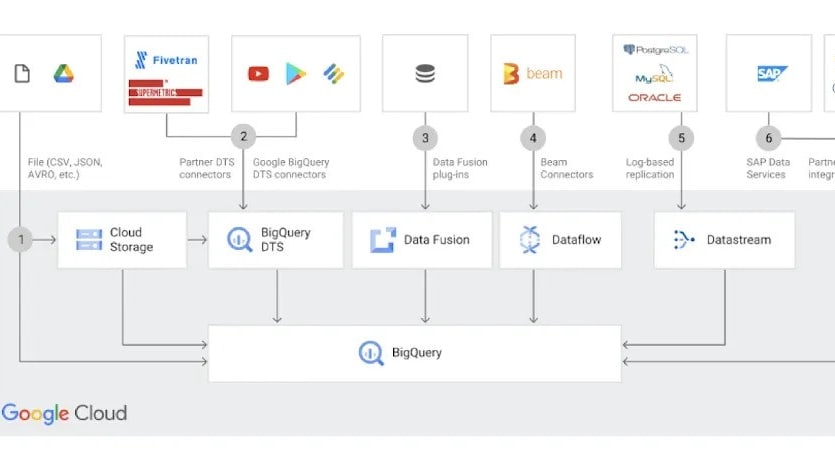
Google Cloud Allows You to Bring Data from Multiple Sources Together in BigQuery
For big data and analytics, Google Cloud outperforms DigitalOcean. Google Cloud offers a comprehensive suite of tools tailored for various data-related tasks. For instance, BigQuery enables efficient data warehousing and analytics, allowing users to analyze vast datasets quickly. Additionally, Dataflow facilitates stream and batch data processing, while Dataprep streamlines the data preparation process.
In contrast, DigitalOcean, while proficient in hosting and managing data, lacks the specialized tools for advanced analytics provided by Google Cloud. Therefore, for businesses prioritizing big data analytics capabilities, Google Cloud emerges as the preferred solution.
Both DigitalOcean and Google Cloud Shine in Kubernetes Services

DigitalOcean's Kubernetes Service is Easy to Set Up and Manage
Both DigitalOcean and Google Cloud excel in Kubernetes services. DigitalOcean streamlines the deployment and management of containerized applications with its Kubernetes service. For instance, DigitalOcean's Kubernetes service automates the distribution of containers across Droplets, simplifying the orchestration process for users.
Similarly, Google Cloud offers robust Kubernetes capabilities through its Google Kubernetes Engine (GKE). GKE provides users with a managed Kubernetes environment, enabling seamless container orchestration and scaling. Both DigitalOcean and Google Cloud excel in offering reliable and efficient Kubernetes services, catering to the needs of developers and businesses seeking containerized application deployment and management solutions.
Google Cloud Surpasses DigitalOcean in Machine Learning and AI Capabilities
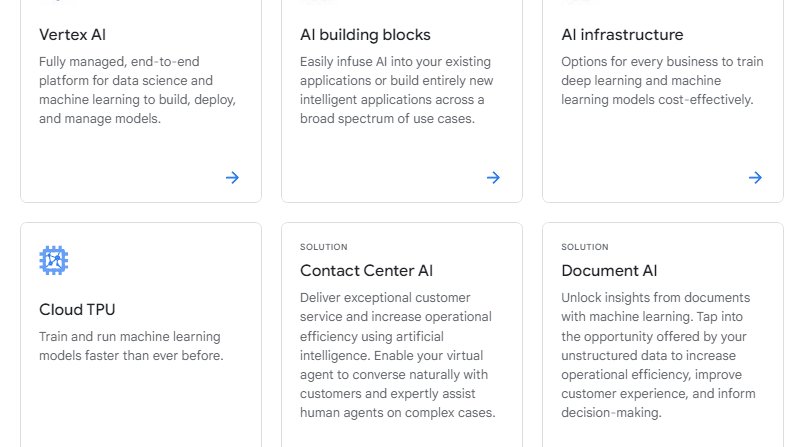
Google Cloud's Machine Learning & AI Products & Solutions Include Vertex AI, AI Building Blocks, and Cloud TPU
Google Cloud establishes superiority over DigitalOcean in machine learning and AI services. Offering tools like AutoML, AI Platform, and TensorFlow, Google Cloud empowers businesses to develop, train, and deploy diverse machine learning models effectively. For instance, AutoML enables users to create custom machine learning models without extensive coding knowledge, streamlining the model development process.
Moreover, Google Cloud's AI Platform provides a scalable infrastructure for running machine learning workloads efficiently. In contrast, while DigitalOcean boasts robust cloud infrastructure, it lacks specific tools tailored for machine learning and AI applications. Therefore, for businesses prioritizing advanced AI capabilities, Google Cloud emerges as the preferred choice.
Google Cloud Excels in Integration Flexibility Compared to DigitalOcean

An Example of Google Cloud's High-Level Architecture of Application Integation
When it comes to integration capabilities, Google Cloud undoubtedly takes the lead. Its seamless integration with various popular SaaS tools such as Google Workspace and Firebase provides users with a comprehensive ecosystem to streamline their workflows. For instance, Google Cloud integrates effortlessly with productivity tools like Google Drive, allowing for seamless collaboration and file sharing within the cloud environment. Moreover, Google Cloud's robust APIs facilitate easy customization and integration with third-party solutions like Slack, GitHub, and more.
In contrast, while DigitalOcean does offer API functionality and supports integrations with select applications, its integration scope remains relatively limited. Thus, for businesses seeking extensive integration capacities and a seamless ecosystem, Google Cloud emerges as the superior choice.
08 DigitalOcean vs Google Cloud (GCP): Which is the best for your business?
DigitalOcean is the best tool for you if:
- You're a startup or small to medium-sized business looking for a cloud service provider that combines ease of use with affordability, making cloud computing accessible without a steep learning curve.
- Your project demands a straightforward, no-frills cloud hosting solution that offers transparent pricing and a user-friendly interface, ensuring you can launch and manage applications with minimal hassle.
- You value a supportive community and extensive documentation, enabling developers of all skill levels to find the resources and guidance needed to efficiently deploy and scale applications.
- Scalability within a moderate range is what you seek, offering enough flexibility to grow your business without the complexity and cost associated with larger cloud providers.
- Quick deployment and management of virtual private servers are critical to your operations, with DigitalOcean providing a streamlined process for setting up and running Droplets, their cloud servers.
 You're a startup or small to medium-sized business looking for a cloud service provider that combines ease of use with affordability, making cloud computing accessible without a steep learning curve.
Google Cloud (GCP) is the best tool for you if:
- Your enterprise requires cutting-edge technology and extensive scalability, with access to a global network of data centers ensuring high performance and reliability for demanding workloads.
- You prioritize advanced security features and comprehensive compliance coverage to protect your data and applications, benefiting from Google's investment in leading-edge security technologies.
- Integration with Google's ecosystem is crucial for your operations, offering seamless connectivity with AI, machine learning, and analytics services to enhance your applications and insights.
- Your project demands flexibility and a wide range of tools, with Google Cloud providing an extensive selection of services that cater to complex and varied technical requirements.
- You're looking for a cloud provider that supports open-source technologies and hybrid cloud environments, allowing for a customizable infrastructure that can grow and adapt with your business needs.
Google Cloud (GCP)
Premium
Cloud services by Google
$2,000 in credits for 1 year if you never raised funds // $350,000 in credits for 2 years if you did
Save up to $350,000
09 Alternatives to DigitalOcean & Google Cloud (GCP)

AWS Activate
Used by 6208 members
Up to $100,000 in credits or 20-50% off your monthly spend through an AWS partner (must be spending $100+/month)
Save up to $300,000

Microsoft Azure
Used by 2727 members
$5,000 in credits for 6 months if you didn't raise funds // Up to $150,000 in credits for 2 years if you did
Save up to $150,000

Hostinger
Used by 1836 members
Additional 10% off on all 12/24/48-monthly plan purchases
Save up to $144

OVHcloud
Used by 1764 members
€10,000 in credits for 1 year
Save up to $10,000
10 Promotions on Cloud Storage software
DigitalOcean and Google Cloud (GCP) are great tools, but Secret offers promo codes with discounts on over 2220+ different SaaS solutions. New deals are added regularly, helping you save money on your online subscriptions. Get access to codes for other Cloud Storage software you might want to purchase
AWS Activate promo
Up to $100,000 in credits or 20-50% off your monthly spend through an AWS partner (must be spending $100+/month)

Cloudflare coupon code
$10,000 in credits for self-funded startups // $350,000 in credits funded startups
Promo code OVHcloud
€10,000 in credits for 1 year

Galaxy (ex. Meteor Cloud) discount code
$600 in credits for 1 year
Hostinger free credits
Additional 10% off on all 12/24/48-monthly plan purchases

Credits for Amazon EC2
Up to $100,000 in credits or 20-50% off your monthly spend through an AWS partner (must be spending $100+/month)

Deal for Cloudways
30% off for 3 months

Promo codes for Mux
$500 credits on Mux

Code for GoDaddy
1st year .com domain purchase for $11.99

CloudTalk discounts
50% off the first month
Start saving on the best SaaS
Secret has already helped tens of thousands of startups save millions on the best SaaS like Microsoft Teams, Google Workspace & many more. Join Secret now to buy software the smart way.