


If you're involved in building communication solutions, selecting the right platform is crucial. Whether you're focusing on voice calls, messaging, or omni channel communication, having a reliable platform is essential for seamless operations and customer satisfaction. With numerous options available, choosing between Vonage and Twilio can be challenging.
This article aims to simplify your decision-making process by providing a comprehensive comparison of Vonage vs Twilio. We'll delve into their key features, performance metrics, and pricing structures, allowing you to make an informed choice for your communication needs. Whether you prioritize scalability, integration capabilities, or developer-friendliness, this comparison will help you identify the platform that aligns best with your business objectives.
- 01 Vonage vs Twilio: overview
- 02 What's the difference between Vonage and Twilio?
- 03 Vonage pros and cons
- 04 Twilio pros and cons
- 05 Vonage compared to Twilio
- 06 Twilio compared to Vonage
- 07 Features comparison
- 08 Vonage vs Twilio: Which is the best for your business?
- 09 Alternatives to Vonage & Twilio
- 10 Promotions on Call Centers software
Start saving on the best SaaS
Secret has already helped tens of thousands of startups save millions on the best SaaS like Microsoft Teams, Google Workspace & many more. Join Secret now to buy software the smart way.

01 Vonage vs Twilio: overview
Vonage and Twilio are two leading players in the realm of communication platforms, each offering distinct advantages tailored to suit diverse business needs.
Vonage, renowned for its reliability and comprehensive suite of communication tools, excels in providing seamless voice and messaging solutions. It's a preferred choice for businesses seeking a reliable platform that offers high-quality voice calls, SMS, and video conferencing capabilities. On the other hand, Twilio is a versatile communication platform known for its developer-friendly approach and extensive customization options. It provides a wide range of APIs and tools that empower businesses to build custom communication solutions tailored to their specific requirements.
To determine the best fit between Vonage and Twilio, it's essential to evaluate your business's communication needs, technical expertise, and growth aspirations. Vonage is an excellent choice for organizations prioritizing reliability and ease of use, while Twilio is ideal for those seeking flexibility and customization capabilities to build tailored communication solutions.

Ease of use
Twilio's API-first approach offers developers extensive flexibility, which may come with a steeper learning curve. Vonage's user interface is considered more user-friendly for non-developers.

Vonage
Twilio
Security
Twilio offers advanced security features like end-to-end encryption for certain products. Vonage also prioritizes security but Twilio's offerings are more comprehensive, catering to enterprise-level needs.
Vonage
Twilio
Pricing plans
Pricing for both Vonage and Twilio varies based on usage and services required. Both provide pay-as-you-go pricing, which can be cost-effective for startups but may become expensive at scale.
Vonage
Twilio
Integrations
Twilio boasts extensive integrations, especially for its programmable SMS and voice services, integrating with platforms like Salesforce, Zendesk, and others. Vonage provides APIs for voice and messaging but has fewer out-of-the-box integrations compared to Twilio.
Vonage
Twilio
Positive reviews
Both Vonage and Twilio have strong reputations in the industry. Vonage is praised for its voice quality and customer service, whereas Twilio is lauded for its scalability and comprehensive API offerings.
Vonage
Twilio
Scalability
Twilio's infrastructure is designed to scale effortlessly, handling billions of interactions seamlessly, making it a go-to for large-scale operations. Vonage offers scalable solutions but is less recognized for handling very high volumes.
Vonage
Twilio
Reliability
Twilio's network reliability and uptime are often cited as superior, which is critical for businesses that rely on constant communication. Vonage also provides reliable service with minimal downtime.
Vonage
Twilio
Customer support
Vonage offers dedicated support and is generally well-reviewed for customer service. Twilio provides robust documentation and community forums, but some users report slower direct support response times.
Vonage
Twilio
API flexibility
Twilio is known for its robust API offerings, providing developers with a high degree of flexibility. Vonage also offers comprehensive APIs, but Twilio's are generally seen as the industry standard.
Vonage
Twilio
SMS capabilities
Twilio's SMS capabilities are among the most advanced on the market, with features such as intelligent routing and delivery receipts. Vonage provides robust SMS services, but Twilio leads with more innovative features.
Vonage
Twilio
02 What's the difference between Vonage and Twilio?

Keep in Touch With Your Team and Audience With Vonage's Comprehensive Suite
Vonage
Unified communications solutions

Twilio's TaskRouter and Studio Allows You To Customize Your Communication Workflows
Twilio
Twilio makes it easier for you to communicate with your customers, no matter which channel they use. You get unified data and communications at all levels of your business: marketing, sales, customer service.
When comparing Vonage and Twilio, it's essential to recognize the distinct features and offerings that set these communication platforms apart. One of the primary differences lies in their core focus and product suites.
Vonage primarily focuses on providing a comprehensive suite of communication tools, including voice calls, messaging, and video conferencing solutions. It caters to businesses seeking a reliable platform for managing various communication channels efficiently. With its emphasis on seamless integration and user-friendly interface, Vonage is well-suited for companies looking to streamline their communication processes and enhance customer engagement.
On the other hand, Twilio distinguishes itself with its developer-friendly approach and extensive customization options. It offers a wide range of APIs and tools that empower businesses to build custom communication solutions tailored to their specific requirements. Twilio's flexibility and scalability make it an attractive option for companies looking to innovate and create unique communication experiences for their customers. With a focus on empowering developers to build and deploy communication solutions quickly, Twilio appeals to businesses seeking greater control and customization over their communication workflows.
Another notable difference between Vonage and Twilio lies in their ecosystem and partner integrations. While Vonage provides a comprehensive suite of communication tools under its platform, Twilio offers a vast ecosystem of partner integrations and third-party applications that extend its functionality even further. This difference may influence businesses' decisions based on their existing infrastructure and integration requirements.
Vonage offers a robust, all-in-one solution for streamlined communication, while Twilio provides unparalleled flexibility and customization options for businesses looking to build unique communication experiences.
03 Vonage pros and cons
What are the advantages of Vonage?
- Comprehensive communication solutions: Vonage offers a wide range of communication tools, including voice calls, messaging, video conferencing, and collaboration features. This comprehensive suite allows businesses to consolidate their communication needs into a single platform, streamlining operations and enhancing productivity.

- Scalability: Vonage's solutions are scalable, making them suitable for businesses of all sizes. Whether you're a small startup or a large enterprise, Vonage can accommodate your communication needs and grow with your business.
- Integration capabilities: Vonage integrates seamlessly with popular business applications, such as CRM systems, helpdesk software, and productivity tools. This integration enables businesses to leverage their existing infrastructure and maximize efficiency.
- Reliability and quality: Vonage is known for its reliable service and high-quality voice calls. With robust infrastructure and network redundancy, Vonage ensures minimal downtime and excellent call quality for its users.
- Global reach: Vonage offers international calling and messaging capabilities, allowing businesses to connect with customers and clients worldwide. This global reach is beneficial for companies with a diverse customer base or those operating in multiple countries.
What are the disadvantages of Vonage?
- Pricing structure: While Vonage offers various pricing plans to suit different business needs, some users may find its pricing structure complex or potentially expensive, especially for larger organizations or those requiring advanced features.

- Customer support: Although Vonage provides customer support, some users have reported mixed experiences with responsiveness and resolution times. Improved customer support could enhance overall user satisfaction.
- Learning curve: For users new to VoIP technology or complex communication platforms, Vonage may have a learning curve. Training and resources may be necessary to fully utilize its features and functionalities.
- Limited customization: While Vonage offers a range of communication tools, some users may find its customization options limited compared to other platforms. Businesses requiring extensive customization may need to explore alternative solutions.
- Dependency on internet connection: Vonage relies on internet connectivity for its services, which may pose challenges in areas with unreliable or limited internet access. Businesses operating in such regions should consider backup options or alternatives for uninterrupted communication.
Compare Vonage to other tools


Google Voice vs Vonage

04 Twilio pros and cons
What are the advantages of Twilio?
- Extensive customization: Twilio offers a wide range of APIs and tools that allow developers to build custom communication solutions tailored to their specific needs. This level of customization enables businesses to create unique and innovative communication experiences for their customers.
- Developer-friendly platform: Twilio is renowned for its developer-friendly approach, providing comprehensive documentation, SDKs, and developer tools to facilitate the integration of communication features into applications and workflows. This accessibility appeals to businesses seeking flexibility and control over their communication infrastructure.
- Scalability: Twilio's cloud-based infrastructure ensures scalability, making it suitable for businesses of all sizes. Whether you're a small startup or a large enterprise, Twilio can accommodate your communication needs and scale with your growth.
- Global reach: Twilio offers international calling and messaging capabilities, allowing businesses to connect with customers and clients worldwide. With a presence in multiple countries and support for various languages, Twilio enables global communication without geographical limitations.
- Diverse communication channels: Twilio supports a diverse range of communication channels, including voice calls, SMS, MMS, email, and chat. This versatility enables businesses to engage with customers across multiple platforms and channels, enhancing customer interaction and satisfaction.
What are the disadvantages of Twilio?
- Complexity for non-developers: While Twilio's developer-centric approach provides extensive customization options, it may be challenging for non-technical users to navigate and implement. Businesses without dedicated development resources may require additional support or expertise to leverage Twilio effectively.
- Learning curve: Integrating Twilio into existing workflows or applications may involve a learning curve, especially for users unfamiliar with APIs or cloud communication platforms. Training and resources may be necessary to fully utilize Twilio's capabilities.
- Pricing structure: Twilio's pricing structure can be complex, with usage-based pricing for different communication channels and features. While this flexibility allows businesses to pay for what they use, it may lead to unpredictability in monthly expenses, particularly for high-volume usage.
- Reliance on third-party infrastructure: Twilio relies on third-party infrastructure, such as telecom carriers and cloud providers, to deliver its services. While Twilio maintains redundancy and reliability measures, any disruptions or outages in these external services could impact Twilio's performance.
- Support limitations: While Twilio offers comprehensive documentation and developer resources, some users may find its customer support options limited. Users may need to rely on community forums, documentation, or self-service resources for troubleshooting and assistance, which may not always meet their needs.
Compare Twilio to other tools


Twilio vs SendGrid

Twilio vs Aircall

AWS Activate vs Twilio

SimpleTexting vs Twilio
05 Vonage compared to Twilio
Vonage and Twilio are two prominent players in the communication platform arena, each offering distinct advantages. Vonage provides a comprehensive suite of communication tools, including voice calls, messaging, and video conferencing, ideal for businesses seeking reliability and seamless integration.
In contrast, Twilio distinguishes itself with extensive customization options and developer-friendly APIs, empowering businesses to build tailored communication solutions. While Vonage excels in providing a user-friendly experience and scalability, Twilio appeals to those requiring flexibility and control over their communication workflows.
Is Vonage better than Twilio?
 Is Vonage better than Twilio?
Deciding between Vonage and Twilio hinges on specific business needs and priorities. If your organization values a straightforward, plug-and-play communication solution that scales effortlessly with your growth, Vonage emerges as a compelling choice. Its intuitive interface and broad feature set simplify the integration of communication capabilities into your operations.
On the other hand, Twilio is unparalleled for companies with a strong technical team eager to craft customized communication experiences. Its robust APIs allow for deep customization, catering to unique use cases and enabling intricate control over every aspect of the communication process.
What is Vonage best used for?
Vonage is best used for businesses seeking a reliable and comprehensive communication solution. With its suite of tools encompassing voice calls, messaging, and video conferencing, Vonage caters to various communication needs. It's ideal for companies looking to streamline communication processes, enhance collaboration among teams, and improve customer engagement.
Vonage's user-friendly interface and extensive integration options make it particularly suitable for businesses of all sizes, from startups to enterprises. Whether it's for internal communication, client interactions, or remote collaboration, Vonage offers a dependable platform to facilitate seamless and efficient communication workflows.
Can Vonage replace Twilio?
While both Vonage and Twilio are prominent communication platforms, it's important to understand that they serve different purposes and have unique strengths. Vonage excels in providing a comprehensive suite of communication tools, including voice calls, messaging, and video conferencing, with a focus on reliability and ease of use.
Twilio, on the other hand, offers extensive customization options and developer-friendly APIs, allowing businesses to build tailored communication solutions. While Vonage may fulfill the communication needs of many businesses, whether it can fully replace Twilio depends on specific requirements, technical expertise, and integration needs.
Is Vonage cheaper than Twilio?
Determining whether Vonage is cheaper than Twilio requires a nuanced analysis of various factors, including usage patterns, features required, and pricing structures. Vonage typically offers subscription-based pricing plans tailored to different business needs, often including a set number of minutes or messages per month.
In contrast, Twilio operates on a usage-based pricing model, where customers pay for the actual usage of communication services. While Vonage’s pricing may appear more cost-effective for certain businesses with predictable communication volumes, Twilio's pay-as-you-go model could be advantageous for others, especially those with fluctuating usage patterns or specific customization requirements.
Is there a better Call Centers software than Vonage?
When evaluating communication platforms, it's important to explore alternatives to determine if there's a better fit for your business needs than Vonage.
Several noteworthy alternatives to Vonage in the communication platform space include Twilio, RingCentral, Zoom, CallHippo, and 8x8.
Choosing the optimal communication platform depends on various factors such as your organization's size, industry requirements, integration capabilities, and budget considerations. While Vonage may offer robust features and reliability, exploring these alternatives can help you discover additional functionalities and options that better align with your communication needs and strategic goals.
06 Twilio compared to Vonage
Twilio and Vonage are prominent communication platforms, each offering distinct advantages. Twilio stands out for its extensive customization options and developer-friendly APIs, enabling businesses to create tailored communication solutions. It's ideal for organizations seeking flexibility and control over their communication workflows.
Vonage, on the other hand, excels in providing a comprehensive suite of communication tools with a focus on reliability and ease of use. It's preferred by businesses looking for seamless integration and user-friendly experience. While Twilio offers unparalleled customization capabilities, Vonage provides a reliable platform with comprehensive communication features, catering to diverse business needs.
Is Twilio better than Vonage?
Choosing between Twilio and Vonage boils down to the specific requirements and technical capabilities of a business. Twilio shines for organizations with a developer-centric approach, offering the tools needed to build bespoke communication systems. Its strength lies in empowering businesses to innovate and customize, making it the go-to choice for those who value the ability to tailor every aspect of their communication stack.
Conversely, for companies prioritizing ease of implementation and a robust, all-in-one solution, Vonage proves superior. Its plug-and-play nature and comprehensive offerings simplify communication needs.
What is Twilio best used for?
Twilio is best used for businesses looking to build customized communication solutions tailored to their specific needs. With its extensive range of APIs and developer-friendly tools, Twilio empowers organizations to integrate voice calls, messaging, video, and other communication functionalities directly into their applications and workflows. It's ideal for companies seeking flexibility and control over their communication infrastructure, allowing them to create unique and innovative customer experiences.
Twilio's versatility makes it suitable for a wide range of industries and use cases, from customer support and marketing automation to telehealth and IoT applications, enabling businesses to engage with their audiences effectively.
Can Twilio replace Vonage?
Determining whether Twilio can replace Vonage depends on various factors, including specific business requirements and technical capabilities. While both platforms offer communication solutions, Twilio distinguishes itself with extensive customization options and developer-friendly APIs, appealing to businesses seeking flexibility and control over their communication workflows.
However, whether Twilio can fully replace Vonage hinges on factors such as reliability, ease of use, and integration capabilities needed for seamless communication operations.
Is Twilio cheaper than Vonage?
Determining whether Twilio is cheaper than Vonage requires a detailed analysis of usage patterns, features required, and pricing structures. Twilio typically operates on a pay-as-you-go model, where customers pay for the actual usage of communication services. In contrast, Vonage often offers subscription-based pricing plans tailored to different business needs, which may include a set number of minutes or messages per month.
While Twilio's pay-as-you-go model may appear cost-effective for businesses with fluctuating communication volumes, Vonage's subscription-based plans may offer predictable costs for those with consistent usage.
Is there a better Customer Experience software than Twilio?
When assessing communication platforms, it's vital to explore alternatives to determine if there's a better fit for your business needs than Twilio.
Several noteworthy alternatives to Twilio in the communication platform space include Vonage, CloudTalk, Constant Contact, Telnyx, and Podium.
Selecting the optimal communication platform depends on various factors such as your organization's size, industry requirements, integration capabilities, and budget considerations. While Twilio may offer extensive customization options and developer-friendly APIs, exploring these alternatives can provide additional functionalities and options better aligned with your communication needs and strategic goals.
07 Features comparison
Twilio Triumphs for User-Friendly Communication
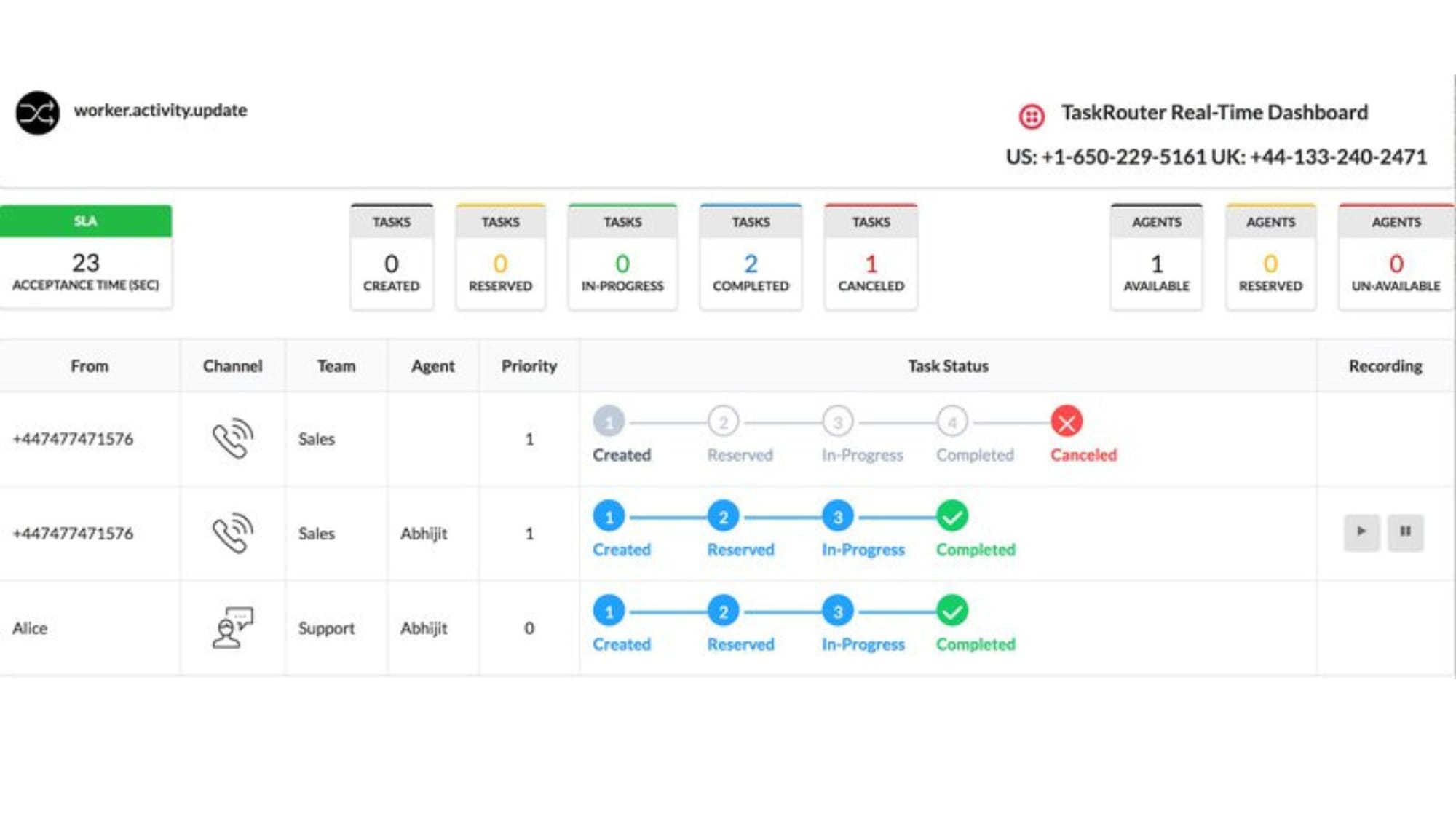
Twilio's TaskRouter Dashboard, Offering a Clear Overview of Calls and Progress
When it comes to ease-of-use, both Vonage and Twilio offer intuitive interfaces, but Twilio edges ahead as the more accessible tool, particularly for beginners. Twilio's dashboard provides straightforward navigation and clear instructions, making it easy for users to set up and manage communication channels without technical expertise.
For instance, Twilio's drag-and-drop interface simplifies the process of creating and customizing communication workflows, while its comprehensive documentation and tutorials offer valuable guidance. In contrast, while Vonage offers robust features, its interface may be slightly more complex for inexperienced users to navigate initially, requiring a steeper learning curve.
Twilio Leads in Email Communication When Compared to Vonage

Twilio SendGrid Provides One Platform for You and Your Team and Effective Email Communications
Twilio offers personalized transactional and marketing email capabilities with high deliverability rates, a feature notably absent from Vonage's offerings. For instance, Twilio SendGrid provides businesses with robust email marketing tools, including customizable templates, automated campaigns, and detailed analytics, ensuring effective engagement with customers.
In contrast, Vonage lacks dedicated email features, making Twilio the preferred choice for businesses prioritizing email communication. With Twilio's comprehensive email solutions, businesses can effectively leverage this vital communication channel to reach and connect with their audience.
Twilio Takes the Lead for Seamless Integrations

Twilio Integrates with a Number of Different SaaS Software, Including Zendesk, Stripe, and Jira
In terms of integrations, both Vonage and Twilio boast extensive options, yet Twilio emerges as the superior choice due to its expansive API and diverse range of integrations. Twilio's robust API allows businesses to seamlessly connect with numerous third-party applications and services, facilitating tailor-made communication systems. For instance, Twilio seamlessly integrates with popular CRM software and e-commerce platforms like Salesforce, Zendesk, and Shopify, empowering businesses to streamline workflows and enhance productivity.
While Vonage also offers valuable integrations, Twilio's breadth and versatility in integration possibilities position it as the preferred solution for businesses seeking comprehensive system integration capabilities to fuel innovation and growth.
Vonage's Advanced Communication Routing Trumps Twilio's Call Features

Live Agent Routing With Vonage Ensures There is No Delay in Allocating Calls For Swift Responses
Vonage's Communication API surpasses Twilio with its intelligent routing capabilities. While Twilio provides basic call features such as call analysis, follow-up, and conference calls, Vonage's advanced routing ensures calls are directed strategically based on various factors like timing and individual preferences.
For instance, Vonage's API allows businesses to route calls to the most appropriate sales representative or department based on availability and expertise, enhancing the likelihood of successful deal closures and delivering superior customer experiences. While Twilio offers valuable call features, Vonage's sophisticated routing capabilities position it as the preferred choice for businesses seeking optimized communication workflows.
Twilio Takes the Lead Ahead of Vonage in IoT Connectivity

Create and Manage Your IoT Applications with Twilio and Microvisor
When it comes to IoT, Twilio excels over Vonage with its specialized platform tailored for building connected objects with enhanced security and adaptability. Twilio's IoT offerings provide developers with robust tools and APIs to create IoT applications and manage connected devices efficiently.
For example, Twilio's Programmable Wireless allows developers to connect IoT devices to cellular networks seamlessly, enabling real-time data transmission and remote device management. In contrast, Vonage, while offering a diverse range of communication features, lacks dedicated IoT functionality, making Twilio the preferred choice for businesses seeking IoT connectivity solutions.
Vonage Surpasses Twilio with Comprehensive Communication Suite

Vonage's Suite of Communication Tools Include Business Phones and More to Ensure Seamless Connectivity
While both Vonage and Twilio offer a range of communication services, Vonage outshines with its unified business communication suite. Vonage's array of features, including Click-to-Dial for seamless calling, virtual fax for efficient document transmission, and virtual secretarial services for professional call handling, elevate its offerings beyond what Twilio provides.
For example, Vonage's provision of local or geographic numbers enables businesses to establish a local presence globally, enhancing customer trust and engagement. While Twilio offers valuable communication tools, Vonage's comprehensive suite positions it as the preferred choice for businesses seeking all-in-one communication solutions.
Vonage and Twilio are Equal at Offering SMS Services

Easily Send SMS Messages To Your Customers with Vonage
Both Vonage and Twilio offer robust capabilities to enhance customer engagement. Vonage's SMS API facilitates automated customer service conversations and notifications, streamlining communication processes. Similarly, Twilio enables businesses to dispatch notifications, alert messages, and more via SMS effortlessly.
For example, Twilio's Programmable SMS allows businesses to send personalized messages to customers based on specific triggers or events, fostering real-time engagement. With both tools empowering businesses to connect with customers in a personalized and immediate manner, the choice between Vonage and Twilio hinges on factors such as integration needs and customization requirements.
08 Vonage vs Twilio: Which is the best for your business?
Vonage is the best tool for you if:
- You value an all-in-one communication solution that offers voice, messaging, and video conferencing capabilities without the need for extensive customization or technical know-how.
- Your priority is a user-friendly platform that allows for quick setup and seamless integration with existing business applications, enhancing team collaboration and customer engagement.
- Reliability and quality of service are non-negotiable for your business communications, with Vonage providing stable connections and excellent call quality across its services.
- You're looking for a cost-effective communication tool that scales with your business, offering transparent pricing plans without compromising on features or functionality.
- Customer support and ease of use are critical for your operations, as Vonage offers extensive resources, tutorials, and a dedicated support team to assist with any issues.
 You value an all-in-one communication solution that offers voice, messaging, and video conferencing capabilities without the need for extensive customization or technical know-how.
Twilio is the best tool for you if:
- You need deep customization and flexibility in your communication solutions, with APIs that allow for intricate control and personalization of messaging, voice, and video services.
- Your development team requires a platform that supports innovation, with extensive documentation, SDKs, and tools that enable building complex, scalable communication systems from scratch.
- Scalability and adaptability are key to your business model, requiring a service that can effortlessly expand and adjust to changing needs without compromising on performance.
- You prioritize having access to cutting-edge technology and features in the communications space, enabling you to stay ahead with the latest advancements and integrations.
- Integration with a wide range of programming languages and development environments is essential, ensuring compatibility and seamless operation within your existing technological infrastructure.
09 Alternatives to Vonage & Twilio

Slack
Used by 3978 members
25% off new plan purchases
Save up to $9,000

Zoom Meetings
Used by 2849 members
$20 off per user on the annual Workplace Pro plan
Save up to $180

Quo (ex. OpenPhone)
Used by 987 members
20% off your first 12 months
Save up to $792

Aircall
Used by 688 members
First month free
Save up to $50
10 Promotions on Call Centers and Customer Experience software
Vonage and Twilio are great tools, but Secret offers promo codes with discounts on over 2240+ different SaaS solutions. New deals are added regularly, helping you save money on your online subscriptions. Get access to codes for other Call Centers and Customer Experience software you might want to purchase
Discount for Aircall
First month free

Zendesk promotion
6 months free (with AI Agents and Copilot)
Quo (ex. OpenPhone) discounts
20% off your first 12 months

Fin (ex. Intercom) promotion code
$6,500 in Fin AI Agent credits + Intercom helpdesk free for 1 year

CallHippo discounts
20% off all monthly and annual plans

Promo codes for Hotjar
40% off all annual plans

Promo code CloudTalk
50% off the first month

Typeform offer
40% off all annual plans

Deal for SnapCall
6 months free on Growth plan

Pipedrive deal
30% off for 12 months
Start saving on the best SaaS
Secret has already helped tens of thousands of startups save millions on the best SaaS like Microsoft Teams, Google Workspace & many more. Join Secret now to buy software the smart way.