


Engaging marketing campaigns are one of the most effective ways to connect directly with potential and existing customers and guide them through the buying process. Compared to traditional advertising, they’re more cost-effective and deliver detailed insights into your customer base. But how do you create an email campaign from scratch?
The solution is an email marketing platform. With a range of choices on the market, this article compares HubSpot vs Mailchimp, two key players that help you create, automate, and manage your email campaigns. By looking at their main differences, features, and use cases, you’ll know exactly which tool is right for you by the end of this article.
- 01 HubSpot vs Mailchimp: overview
- 02 What's the difference between HubSpot and Mailchimp?
- 03 HubSpot pros and cons
- 04 Mailchimp pros and cons
- 05 HubSpot compared to Mailchimp
- 06 Mailchimp compared to HubSpot
- 07 Features comparison
- 08 HubSpot vs Mailchimp: Which is the best for your business?
- 09 Alternatives to HubSpot & Mailchimp
- 10 Promotions on CRM software
Start saving on the best SaaS
Secret has already helped tens of thousands of startups save millions on the best SaaS like Microsoft Teams, Google Workspace & many more. Join Secret now to buy software the smart way.

01 HubSpot vs Mailchimp: overview
In the realm of email marketing and automation, HubSpot and Mailchimp are two prominent players renowned for their robust offerings. Their comprehensive feature sets can make the HubSpot vs Mailchimp decision a nuanced one.
To aid you in making an informed choice for your business needs, we've crafted a comparative table highlighting the core attributes of each platform. Each aspect is assessed with a star rating and accompanied by insightful commentary, facilitating a comprehensive assessment of the platforms. This resource empowers you to navigate the HubSpot vs Mailchimp landscape effectively and determine the solution that aligns best with your objectives.

Landing pages
Both tools offer landing pages—including in their free plans—and a range of customizable landing page templates.

HubSpot
Mailchimp
Customer support
Both only offer in-app chat and email support with their paid plans. Phone support is available with HubSpot’s and Mailchimp’s highest subscriptions.
HubSpot
Mailchimp
Automation
HubSpot includes advanced automation features. While Mailchimp offers good automation for email marketing, it’s limited compared to HubSpot.
HubSpot
Mailchimp
Customization
HubSpot offers a high level of email customization to match your brand. While Mailchimp offers less customization than HubSpot, it has a range of helpful email templates.
HubSpot
Mailchimp
Ease of use
Mailchimp is easy for beginners to use, with an intuitive user interface. HubSpot has more advanced features that can present a steep learning curve.
HubSpot
Mailchimp
Analytics
Thanks to its built-in CRM, HubSpot provides deep, insightful data based on more granular analytics. Mailchimp analytics focus on email marketing only.
HubSpot
Mailchimp
Positive reviews
Both receive positive reviews and are rated 4.5 on Capterra. Negative comments often refer to the tools’ pricing strategies or affordability, especially for small businesses.
HubSpot
Mailchimp
Pricing plans
Both offer free plans. HubSpot’s paid plans start at $18/month (1,000 contacts), while Mailchimp’s subscriptions start at $13/month (500 contacts).
HubSpot
Mailchimp
Integrations
HubSpot offers 1400+ integrations, including Google Ads, Slack, and Instagram; Mailchimp has 300+ integrations, including Shopify, Quickbooks, and Salesforce.
HubSpot
Mailchimp
Contact management and email sends
HubSpot’s Starter plan includes 1,000 contacts with email sends calculated as 5 x marketing contacts. Mailchimp’s equivalent offers 6,000 sends/month for 500 contacts.
HubSpot
Mailchimp
02 What's the difference between HubSpot and Mailchimp?

ubSpot’s Advanced Automation Feature Highlighting Custom Email Automations
HubSpot
CRM, marketing automation & customer service software suite

Mailchimp’s Customer Journey Builder with Custom Email Automations Highlighted
Mailchimp
Mailchimp is the #1 email and marketing automations brand* helping businesses find and engage customers across email, social media, landing pages, and advertising platforms.
HubSpot and Mailchimp are powerful email marketing tools that attract and engage with your customers. Despite serving similar markets, there are several key differences between the platforms.
The main point of difference is the scope of their features. HubSpot combines its CRM with sales, marketing, content management, and customer service features. This combination means you don’t have to maintain separate CRM and email marketing systems. HubSpot is an all-in-one tool that streamlines information sharing between your sales and marketing teams. Although you can do more with HubSpot, the necessary trade-off is that it’s more complex to learn. Mailchimp is purely an online marketing platform. It takes a logical, intuitive approach to creating and sending marketing emails, for example, by providing user-friendly drag-and-drop email templates. Although Mailchimp doesn’t have a dedicated CRM feature, it records customer interactions in its audience dashboard.
Another difference is the level of automation each tool offers. HubSpot includes advanced workflow automation features—including emails, social media posts, reminders, and analytics—designed to nurture customers through lengthy sales funnels. Mailchimp offers less automation than HubSpot, but what it does offer is very useful for email marketers. For example, it includes a Customer Journey builder to automate simple workflows based on customer behaviors, including basic auto responses.
Finally, HubSpot and Mailchimp’s pricing strategies differ. Both operate a Freemium model, with Mailchimp’s free plan offering a 1,000 email send limit and HubSpot a 2,000 email send limit. Both tools’ paid plans increase as the number of contacts and email sends do. If we compare entry-level plans, Mailchimp’s Essentials plan starts at $13/month for 500 contacts and 5,000 email sends. HubSpot’s equivalent Starter plan is $18/month for 1,000 contacts and with email sends equating to 5 x the marketing contact tier.

HubSpot
Premium
CRM, marketing automation & customer service software suite
90% off the Professional and Enterprise plans for 1 year
Save up to $7,000
03 HubSpot pros and cons
What are the advantages of HubSpot?
- All-in-one platform: HubSpot provides a comprehensive suite of marketing, sales, and customer service tools, streamlining processes and promoting seamless collaboration.

- User-friendly interface: Its intuitive interface makes it accessible to users of varying skill levels, enabling efficient campaign creation and management.
- In-depth analytics: HubSpot offers robust analytics and reporting features, allowing businesses to monitor campaign performance and make data-driven decisions.
- Automation capabilities: Automation features facilitate personalized and timely communication, enhancing customer engagement and lead nurturing.
- CRM integration: HubSpot's CRM integration ensures a holistic view of customer interactions, improving lead tracking, sales conversions, and customer relationships.
What are the disadvantages of HubSpot?
- Pricing: HubSpot's plans can be costly, particularly for small businesses or startups with limited budgets.

- Learning curve: Despite its user-friendly design, mastering all of HubSpot's features may require some training and time investment.
- Limited customization: While it offers templates and themes, some advanced customization options may be restricted for certain users.
- Overwhelming for beginners: The plethora of features can be overwhelming for newcomers, potentially leading to underutilization of the platform's capabilities.
- Integration complexity: Integrating HubSpot with existing systems may be complex for businesses with diverse tech stacks, potentially requiring additional resources and expertise.
Compare HubSpot to other tools


Monday vs HubSpot


HubSpot vs Salesforce

Semrush vs HubSpot

Apollo.io vs HubSpot

HubSpot vs WordPress.com

Freshworks vs HubSpot
04 Mailchimp pros and cons
What are the advantages of Mailchimp?
- User-friendly interface: Mailchimp's intuitive design and drag-and-drop editor make it easy for users to create and customize email campaigns.
- Versatile templates: A wide range of professionally designed templates helps users create visually appealing and engaging emails.
- Automation and segmentation: Mailchimp offers powerful automation and segmentation features, allowing targeted and personalized communication.
- Integration options: It integrates with various third-party applications, enhancing its functionality and compatibility with other tools.
- Analytics and reporting: Mailchimp provides detailed insights into campaign performance, allowing users to assess open rates, click-through rates, and engagement metrics.
What are the disadvantages of Mailchimp?
- Pricing tiers: As subscriber lists grow, costs can increase significantly, making it less budget-friendly for businesses with large audiences.
- Limited support: Some users report challenges in obtaining prompt and comprehensive customer support, particularly for free-tier users.
- Learning curve for advanced features: While basic features are easy to use, mastering more advanced functionalities may require a learning curve.
- Automation restrictions: Some automation features are only available in higher-tier plans, limiting the capabilities of users on lower plans.
- Deliverability concerns: Users have reported occasional deliverability issues, with emails ending up in spam folders or not reaching recipients.
Compare Mailchimp to other tools


Moosend vs Mailchimp

SendGrid vs Mailchimp

Omnisend vs Mailchimp

ActiveCampaign vs Mailchimp

GetResponse vs Mailchimp

Freshmarketer vs Mailchimp
05 HubSpot compared to Mailchimp
In the realm of email marketing tools, HubSpot and Mailchimp each bring unique strengths to the table. HubSpot shines with its comprehensive marketing automation capabilities and all-in-one platform, making it an appealing choice for businesses seeking a unified solution. Its intuitive interface allows users to seamlessly manage campaigns and customer interactions.
In essence, HubSpot's robust automation and integration capabilities cater to those prioritizing advanced marketing strategies, while Mailchimp's accessibility and template variety suit users seeking a user-friendly yet feature-rich experience.
Is HubSpot better than Mailchimp?
 Is HubSpot better than Mailchimp?
Choosing between HubSpot and Mailchimp hinges on aligning with your business objectives. HubSpot goes beyond email marketing, encompassing sales and customer service tools. This integrated approach suits those seeking a unified platform for various functions.
In contrast, Mailchimp, with its strong focus on email marketing, may suit those who prioritize specialized campaigns without the broader suite of services offered by HubSpot. Consider the scope of your needs and the depth of features required to determine the optimal fit. Both platforms offer unique strengths, so the decision boils down to tailoring your choice to your specific goals.
What is HubSpot best used for?
HubSpot excels as an all-in-one solution tailored for businesses aiming to enhance marketing, sales, and customer service. Its seamless integration empowers you to centralize customer relationships, automate marketing initiatives, and monitor engagement and conversions. The robust CRM system fosters personalized interactions by ensuring real-time access to comprehensive customer information across departments.
Whether aligning marketing strategies, closing deals, or nurturing customer relationships, HubSpot offers a versatile platform that harmonizes key functions, streamlining operations and optimizing interactions for sustained growth and success.
Can HubSpot replace Mailchimp?
While HubSpot does incorporate email marketing capabilities, it might not entirely supplant Mailchimp, especially for businesses deeply reliant on email campaigns.
Mailchimp holds a reputation for its user-friendly and intuitive email marketing tools, making it a preferred choice for those predominantly focused on email campaigns. However, if you seek a broader solution encompassing diverse marketing and sales functionalities, HubSpot emerges as a compelling alternative worth considering.
The decision hinges on your specific priorities and whether you prioritize specialized email marketing or an integrated approach with an array of marketing and sales tools.
Is HubSpot cheaper than Mailchimp?
In terms of pricing, HubSpot generally carries a higher cost compared to Mailchimp, particularly as your needs expand to encompass more advanced functionalities. Mailchimp presents a range of pricing tiers, even offering a free plan with restricted features, catering well to small businesses and startups grappling with financial limitations.
While HubSpot may come with added expenses, its comprehensive suite of tools may justify the investment for businesses seeking an integrated platform to manage various aspects of their marketing, sales, and customer interactions.
Is there a better CRM software than HubSpot?
While HubSpot provides robust email marketing capabilities, other alternative tools like Mailchimp, ConvertKit, and ActiveCampaign are also popular choices. The ideal choice hinges on your unique needs and preferences. For those placing utmost emphasis on email marketing, Mailchimp might hold an edge with its dedicated approach and easy-to-navigate design, tailored for effective email campaigns.
Ultimately, the right pick depends on aligning the tool's offerings with your specific business goals and strategies.
HubSpot
Premium
CRM, marketing automation & customer service software suite
90% off the Professional and Enterprise plans for 1 year
Save up to $7,000
06 Mailchimp compared to HubSpot
When exploring email marketing options, Mailchimp and HubSpot come into the spotlight, each with distinct advantages. Mailchimp's user-friendly interface and versatile features make it a solid choice for businesses of all sizes. Its extensive template library and customizable options cater to both beginners and experienced marketers, although the plethora of functionalities might feel overwhelming at first.
In summary, Mailchimp's accessibility and diverse features suit a broad range of users, while HubSpot's integration prowess and comprehensive toolkit are favored by businesses aiming for a holistic marketing approach.
Is Mailchimp better than HubSpot?
When considering Mailchimp versus HubSpot, the decision relies on your distinct requirements and marketing strategies.
If your main focus is on efficient email marketing, coupled with user-friendly navigation, Mailchimp could emerge as the preferred choice. Yet, for a broader array of tools encompassing marketing automation, CRM, and analytics, HubSpot could present a more fitting solution to cater to your needs effectively.
The ultimate selection hinges on aligning the software's capabilities with your specific business objectives and aspirations.
What is Mailchimp best used for?
Mailchimp truly shines as an exceptional and powerful email marketing solution, garnering recognition for its exceptionally user-friendly interface, seamless drag-and-drop email composition, and a wealth of automation capabilities that empower businesses.
If your primary goal is centered around designing and executing impactful email campaigns that resonate with your target audience, employing efficient audience segmentation to deliver tailored content, and gaining in-depth insights through meticulous email performance analysis, then Mailchimp undoubtedly emerges as a valuable and indispensable asset to elevate your overall business operations. Its versatile toolkit equips you with the tools needed to not only communicate effectively but also to establish lasting connections with your clientele.
Can Mailchimp replace HubSpot?
While Mailchimp is undoubtedly a noteworthy contender in the realm of marketing automation, its capabilities might not encompass the full spectrum of what HubSpot offers.
HubSpot's multifaceted approach extends beyond marketing automation, encompassing a broader spectrum of functionalities essential for modern business operations. With its encompassing Customer Relationship Management (CRM) system, comprehensive landing page design tools that facilitate seamless lead generation, social media management prowess, and advanced analytical insights, HubSpot emerges as an encompassing solution tailored for businesses seeking to amplify their marketing endeavors. It's akin to comparing a specialized tool to a comprehensive toolkit, each tailored for distinct needs and goals.
Is Mailchimp cheaper than HubSpot?
When assessing the pricing landscape, it becomes evident that Mailchimp often positions itself as a more cost-effective option, especially for startups and small businesses with limited budgets.
Mailchimp's tiered pricing structure accommodates various scales of operations, making it a favorable choice for those seeking to establish a strong email marketing foundation. However, as your business blossoms and demands evolve, the full extent of your requirements might encompass more intricate functionalities that HubSpot's higher-tier plans offer.
While Mailchimp's initial affordability is a key consideration, it's crucial to map your growth trajectory and anticipate potential expansion costs as your marketing strategies flourish.
Is there a better Email Marketing software than Mailchimp?
Mailchimp has carved a prominent niche when it comes to email marketing software. However, the landscape is rich with alternatives that merit exploration.
Among these contenders, Constant Contact emerges with its array of features tailored to diverse business requirements, as well as Brevo's prowess in transactional emails and marketing campaigns. Other alternatives include HubSpot, ActiveCampaign and SendGrid.
The choice between these platforms hinges on your unique demands, financial allocation, and the extent of automation intricacies you seek. By embracing the myriad possibilities, you can ascertain the optimal solution to orchestrate your email campaigns seamlessly.
07 Features comparison
Mailchimp Takes the Lead in Precise Customer Segmentation Compared to HubSpot
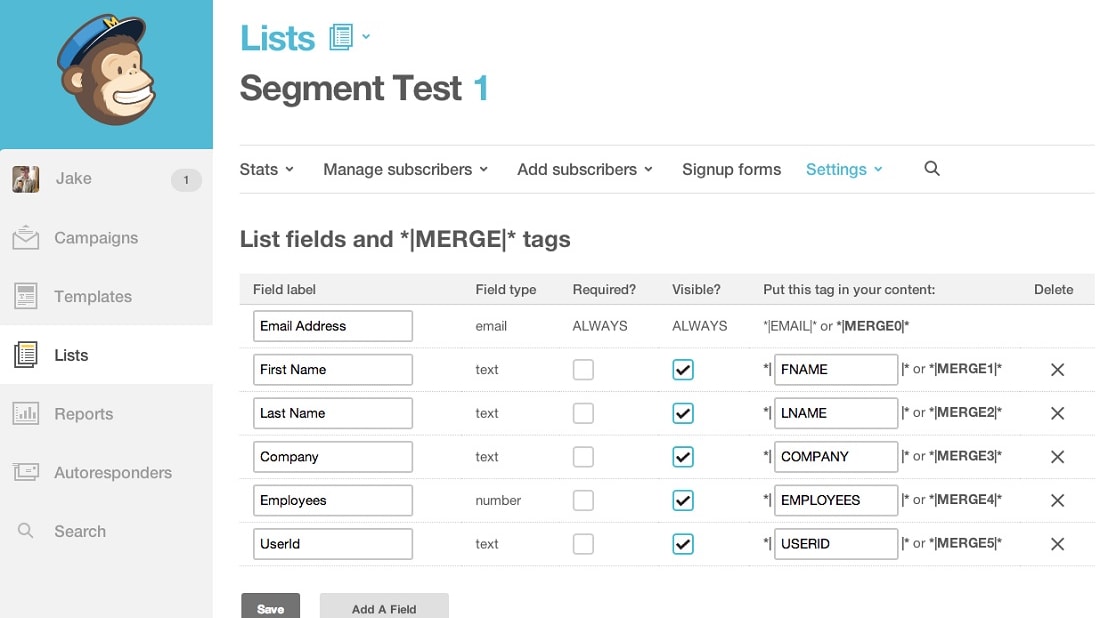
Through its advanced segmentation feature, Mailchimp empowers you to divide your customer base according to specific behaviors or interests, guaranteeing that each recipient receives customized emails tailored to their preferences.
In the realm of modern marketing, personalization reigns supreme, and Mailchimp stands as a leader in guiding you towards your audience with pinpoint accuracy. Through its advanced segmentation feature, Mailchimp empowers you to divide your customer base according to specific behaviors or interests, guaranteeing that each recipient receives customized emails tailored to their preferences.
Furthermore, Mailchimp's predictive segmentation elevates this approach by identifying potential repeat purchasers or those likely to increase their spending over time. By harnessing this capability, you can strategically target and engage with the right customers, optimizing your marketing efforts and enhancing the likelihood of successful conversions and long-term customer relationships.
Mailchimp Excels in Designing Impactful Emails Over HubSpot

Mailchimp's design tool empowers you to effortlessly fashion captivating multi-channel designs that captivate the interest of your potential leads and loyal customers.
When the goal is to craft visually striking and impactful emails, Mailchimp emerges as the stronger tool. Leveraging the power of artificial intelligence, Mailchimp's design tool empowers you to effortlessly fashion captivating multi-channel designs that captivate the interest of your potential leads and loyal customers. Bid farewell to mundane and cookie-cutter email templates, and elevate your engagement levels with visually stunning emails that create a memorable and lasting impact.
Mailchimp's design capabilities enable you to infuse creativity into your email campaigns, allowing you to stand out in crowded inboxes and convey your brand's essence effectively. Whether it's a promotional offer, a newsletter, or a personalized communication, Mailchimp's design prowess ensures that your emails make a remarkable impression and drive desired actions.
HubSpot Surpasses Mailchimp in Advanced Automation Capabilities

With HubSpot, you can create intricate automated workflows that streamline various tasks and processes, from lead nurturing to customer follow-ups.
When it comes to automation and workflow capabilities, HubSpot takes the lead, offering a suite of powerful tools designed to elevate your productivity and efficiency. With HubSpot, you can create intricate automated workflows that streamline various tasks and processes, from lead nurturing to customer follow-ups.
For instance, HubSpot allows you to set up automated email sequences triggered by specific actions, ensuring timely and personalized communication with your audience. Moreover, you can automate lead scoring, assigning values to prospects based on their engagement level, enabling your sales team to prioritize their efforts effectively.
In contrast, while Mailchimp also provides automation features, HubSpot's comprehensive automation capabilities offer a broader spectrum of possibilities for optimizing your marketing and sales endeavors.
Mailchimp Excels Ahead of HubSpot in Terms of User-Friendliness
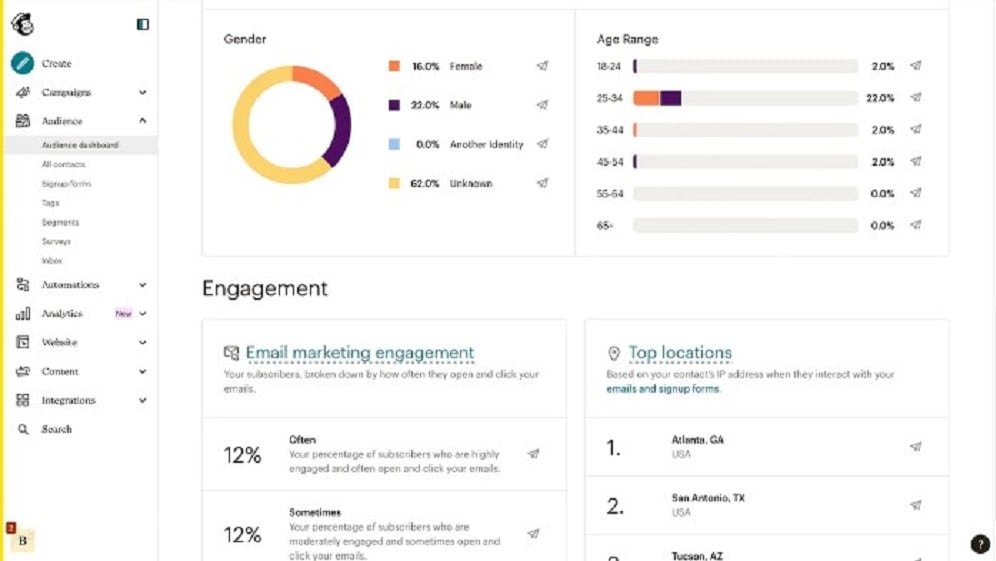
Mailchimp also delivers a user-friendly environment, albeit with a slightly steeper learning curve for newcomers.
Both HubSpot and Mailchimp exhibit interfaces designed for seamless navigation and effective feature utilization. Nevertheless, Mailchimp emerges as the frontrunner, offering an enhanced user experience that effortlessly guides users through its functionalities.
HubSpot boasts an intuitive design and simplified setup process, catering to entrepreneurs and business owners seeking swift adaptation without encountering a steep learning curve. The user-friendly interface streamlines campaign creation, analytics tracking, and marketing automation, making it an accessible tool for individuals of varying technical backgrounds. HubSpot's approach empowers users to harness its potential with ease and efficiency.
In parallel, Mailchimp also delivers a user-friendly environment, albeit with a slightly steeper learning curve for newcomers. Acquainting yourself with the platform's layout and features might take a touch more time. While Mailchimp extends comprehensive documentation and support, users might invest additional effort to grasp its complete capabilities compared to HubSpot.
HubSpot Outshines Mailchimp in Sales Pipeline Management

By visualizing your sales process, defining stages and milestones, and effortlessly progressing deals through the pipeline, HubSpot streamlines your operations.
For a comprehensive and effective sales pipeline management solution, HubSpot stands as the optimal choice. Its user-friendly features empower you to adeptly monitor and oversee your sales opportunities and deals. By visualizing your sales process, defining stages and milestones, and effortlessly progressing deals through the pipeline, HubSpot streamlines your operations.
Experience enhanced organization, task prioritization, and an increased rate of deal closures with HubSpot's adept sales pipeline management capabilities. Whether you're a sales professional tracking leads or a business owner optimizing conversions, HubSpot equips you with the tools needed to maximize your sales potential and achieve your revenue goals.
HubSpot Provides a Wider Range of Integrations than Mailchimp

HubSpot seamlessly merges with renowned CRM systems like Salesforce and Microsoft Dynamics, ensuring the harmonious flow of data between marketing and sales teams
HubSpot and Mailchimp welcome a multitude of tools and platforms for seamless connectivity. Yet, HubSpot emerges as the winner, presenting an expansive integration ecosystem that empowers entrepreneurs to refine their workflows and amplify operational efficiency.
HubSpot seamlessly merges with renowned CRM systems like Salesforce and Microsoft Dynamics, ensuring the harmonious flow of data between marketing and sales teams. This harmonization facilitates businesses in aligning their endeavors, leading to heightened customer interactions, streamlined lead management, and enhanced conversion rates.
Additionally, HubSpot extends its integration prowess to major e-commerce platforms such as Shopify and Magento. This infusion allows entrepreneurs to seamlessly automate marketing campaigns, monitor customer behaviors, and optimize online sales processes. By harnessing these integrations, businesses can craft tailored experiences, foster enduring customer loyalty, and drive revenue growth.
While Mailchimp does offer integration options, its array may not rival the comprehensive scope of HubSpot's. Some users might discover that specific integrations they seek are either absent or demand customized development, potentially entailing both time and expenses. The breadth and depth of HubSpot's integration ecosystem render it a potent choice for businesses seeking a robust and versatile integration landscape.
HubSpot Takes the Lead in Contact Management Over Mailchimp
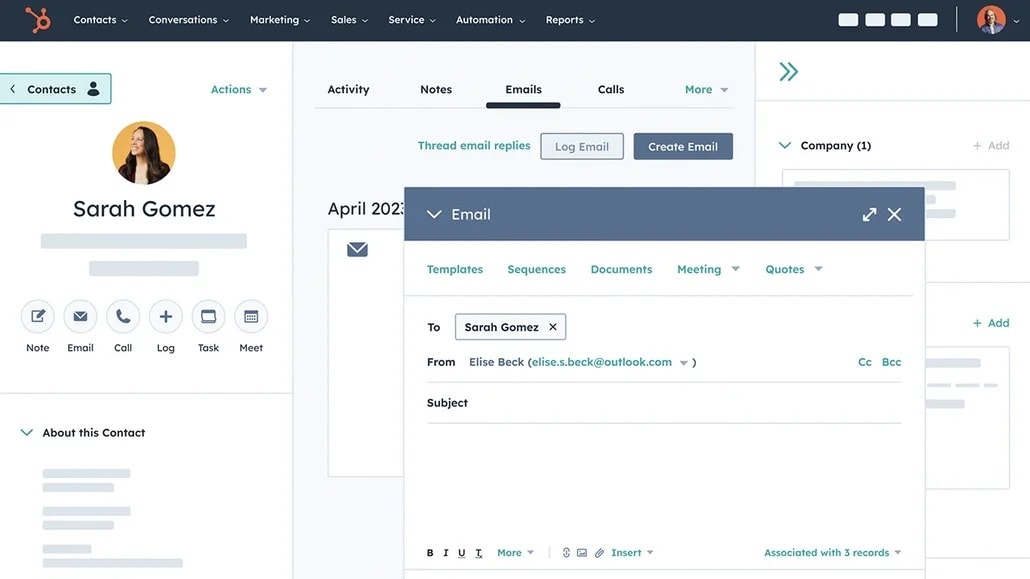
HubSpot offers a robust suite of tools that excel in facilitating effective and organized interactions with your audience.
When it comes to contact management, HubSpot offers a robust suite of tools that excel in facilitating effective and organized interactions with your audience. HubSpot's Contact Management feature goes beyond the basics, empowering businesses to nurture leads, personalize communications, and track interactions seamlessly.
With HubSpot's intuitive interface, you can effortlessly manage your contacts, segment your audience based on various criteria, and tailor your marketing efforts accordingly. The platform's CRM system ensures that you have a comprehensive view of each contact's interactions, enabling personalized engagement and informed decision-making.
While Mailchimp offers contact management features, HubSpot's comprehensive suite and seamless integration across its ecosystem make it a standout choice for businesses seeking a holistic approach to contact management and relationship-building.
08 HubSpot vs Mailchimp: Which is the best for your business?
HubSpot is the best tool for you if:
- You’re seeking an all-in-one CRM, email marketing, customer service, and content management solution
- Your business caters to extended buyer lifecycles that require higher levels of marketing workflow automation and integration
- A large and broad choice of integrations is a deciding factor and you need your solution to integrate with other CRMs, e-commerce platforms, and social media apps
- You have a larger marketing budget to play with and want to use it to optimize the sharing of customer information across departments
- You need a high degree of customization to ensure your email marketing fully reflects your brand
 You’re seeking an all-in-one CRM, email marketing, customer service, and content management solution
Mailchimp is the best tool for you if:
- You already use a CRM and are now looking for a targeted email marketing solution to integrate with it
- You want to quickly create and send out marketing emails with the help of easy-to-use, customizable templates
- You’re a start-up or small business looking for an affordable email marketing solution or a seasonal business that would prefer a PAYG subscription model
- You have limited digital marketing experience and want a simple, easy-to-use solution to create and deliver email marketing campaigns
- Your business caters to shorter buyer lifecycles requiring less marketing workflow automation
HubSpot
Premium
CRM, marketing automation & customer service software suite
90% off the Professional and Enterprise plans for 1 year
Save up to $7,000
09 Alternatives to HubSpot & Mailchimp

Apollo.io
Used by 5126 members
50% off the annual Basic or Professional plan for 1 year (Up to 5 seats)
Save up to $3,000

Brevo (ex. Sendinblue)
Used by 5004 members
50% off Starter and Standard Plans
Save up to $2,574

Slack
Used by 3975 members
25% off new plan purchases
Save up to $9,000

Fin (ex. Intercom)
Used by 3550 members
$6,500 in Fin AI Agent credits + Intercom helpdesk free for 1 year
Save up to $6,500
10 Promotions on CRM and Email Marketing software
HubSpot and Mailchimp are great tools, but Secret offers promo codes with discounts on over 2240+ different SaaS solutions. New deals are added regularly, helping you save money on your online subscriptions. Get access to codes for other CRM and Email Marketing software you might want to purchase

Promo code for Pipedrive
30% off for 12 months
Brevo (ex. Sendinblue) coupon code 2026
50% off Starter and Standard Plans

Zoho promo code
$3,000 in credits for 1 year

Deal for Bouncer
20% off on Pay-as-you-go

folk CRM coupon code 2026
14 days free + 20% off annual plans

Customer.io promo code
1 year free on the Essentials plan (30k profiles)

Deal for Notion
3 months free on the Business plan with Unlimited AI

Deal for Beefree SDK
90% off subscription fees on Core and Superpowers plans for 12 months

Zendesk offer
6 months free (with AI Agents and Copilot)

Moosend promotion
75% off monthly plans for 1 year
Start saving on the best SaaS
Secret has already helped tens of thousands of startups save millions on the best SaaS like Microsoft Teams, Google Workspace & many more. Join Secret now to buy software the smart way.