


Managing the customer buying journey can be complex, especially coordinating between various teams including sales, marketing, and customer service. That’s why finding a Customer Relationship Management (CRM) tool is essential to help you manage your sales cycles and guide customers through the purchase process.
That’s where companies like Zendesk and Salesforce enter the picture. This article walks you through their CRM products, Zendesk Sell vs Salesforce Sales Cloud. We compare their main features and differences to help you understand how to best use them in your business. Plus, we explore the other sales support products these providers offer. Let’s go!
- 01 Zendesk vs Salesforce: overview
- 02 What's the difference between Zendesk and Salesforce?
- 03 Zendesk pros and cons
- 04 Salesforce pros and cons
- 05 Zendesk compared to Salesforce
- 06 Salesforce compared to Zendesk
- 07 Features comparison
- 08 Zendesk vs Salesforce: Which is the best for your business?
- 09 Alternatives to Zendesk & Salesforce
- 10 Promotions on Customer Support software
Start saving on the best SaaS
Secret has already helped tens of thousands of startups save millions on the best SaaS like Microsoft Teams, Google Workspace & many more. Join Secret now to buy software the smart way.

01 Zendesk vs Salesforce: overview
Zendesk and Salesforce are two prominent players in the world of customer relationship management (CRM) and customer support software, each offering unique strengths tailored to meet specific business needs.
Zendesk is renowned for its user-friendly interface and focus on customer support and ticket management. It provides a comprehensive platform that includes a ticketing system, multichannel support, knowledge base, automation, reporting, and customer engagement features. On the other hand, Salesforce is a comprehensive CRM platform known for its robust customer relationship management capabilities. It offers a wide range of features, including sales automation, marketing automation, analytics, and custom application development.
Now, let's delve into the Zendesk vs. Salesforce comparison to help you make an informed decision when selecting the right CRM and customer support solution for your specific business needs.

Customer support
All Zendesk plans come with digital support during business hours. Salesforce offers ticket support and online resources. Phone support is available for an additional fee.

Zendesk
Salesforce
Positive reviews
Both receive generally positive reviews. Some users note that advanced automation and reports are only available with higher plans (Zendesk) and the product can be expensive (Salesforce).
Zendesk
Salesforce
Pricing plans
While both offer free trials, they don’t have free plans. Zendesk plans start at $19/month/ agent. Salesforce subscriptions start at $25/month/user.
Zendesk
Salesforce
Lead scoring
Lead scoring is only available with Zendesk’s two highest plans. With Salesforce, it’s only available with the Unlimited plan.
Zendesk
Salesforce
Ease of use
Zendesk’s CRM has a clean, user-friendly interface that is easy to navigate. There can be a steep learning curve with Salesforce’s advanced features.
Zendesk
Salesforce
Reporting and analytics
Zendesk offers advanced reporting features, available with higher-priced plans. Salesforce also provides various report types and an AI sales forecasting tool.
Zendesk
Salesforce
Automation
Salesforce offers a range of automation options. A subscription to higher-priced plans is required to schedule automation. Zendesk offers more limited automation functionality.
Zendesk
Salesforce
Pipeline management
Zendesk’s plans cap the number of pipelines available. Most of Salesforce’s pipeline management features are only available with its highest plans.
Zendesk
Salesforce
AI-powered features
Both use AI features supported by OpenAI.
Zendesk
Salesforce
Integrations
Zendesk offers 1530+ integrations with apps including Jira, Shopify, and Trello. Salesforce includes 3000+ integrations including WooCommerce and Flosum. Both integrate with Zapier.
Zendesk
Salesforce
02 What's the difference between Zendesk and Salesforce?

Zendesk’s Home Page Listing its Service, Sales, and Sunshine Platforms
Zendesk
Create a customer success support suite that is accessible and available to your customers at all times.
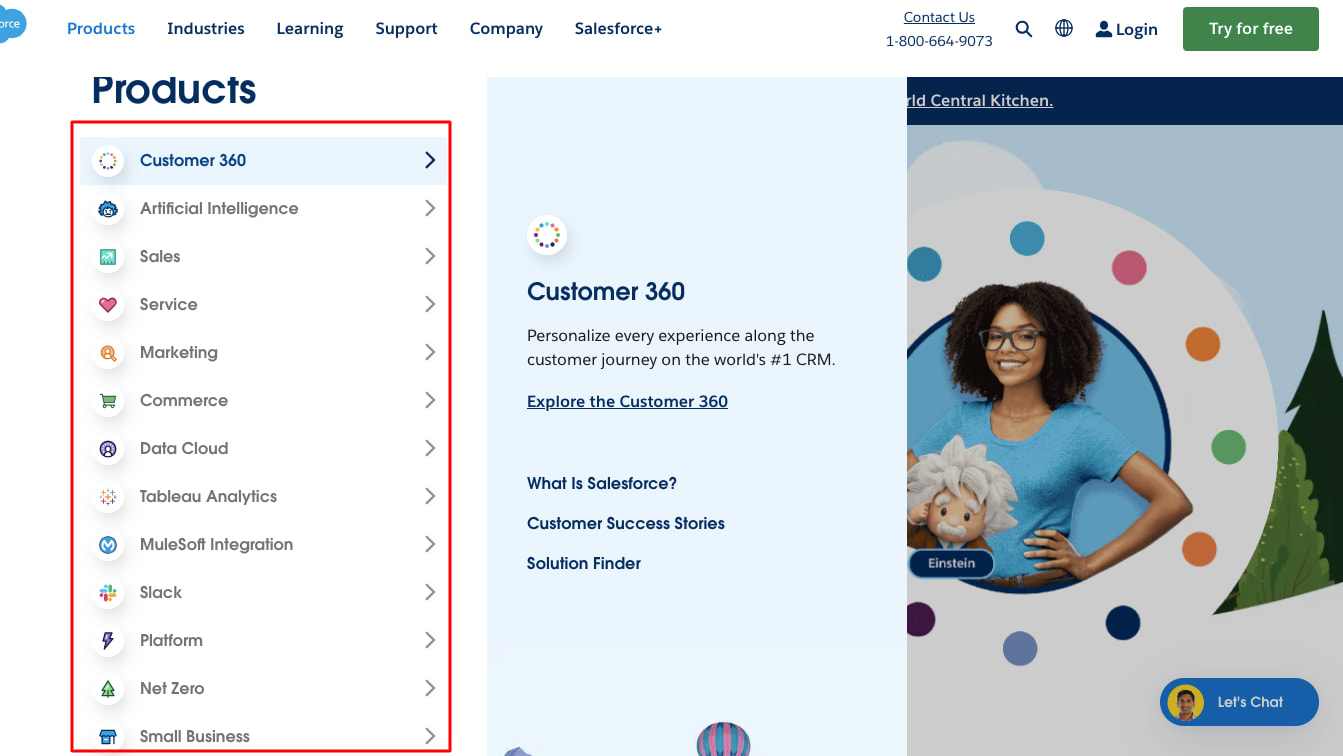
Salesforce’s Homepage with its Drop-Down Products Menu Open
Salesforce
Salesforce is a widely-used cloud-based CRM platform that helps businesses organize customer data, manage sales and marketing workflows, and provide consistent support across different channels.
Zendesk Sell and Salesforce Sales Cloud are two top-rated CRM solutions. Understanding their fundamental differences helps you find the right solution for your business. One of the main differences is the broader ecosystem in which the two tools exist. Zendesk and Salesforce offer a suite of products, one of which is their CRM. Zendesk focuses on the service aspect of sales and its other products reflect this. In addition to its CRM, Zendesk provides a ticket management system, personalized chat, community forums, and help center tools. The platform supports multi-channel customer support including tickets, email, text, and social media. It also offers Zendesk Sunshine, a CRM native to Amazon Web Services (AWS), to help you connect customer data. These products are especially popular with small to medium businesses.
In addition to its Sales Cloud, Salesforce offers customer service and marketing clouds. You can combine these to enable the sharing and management of customer data across your marketing, services, and sales departments. You can also purchase additional clouds, such as Salesforce’s e-commerce platform or an analytics platform for advanced reports and data. Salesforce even offers a product to assist businesses with sustainable data management. Businesses of any size can use Salesforce, but its advanced features are especially well-suited to enterprises. When deciding between Zendesk compared to Salesforce, consider your broader requirements and other tools you need now or in the near future.
Another difference between Zendesk and Salesforce is the user experiences they deliver. Zendesk is known for its clean and intuitive user interface. Designed as an ‘out of the box’ solution, it requires minimal technical expertise to set up. Salesforce’s user interface can be complex to navigate. Due to this and the scope of its features, Salesforce users may experience a steep initial learning curve. However, this pays off with access to in-depth sales features.

Zendesk
Used by 2812 members
6 months free (with AI Agents and Copilot)
Save up to $50,000

Salesforce
Used by 282 members
45% off the Starter Suite plan for 1 year
Save up to $675
03 Zendesk pros and cons
What are the advantages of Zendesk?
- User-friendly interface: Zendesk is known for its intuitive and easy-to-use interface. Agents and customers can quickly adapt to the platform, leading to faster onboarding and increased productivity.

- Multichannel support: Zendesk allows businesses to manage customer interactions from various channels, including email, chat, social media, and more, all within a unified platform. This enhances customer convenience and support efficiency.
- Customization and integration: Zendesk offers a high level of customization, allowing businesses to tailor the platform to their specific needs. It also integrates seamlessly with numerous third-party applications, making it versatile and adaptable to existing workflows.
- Automation and workflow tools: Zendesk provides robust automation and workflow capabilities. Businesses can automate routine tasks, route tickets to the right agents, and set up predefined rules to enhance efficiency and consistency in customer support processes.
- Reporting and analytics: Zendesk offers powerful reporting and analytics features, allowing businesses to gain insights into their support operations. This data-driven approach helps in identifying areas for improvement, optimizing agent performance, and ultimately enhancing the customer experience.
What are the disadvantages of Zendesk?
- Cost: Zendesk can be relatively expensive, especially for small businesses or startups. The pricing structure can become a drawback for organizations with limited budgets.

- Complexity for advanced needs: While Zendesk is user-friendly, it may lack certain advanced features and customizations that some larger enterprises require. For highly complex workflows or specialized requirements, organizations may need additional development or customization.
- Learning curve for advanced features: Although the basics are easy to grasp, mastering advanced features and customizations in Zendesk can take time and resources, which may pose challenges for businesses seeking quick implementations.
- Limited native marketing and sales features: Zendesk's primary focus is on customer support, so it may not offer the same level of native marketing and sales features as other CRM platforms like Salesforce. Businesses looking for an all-in-one CRM solution might need to consider additional integrations.
- Limited out-of-the-box reporting: While Zendesk offers reporting and analytics, some users may find that they need to rely on additional reporting tools or integrations to access more advanced reporting capabilities.
Compare Zendesk to other tools


Zendesk vs Fin (ex. Intercom)

Salesforce Service Cloud vs Zendesk

Zendesk vs Gorgias

Help Scout vs Zendesk

Zendesk vs HubSpot

Zendesk vs Jira
04 Salesforce pros and cons
What are the advantages of Salesforce?
- Comprehensive CRM features: Salesforce offers a comprehensive suite of CRM tools, including sales automation, marketing automation, customer support, analytics, and more. It provides a holistic view of customer data and interactions, helping businesses streamline their operations.
- Scalability: Salesforce is highly scalable and suitable for businesses of all sizes, from startups to large enterprises. It can grow with your organization's needs and can be customized to fit specific requirements.
- Integration capabilities: Salesforce has a vast ecosystem of third-party integrations and a robust API, making it easy to connect with other business applications and tools. This ensures a seamless flow of data and processes across different departments.
- Analytics and reporting: Salesforce offers powerful reporting and analytics tools, allowing businesses to track performance metrics, analyze customer data, and make data-driven decisions. The platform provides insights that can help improve sales, marketing, and customer service strategies.
- Community and support: Salesforce has a strong user community and extensive resources for learning and support. Users can access a wealth of knowledge through forums, documentation, and training materials. Additionally, Salesforce provides various support options, including phone and email support, for users with different needs.
What are the disadvantages of Salesforce?
- Cost: Salesforce is known for being relatively expensive, especially for small and mid-sized businesses. Licensing fees, implementation costs, and additional add-ons can add up quickly, making it less accessible for organizations with limited budgets.
- Complexity: The platform's extensive capabilities can lead to complexity, especially for users who are new to CRM systems. Implementing and configuring Salesforce may require skilled administrators and developers.
- Learning curve: Due to its wide range of features, Salesforce can have a steep learning curve. Users may need significant training and time to fully utilize all of its functionalities effectively.
- Customization complexity: While Salesforce offers extensive customization options, making complex customizations can be challenging and may require advanced technical knowledge. This can lead to delays and additional costs in development.
- Integration costs: While integration is a strength of Salesforce, integrating it with other systems can be costly and time-consuming. Custom integrations or the use of third-party integration tools may be necessary, adding to the overall expense.
Compare Salesforce to other tools


Freshsales Suite vs Salesforce
HubSpot vs Salesforce

Zoho vs Salesforce

Freshworks vs Salesforce

Pipedrive vs Salesforce
05 Zendesk compared to Salesforce
When comparing Zendesk and Salesforce, each platform has its unique strengths and is tailored to meet specific business needs in the realm of customer relationship management (CRM) and customer support.
Zendesk stands out with its user-friendly interface and its primary focus on customer support and ticket management. The platform offers a range of pricing plans, including options suitable for startups and small businesses, making it accessible to a broad audience. Zendesk's strength lies in its simplicity and efficiency in managing customer support operations, making it a compelling choice for businesses seeking a streamlined approach to customer service.
The choice between Zendesk and Salesforce depends on your specific business needs. Zendesk offers an accessible and user-friendly solution with a focus on customer support, making it an excellent choice for businesses looking to enhance their support operations.
Is Zendesk better than Salesforce?
 Is Zendesk better than Salesforce?
When evaluating whether Zendesk is better than Salesforce, it's important to consider that the comparison hinges on specific business needs and priorities.
Zendesk excels in its simplicity and user-friendliness. For instance, its ticketing system is renowned for its ease of use, allowing support agents to efficiently manage customer inquiries from various channels like email, chat, and social media. In contrast, Salesforce offers a comprehensive CRM system with extensive capabilities that encompass sales automation, marketing automation, analytics, and custom application development. While Salesforce's vast feature set is powerful, it may require more configuration and customization to align with specific business processes.
If your business primarily focuses on customer support and aims for a straightforward, out-of-the-box solution, Zendesk may be the preferable choice. However, if your organization seeks an all-encompassing CRM platform that spans sales, marketing, and customer service functions, Salesforce's versatility and scalability could be more advantageous.
What is Zendesk best used for?
Zendesk is a highly acclaimed customer service software renowned for its exceptional capabilities in streamlining customer interactions across diverse channels. Its primary strength lies in creating a centralized, easily manageable interface where businesses can efficiently handle customer support. For instance, its intuitive helpdesk software empowers teams to seamlessly track, prioritize, and resolve customer support tickets with remarkable efficiency.
Consider an e-commerce business that utilizes Zendesk to merge customer inquiries from email, live chat, and social media into a unified system. This enables their support team to promptly address customer concerns and maintain high satisfaction levels.
Zendesk is particularly advantageous for organizations seeking a rapid implementation process with minimal customization. Its user-friendly design and straightforward setup make it an ideal choice for businesses desiring a quick and hassle-free solution to streamline their customer service operations, ultimately enhancing the overall customer experience.
Can Zendesk replace Salesforce?
Zendesk and Salesforce, though both valuable, cater to distinct needs. Zendesk excels in customer support with its efficient ticketing system. Imagine a startup utilizing Zendesk to streamline customer inquiries across email, chat, and social media. However, Salesforce, as a comprehensive CRM, offers advanced customization and integration capabilities. Picture a larger enterprise optimizing sales processes with Salesforce's tailored workflows.
While Zendesk can replace Salesforce for specific functions like customer service, it doesn't entirely substitute it for comprehensive CRM needs. Consider a company that relies on Salesforce for managing leads, opportunities, and marketing campaigns. In such cases, coexistence is often practical, leveraging each platform's strengths to create a holistic business solution.
Is Zendesk cheaper than Salesforce?
Comparing the cost of Zendesk and Salesforce reveals a notable difference in pricing structures. Generally, Zendesk’s pricing structure is known for its affordability, with entry-level plans typically coming in at a lower price point than Salesforce's equivalents. For instance, consider a small business opting for Zendesk's basic plan, which provides essential customer support features.
Nonetheless, the decision between Zendesk and Salesforce shouldn't rely solely on price. It's vital to assess the overall value offered by each platform. Salesforce may have a higher cost, but it provides an extensive set of CRM, sales automation, and marketing tools. A larger enterprise might find that the added capabilities justify the investment.
Is there a better Customer Support software than Zendesk?
Zendesk is a popular choice for customer support and service management, but it's important to explore whether there might be a better-suited software for your specific customer service and CRM needs.
There are several noteworthy alternatives to Zendesk in the customer support and CRM space, including Salesforce, Freshdesk, Zoho Desk, and Help Scout.
The choice of customer support and CRM software depends on your organization's unique requirements, customer service complexities, and team preferences. While Zendesk offers a user-friendly interface and strong support ticketing capabilities, other platforms may provide more comprehensive CRM features, marketing automation, or specialized tools for specific industries.

Zendesk
Create a customer success support suite that is accessible and available to your customers at all times.
6 months free (with AI Agents and Copilot)
Save up to $50,000
06 Salesforce compared to Zendesk
Salesforce distinguishes itself with its comprehensive set of CRM and business management capabilities, making it a compelling choice for businesses with diverse needs in customer relationship management and sales automation. Salesforce offers various pricing tiers, accommodating businesses of all sizes and budgets, from startups to large enterprises.
One of Salesforce's standout features is its extensive customization options and flexibility in tailoring the platform to specific business requirements. This capability is particularly valuable for organizations seeking a highly adaptable CRM solution.
While both Salesforce and Zendesk are proficient in managing customer interactions, the choice between the two hinges on your specific needs. Salesforce provides a versatile and scalable solution with a focus on sales, marketing, and customer relationship management, making it an ideal choice for businesses aiming to centralize and optimize a wide range of customer-related activities.
Is Salesforce better than Zendesk?
The comparison between Salesforce and Zendesk hinges on specific use-case needs and business requirements. Salesforce is a powerhouse in the CRM realm, providing a comprehensive suite of tools encompassing sales, marketing, and service. For example, a large enterprise might utilize Salesforce's advanced customization to align intricate sales processes with specific business needs.
On the other hand, smaller businesses or those seeking a more straightforward solution could find Zendesk to be a better fit. Imagine a startup utilizing Zendesk's user-friendly customer support system to efficiently manage support inquiries.
What is Salesforce best used for?
Salesforce is an extensive CRM platform primarily designed for efficiently managing intricate sales processes within sizable teams. Its strengths lie in its ability to meticulously track customer interactions, effectively manage sales pipelines, and generate comprehensive reports. For instance, envision a multinational corporation utilizing Salesforce to monitor leads, opportunities, and sales activities across diverse regions.
Furthermore, Salesforce offers advanced marketing automation, robust analytics, and exceptional customer service capabilities. This makes it an ideal choice for businesses seeking a holistic approach to customer relationship management. Consider a tech company employing Salesforce to streamline marketing campaigns, analyze customer data, and provide top-notch support services. In such cases, Salesforce's versatility and scalability are instrumental in achieving organizational goals.
Can Salesforce replace Zendesk?
Salesforce has the potential to replace Zendesk, particularly for businesses with comprehensive customer relationship management needs that extend beyond managing customer service tickets. Salesforce's expansive suite of features, including sales, marketing, and service modules, enables organizations to manage a broader spectrum of customer relationships. For example, an enterprise might leverage Salesforce to automate sales processes, run targeted marketing campaigns, and provide top-tier customer support.
However, for businesses with a specific focus on streamlined ticketing and customer service operations, Salesforce might offer more capabilities than necessary. In such cases, Zendesk continues to hold its place as a user-friendly and straightforward ticketing system, aligning perfectly with the requirements of organizations seeking a simplified approach to customer support.
Is Salesforce cheaper than Zendesk?
When comparing the pricing of Salesforce to Zendesk, it becomes evident that Salesforce’s subscription plans generally come with higher costs. This premium pricing is attributed to Salesforce's expansive suite of functionalities and advanced features. For example, a large corporation might invest in Salesforce for its intricate sales automation, marketing analytics, and custom application development capabilities.
However, this elevated price point may not be the most budget-friendly solution, especially for small businesses or startups with limited financial resources. In contrast, Zendesk offers more budget-friendly options, making it an attractive choice for organizations looking to streamline customer support operations without incurring substantial costs.
Is there a better CRM software than Salesforce?
Salesforce is a powerful CRM and business management platform, but it's crucial to assess whether there might be a more suitable software solution for your specific CRM and business needs.
There are several notable alternatives to Salesforce in the CRM and business management space, including HubSpot CRM, Microsoft Dynamics 365, Zoho CRM, and Pipedrive.
The choice of CRM and business management software depends on your organization's unique requirements, sales and marketing complexities, and team preferences. While Salesforce offers extensive customization, integration capabilities, and scalability, other platforms may excel in areas like marketing automation, affordability for small businesses, or specific industry-focused features.

Salesforce
Premium
The world’s #1 AI CRM
45% off the Starter Suite plan for 1 year
Save up to $675
07 Features comparison
Both Zendesk and Salesforce are Equal in Efficient Reporting

A software company can leverage Salesforce's reporting tools to monitor sales pipeline dynamics, identify top-performing agents, and fine-tune sales strategies accordingly.
Both Zendesk and Salesforce are equipped with robust reporting and analytics capabilities, empowering businesses to delve into critical metrics that drive decision-making. Zendesk enables organizations to track ticket volumes, response times, and customer satisfaction scores, giving a comprehensive view of customer support operations.
Similarly, Salesforce excels in providing comprehensive analytics for sales progress and agent performance. A software company can leverage Salesforce's reporting tools to monitor sales pipeline dynamics, identify top-performing agents, and fine-tune sales strategies accordingly.
In sum, both platforms offer powerful reporting and analytics features, allowing organizations to gain valuable insights and continually enhance their operations. These tools play a pivotal role in fostering data-driven decision-making, regardless of whether the focus is on customer support in Zendesk or sales and CRM in Salesforce.
Zendesk Pulls Ahead of Salesforce for User-Friendliness

Zendesk excels in providing a straightforward and accessible interface. Its clean design and intuitive layout make it easy for users, even those with limited technical expertise, to navigate seamlessly.
Both Zendesk and Salesforce prioritize user-friendliness, but they cater to different user experiences. Zendesk excels in providing a straightforward and accessible interface. Its clean design and intuitive layout make it easy for users, even those with limited technical expertise, to navigate seamlessly. For instance, imagine a small business adopting Zendesk's user-friendly ticketing system, allowing support agents to swiftly respond to customer inquiries without extensive training.
Conversely, Salesforce boasts a feature-rich platform, offering advanced functionalities that can appear overwhelming initially. While Salesforce provides a robust system, its complexity may necessitate a steeper learning curve when compared to Zendesk. A large corporation may implement Salesforce to harness its extensive customization options, but this may require additional training to optimize its capabilities fully.
Salesforce's Efficient Contact Management Trumps Zendesk

Salesforce stands out with its robust contact management capabilities, streamlining the organization of critical contact details and account information effortlessly.
Salesforce stands out with its robust contact management capabilities, streamlining the organization of critical contact details and account information effortlessly. This functionality proves invaluable for businesses that rely on maintaining up-to-date and comprehensive customer profiles. A sales team can utilize Salesforce to centralize customer data, ensuring that every interaction is informed by a holistic understanding of the customer's history and preferences.
Furthermore, Salesforce's unique auto-synchronization feature simplifies contact management by automatically updating and consolidating contacts from email inboxes. This automation ensures that contact information remains accurate and reduces the risk of data discrepancies. In contrast, Zendesk lacks this auto-synchronization functionality, making Salesforce an attractive choice for businesses seeking efficient and comprehensive contact management.
Salesforce's Mobile App Elevates CRM Mobility Beyond Zendesk

Salesforce takes it a step further by providing its dedicated mobile app, offering users the capability to efficiently handle contacts, deals, and tasks directly from their smartphones or tablets.
Both Zendesk and Salesforce offer users the convenience of accessibility across various devices, ensuring flexibility in managing customer interactions and tasks. However, Salesforce takes it a step further by providing its dedicated mobile app, offering users the capability to efficiently handle contacts, deals, and tasks directly from their smartphones or tablets. For example, a sales representative on the go can easily access and update critical customer data, monitor deal progress, and respond to leads swiftly using Salesforce's mobile app, enhancing productivity and responsiveness.
While Zendesk supports multichannel interactions, Salesforce's dedicated mobile app provides a more streamlined and integrated experience, catering to users who prioritize mobile accessibility in their CRM workflow. This distinction can be particularly advantageous for businesses seeking greater efficiency and agility in their customer relationship management efforts.
Zendesk’s Customer Service Approach Excels Beyond Salesforce

Zendesk excels with its dedicated knowledge base feature, designed for creating and maintaining articles, FAQs, and self-help resources.
Zendesk and Salesforce both offer customer service capabilities, but they have distinct approaches. Zendesk excels with its dedicated knowledge base feature, designed for creating and maintaining articles, FAQs, and self-help resources. A software company can use Zendesk's knowledge base to provide step-by-step guides and troubleshooting tips to users, reducing the volume of incoming support requests.
In contrast, Salesforce relies more on a ticketing and queuing system for customer service operations. This means that customer inquiries are routed to agents through a structured ticketing process. For example, a telecommunications company may utilize Salesforce's ticketing system to efficiently manage and prioritize customer support requests.
Zendesk’s Customization Ensures Better Brand Consistency Compared to Salesforce

Zendesk stands out with its comprehensive customization capabilities, providing businesses the freedom to align the platform precisely with their branding and design preferences.
Zendesk stands out with its comprehensive customization capabilities, providing businesses the freedom to align the platform precisely with their branding and design preferences. This ensures a consistent and tailored customer experience throughout all support interactions. For instance, a fashion retailer can customize Zendesk's interface to match its brand colors and style, reinforcing brand identity in every customer interaction.
On the other hand, Salesforce offers email templates, which are valuable for standard communication scenarios. However, these templates may not match the level of personalization and brand synchronization that Zendesk's customization options provide. Consider an e-commerce company that uses Zendesk to create branded email templates, incorporating unique visuals and messaging to enhance customer engagement.
Salesforce’s App Directory Triumphs Over Zendesk
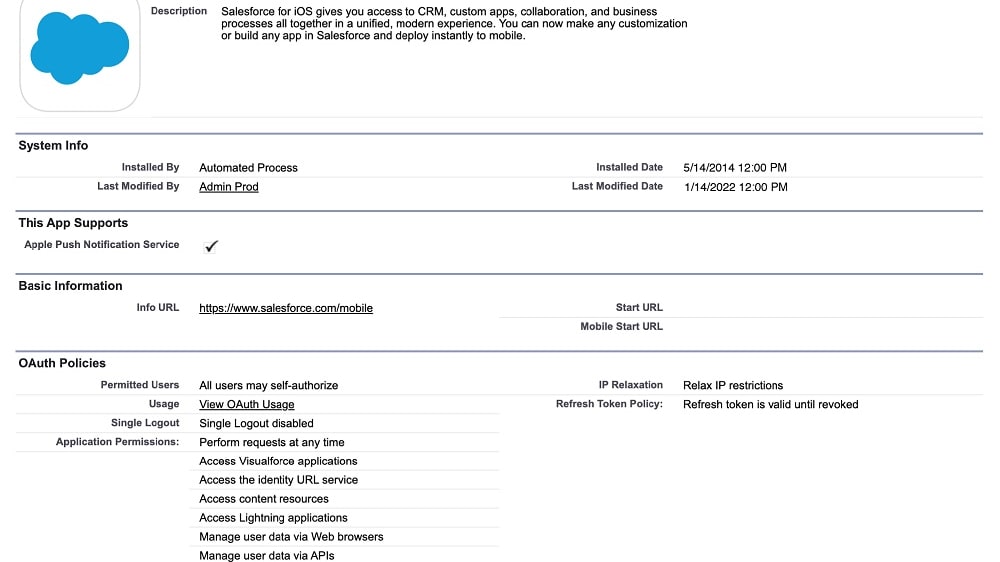
Salesforce seamlessly connects with a vast spectrum of software solutions, enabling businesses to tailor their Salesforce system precisely to their unique needs.
When it comes to integration possibilities, Salesforce takes the lead with an extensive array of third-party integrations. Salesforce seamlessly connects with a vast spectrum of software solutions, enabling businesses to tailor their Salesforce system precisely to their unique needs. A marketing team can integrate Salesforce with email marketing tools, analytics platforms, and social media management software to streamline their campaign management.
Furthermore, Salesforce's robust API capabilities empower businesses to undertake complex customizations and automations that extend beyond the platform's out-of-the-box features. Conversely, while Zendesk offers integration options, its capabilities pale in comparison to Salesforce. While Zendesk efficiently integrates with some commonly-used apps, its overall integration ecosystem isn't as extensive as Salesforce's.
08 Zendesk vs Salesforce: Which is the best for your business?
Zendesk is the best tool for you if:
- You have limited CRM or technical experience and are searching for an easy-to-use, out-of-the-box tool to streamline your CRM and customer support
- You want a platform with extensive customer support features that lets you manage multi-channel support options like help tickets, text, and social media from a centralized platform
- You want an accessible solution that doesn’t require a high level of customization or training to roll out across your organization
- Due to budgetary considerations, you’re looking for an affordable, entry-level CRM and customer service solution
- You intend to develop a knowledge base with articles, FAQs, and resources to help your customers
 You have limited CRM or technical experience and are searching for an easy-to-use, out-of-the-box tool to streamline your CRM and customer support
Salesforce is the best tool for you if:
- You’re in the market for a robust CRM with advanced features including sales and marketing automation, detailed analytics, and business management capabilities
- Your business already relies on other Salesforce products and you would like a solution that seamlessly integrates with your existing systems
- You’re an enterprise needing a fully customizable CRM, customer service, and sales solution that you can tailor to your business’s unique processes and workflows
- You need a highly adaptable solution including custom application development features
- You’re looking for software with in-depth analytics and reporting capabilities to improve your sales, marketing, and customer support strategies
Zendesk
Used by 2812 members
6 months free (with AI Agents and Copilot)
Save up to $50,000
Salesforce
Used by 282 members
45% off the Starter Suite plan for 1 year
Save up to $675
09 Alternatives to Zendesk & Salesforce

Manychat
Used by 4865 members
First month free on Pro plan
Save up to $14

Slack
Used by 3922 members
25% off new plan purchases
Save up to $9,000

Fin (ex. Intercom)
Used by 3500 members
$6,500 in Fin AI Agent credits + Intercom helpdesk free for 1 year
Save up to $6,500

HubSpot
Used by 2892 members
90% off the Professional and Enterprise plans for 1 year
Save up to $7,000
10 Promotions on Customer Support and CRM software
Zendesk and Salesforce are great tools, but Secret offers promo codes with discounts on over 2230+ different SaaS solutions. New deals are added regularly, helping you save money on your online subscriptions. Get access to codes for other Customer Support and CRM software you might want to purchase
Promo code for Fin (ex. Intercom)
$6,500 in Fin AI Agent credits + Intercom helpdesk free for 1 year
Promo code for HubSpot
90% off the Professional and Enterprise plans for 1 year

Freshdesk offer
14 days free

Pipedrive promo code 2026
30% off for 12 months

LiveChat promotion
$150 credits (Team, Business and Enterprise Plans)

Zoho discount
$3,000 in credits for 1 year
Promo codes for Manychat
First month free on Pro plan

Discount for folk CRM
14 days free + 20% off annual plans

LiveAgent discount
$120 credits on any plan

Notion promotion
3 months free on the Business plan with Unlimited AI
Start saving on the best SaaS
Secret has already helped tens of thousands of startups save millions on the best SaaS like Microsoft Teams, Google Workspace & many more. Join Secret now to buy software the smart way.