


Effective lead prospecting boosts revenue and supports the long-term sustainability of a B2B business. Yet, manually searching for accurate contact information for potential leads can be a time-consuming process. That’s where sales intelligence data software comes in. These platforms offer access to databases of B2B contacts, streamlining lead prospecting and generation.
With many choices available, finding the right solution for your business can be challenging. In this article, we compare two popular solutions—Lusha vs ZoomInfo. By comparing their features, pricing structures, and main differences, you can decide which is the best for your situation.
- 01 Lusha vs ZoomInfo: overview
- 02 What's the difference between Lusha and ZoomInfo?
- 03 Lusha pros and cons
- 04 ZoomInfo pros and cons
- 05 Lusha compared to ZoomInfo
- 06 ZoomInfo compared to Lusha
- 07 Features comparison
- 08 Lusha vs ZoomInfo: Which is the best for your business?
- 09 Alternatives to Lusha & ZoomInfo
- 10 Promotions on Lead Management software
Start saving on the best SaaS
Secret has already helped tens of thousands of startups save millions on the best SaaS like Microsoft Teams, Google Workspace & many more. Join Secret now to buy software the smart way.

01 Lusha vs ZoomInfo: overview
Lusha and ZoomInfo are two preeminent players in the domain of B2B contact and company data platforms, each presenting its own unique set of capabilities designed to serve the requirements of varied businesses.
Lusha is known for its straightforward approach to retrieving direct phone numbers and email addresses of business professionals. It integrates effortlessly with platforms such as LinkedIn, ensuring that sales and marketing teams can quickly source valuable contact data. In contrast, ZoomInfo boasts a comprehensive database that provides in-depth insights about companies, their size, revenue, technology stack, and more, in addition to contact information.
Now, let's delve into the Lusha vs. ZoomInfo comparison to assist you in making an informed choice when determining the most fitting platform for your specific B2B data and outreach needs.

Customer Reviews
Both receive positive reviews on platforms like Capterra, especially for their ease of use. Some Lusha users report issues with unverified email addresses, while some ZoomInfo reviewers have found out-of-date contact information.

Lusha
ZoomInfo
Customer Support
Both platforms offer an online knowledge center and help form via its website. Phone support is also available with ZoomInfo during business hours.
Lusha
ZoomInfo
Database size
Lusha’s database contains over 100 million verified contacts, including 20 million in Europe. ZoomInfo offers over 235 million contacts, including 145 million outside the US.
Lusha
ZoomInfo
Ease of Use
Lusha and ZoomInfo are user-friendly, receiving good ratings for ease of use. ZoomInfo has slightly more complex navigation for novices.
Lusha
ZoomInfo
Web extension
You can install Lusha as a web extension on Firefox, Chrome, or Edge, while Zoominfo offers a Chrome extension.
Lusha
ZoomInfo
Data protection compliance
Both are GDPR, CCPA, and SOC2 compliant and ISO 27701 certified. ZoomInfo is also ISO 27001 and TRUSTe certified.
Lusha
ZoomInfo
Contact information
Both platforms offer key contact details, including direct dial numbers, email addresses, and company data and profiles.
Lusha
ZoomInfo
Pricing Plan
Lusha offers a free version, with paid plans starting at $29/month/user. ZoomInfo’s pricing isn’t publicly available.
Lusha
ZoomInfo
Data sources
Both platforms source data from community members, third-party providers, and publicly available information. Lusha also uses propriety models to autocomplete information, while Zoominfo has a dedicated research team.
Lusha
ZoomInfo
Integrations
Lusha offers 11+ integrations, including Salesforce, Hubspot, and Zapier. ZoomInfo’s app marketplace has 15+ integrations for sales teams, including Zoho CRM, Salesforce, and Zapier.
Lusha
ZoomInfo
02 What's the difference between Lusha and ZoomInfo?

Lusha's Pricing Plans, Including Free, Pro and Premium, With Prices Calculated Based on User Count
Lusha
Unlock the power of professional contacts

ZoomInfo's Lead Scoring Feature, Allowing for Effective Segmentation and Scoring of Quality Leads
ZoomInfo
ZoomInfo centralizes your sales and marketing needs, enabling you to manage sales, leads and opportunities. Develop your growth and optimize your GTM strategy with a powerful all-in-one tool.
Lusha and ZoomInfo are popular platforms for sourcing B2B contacts for lead generation. As well as sales, you can use Lusha’s databases for operations, marketing, and recruitment purposes. Similarly, in addition to its SalesOS, ZoomInfo offers a suite of data-related products and services, including MarketingOS, TalentOS, and OperationsOS. There are, however, two key differences between Lusha and ZoomInfo to consider.
The first is their pricing models. Lusha offers an affordable option for SMEs, with pricing details openly available on its website. While Lusha has a free plan, the platform charges per user for its paid plans, which can add up for larger teams. In contrast, users need to contact ZoomInfo for pricing information. Reviews and third-party sites indicate ZoomInfo’s pricing may align more with enterprise-level budgets and doesn’t offer a free plan. Both platforms operate a credits system, using up credits when you export a contact. For example, Lusha’s free plan includes 5 credits per month, while its Solo plan includes 480.
The other significant difference between Lusha and ZoomInfo is the integrations they offer. ZoomInfo offers a broader choice, with at least 15 integrations for sales teams, including Zoho, Salesforce, and Pipedrive.It also provides integrations beyond CRM. Compared to ZoomInfo, Lusha’s integrations are more limited. They include popular CRMs like Salesforce, Salesloft, Outreach, and MS Dynamics. However, these are only available with Lusha’s top-tier plan. While these integrations are more limited, they may be enough for your needs. It’s worth closely checking both platforms’ integrations if you’re looking for a solution to support your current CRM or tech stack. A final difference to note is that ZoomInfo offers several advanced features. For example, ZoomInfo has a built-in lead-scoring feature that allows you to create custom scoring models. This feature doesn’t appear to be included in Lusha’s offerings.

Lusha
Used by 477 members
15% off monthly plans and 35% off annual plans
Save up to $240

ZoomInfo
Used by 329 members
14 days free
Save up to $50
03 Lusha pros and cons
What are the advantages of Lusha?
- Simple integration: Lusha seamlessly integrates with popular platforms, especially LinkedIn, making it easier for users to get contact details directly from profiles.

- User-friendly interface: The platform is intuitive and straightforward to use, even for those who aren't tech-savvy.
- Accuracy of data: Lusha often provides accurate contact details, especially for mid-to-senior level professionals, making the sales and recruitment process smoother.
- Flexible pricing: Lusha offers different pricing tiers, including a free tier, which makes it accessible for businesses of all sizes.
- API access: For businesses with specific needs, Lusha provides API access, allowing them to integrate and fetch data programmatically.
What are the disadvantages of Lusha?
- Data limitations: Depending on the subscription plan, there might be limitations on the number of contacts you can access per month.

- Geographic coverage: While Lusha is strong in certain regions, in others, the database might not be as comprehensive.
- Not comprehensive for all roles: Some users have reported that Lusha is better for certain job roles or levels than others.
- Privacy concerns: Any tool that provides personal contact details can raise privacy concerns, and users need to ensure they use the data responsibly and in compliance with regulations.
- Dependence on platforms: Lusha's strength in integration, especially with LinkedIn, is also a potential weakness. Any changes or restrictions made by such platforms could impact Lusha's effectiveness.
Compare Lusha to other tools


Lusha vs Apollo.io

Kaspr vs Lusha
04 ZoomInfo pros and cons
What are the advantages of ZoomInfo?
- Extensive database: ZoomInfo boasts a comprehensive database of businesses and professionals, which is continually updated, providing users with a vast amount of information.
- Detailed company insights: Beyond individual contact details, users can access valuable company data like company size, revenue, industry, technology stack, and more.
- Advanced search features: The platform offers powerful filtering and search capabilities, making it easier for users to segment and target their ideal profiles.
- Integration capabilities: ZoomInfo integrates with various CRM and sales platforms, allowing for a smoother flow of data into users' existing systems.
- Enhanced product suite: Over the years, ZoomInfo has expanded its offerings, including tools for sales engagement, territory planning, and intent data, making it a more comprehensive solution for sales and marketing teams.
What are the disadvantages of ZoomInfo?
- Cost: ZoomInfo is often viewed as one of the more expensive options in the market, which can be prohibitive for smaller businesses.
- Data accuracy concerns: While ZoomInfo has a vast database, like all data providers, it can occasionally return outdated or inaccurate contact details.
- Usage limitations: Depending on the subscription tier, users may be limited in the number of searches or profile views they can perform within a given period.
- Privacy concerns: As with all tools providing personal contact details, there are inherent privacy concerns, and users need to ensure they handle the data responsibly and comply with relevant regulations.
- Learning curve: With its myriad of features and tools, new users might face a learning curve when trying to navigate and utilize the platform fully.
Compare ZoomInfo to other tools


ZoomInfo vs Cognism
ZoomInfo vs Apollo.io

Zoom Meetings vs ZoomInfo

Crunchbase vs ZoomInfo

RocketReach vs ZoomInfo
05 Lusha compared to ZoomInfo
When comparing Lusha and ZoomInfo, Lusha stands out due to its simplicity and ease of integration, particularly for those looking for a direct way to retrieve business contacts. Lusha presents an intuitive interface that directly integrates with platforms like LinkedIn, enabling users of varying technical expertise to instantly access contact details. It shines in providing quick and direct contact data, allowing users to effectively enhance their outreach efforts.
While both Lusha and ZoomInfo provide powerful solutions for B2B contact data and insights, the choice between the two depends on your specific needs. Lusha offers a more streamlined and focused solution, perfect for users who prioritize direct contact retrieval without delving deep into company insights. It's especially apt for professionals involved in sales and recruitment, delivering a direct and simple platform for contact acquisition without the necessity for intricate setup or a steep learning curve.
Is Lusha better than ZoomInfo?
 Is Lusha better than ZoomInfo?
The answer to whether Lusha is better than ZoomInfo hinges on your specific B2B contact and company data requirements. Lusha excels with its simplicity, direct integration with platforms like LinkedIn, and straightforward contact retrieval, making it an enticing option for users seeking quick access to direct contact information. Its interface is streamlined, ensuring an easy experience for users regardless of their technical proficiency.
The choice between Lusha and ZoomInfo boils down to your unique needs. If you prioritize direct contact retrieval, ease of use, and a no-fuss experience, Lusha might be the preferable option. However, if you're looking for a comprehensive solution that provides in-depth company insights, extensive database searches, and additional features beyond mere contact information, ZoomInfo offers a broader range of capabilities to meet your demands.
What is Lusha best used for?
Lusha is primarily best used for retrieving direct business contact information. It provides an intuitive platform to quickly access email addresses and phone numbers of professionals, making the process of outreach and networking more efficient. Its simplicity and direct integration with platforms like LinkedIn make it especially suitable for individuals and teams aiming to enhance their B2B connections.
Lusha excels in scenarios such as sales prospecting, recruitment outreach, lead generation, and relationship-building in the B2B space. Users can seamlessly source valuable contact data right from platforms they commonly use, whether it's for initiating sales conversations, headhunting potential candidates, or forging partnerships with industry peers.
Can Lusha replace ZoomInfo?
Lusha offers a more streamlined and focused approach to retrieving business contact details, making it a potential choice for users looking for direct and quick access to contact data.
If your primary objective centers around obtaining direct contact information from platforms like LinkedIn, Lusha can be considered a viable alternative to ZoomInfo. It provides a straightforward interface that integrates seamlessly with certain platforms and is particularly effective for tasks like sales outreach and recruitment.
However, it's important to note that ZoomInfo boasts a broader database and offers comprehensive insights about companies, their operations, revenue, industry, and more. If your needs encompass in-depth company data, market analysis, or extensive B2B insights, Lusha may not fully replace the expansive capabilities that ZoomInfo provides.
Is Lusha cheaper than ZoomInfo?
In terms of cost-effectiveness, Lusha's pricing often appears more approachable, especially for individuals or businesses that need straightforward contact retrieval. Lusha provides a limited free option, which can be suitable for occasional users or those just getting started with B2B outreach.
ZoomInfo, on the other hand, is known for its comprehensive database and in-depth company insights. This expansive feature set often comes with a higher price tag. So, if you're seeking a more budget-friendly option primarily for direct contact retrieval, Lusha's pricing might make it a more attractive choice.
Is there a better Lead Management software than Lusha?
When it comes to B2B contact and company data platforms, it's crucial to consider whether there might be an alternative that aligns more closely with your specific needs.
Some prominent alternatives to Lusha in the contact and company data domain include ZoomInfo, Hunter.io, Kaspr, Adapt, and LinkedIn Sales Navigator.
The choice of a contact data platform depends on your organization's unique outreach objectives, depth of insights needed, CRM integration capabilities, and budget considerations. While Lusha excels in simplicity and direct contact retrieval, other tools may offer broader company databases, more extensive market insights, or more specialized features that fit better with your business outreach and networking strategy.

Lusha
Unlock the power of professional contacts
15% off monthly plans and 35% off annual plans
Save up to $240
06 ZoomInfo compared to Lusha
When comparing ZoomInfo and Lusha, ZoomInfo distinguishes itself with its comprehensive approach to B2B contact and company data, making it a go-to choice for organizations and professionals seeking in-depth market insights and a vast database. ZoomInfo offers a wide range of features, from detailed company profiles, revenue figures, technology stacks, and more, catering to a multitude of use cases. It provides multiple subscription tiers, accommodating the varying needs of individuals, small businesses, and large corporations alike.
While both ZoomInfo and Lusha are strong contenders in their domain, the decision between the two hinges on your specific outreach and data requirements. ZoomInfo emerges as a detailed and expansive platform for those looking to deep-dive into market analysis, acquire comprehensive company data, and enhance their B2B strategies with richer insights.
Is ZoomInfo better than Lusha?
ZoomInfo offers a more comprehensive database and deeper insights into B2B contacts and companies, making it a robust platform for extensive market analysis and business development strategies. Its strength lies in its ability to provide intricate details about businesses, including their revenue, technology stacks, employee counts, and more.
The decision between ZoomInfo and Lusha boils down to your particular objectives. If you're looking for a platform with a wide-ranging database and in-depth company insights to fuel your B2B strategies, ZoomInfo might be the better choice.
What is ZoomInfo best used for?
ZoomInfo is best used as a comprehensive platform for B2B contact and company insights. It excels in providing organizations and professionals with detailed information about businesses, their operations, revenue, technology stacks, and more.
With its intuitive interface, ZoomInfo caters to diverse needs, from sales prospecting and market research to recruitment and competitive analysis. Its expansive database accommodates both small-scale outreach efforts and broad market analyses, making it a prime choice for enterprises aiming to deepen their understanding of potential clients, partners, or market segments. Whether you're sourcing leads, analyzing industry trends, or vetting potential business partners, ZoomInfo's depth of data and breadth of insights make it an indispensable tool for a myriad of B2B operations.
Can ZoomInfo replace Lusha?
ZoomInfo offers a wider array of features, encompassing detailed company profiles, revenue metrics, technology stacks, and more, establishing itself as a comprehensive platform for B2B contact and company data. It caters to businesses seeking in-depth market insights and an expansive database for a broad range of sales, marketing, and research needs. Lusha, on the other hand, focuses primarily on direct contact retrieval, making it a streamlined tool for straightforward outreach and networking.
The decision to replace Lusha with ZoomInfo or vice versa hinges on your specific objectives and priorities. If you're in search of a platform that provides deep market insights, vast company data, and a more extensive range of B2B functionalities, ZoomInfo may prove to be the better fit. However, if your main aim is direct contact acquisition, particularly from platforms like LinkedIn, and you appreciate a more simplified, direct approach, Lusha might remain the more optimal solution.
Is ZoomInfo cheaper than Lusha?
ZoomInfo and Lusha have distinct pricing structures, and the cost-effectiveness of each hinges on your specific outreach and data needs. ZoomInfo offers multiple subscription tiers that cater to the requirements of individuals, small businesses, and large corporations, providing in-depth market insights and a vast database of company and contact details. Lusha also presents a tiered pricing system, focusing primarily on direct contact retrieval, with costs varying based on the volume of credits or contacts you need.
For professionals or businesses prioritizing quick and direct contact acquisition, particularly from platforms like LinkedIn, Lusha's pricing might be more appealing. However, for organizations looking for a broader range of B2B functionalities, extensive company databases, and in-depth insights, ZoomInfo's pricing structure may offer a more comprehensive value proposition, even if it might come at a higher cost. It's essential to assess the features you value most and the scale of your operations to determine which platform offers the best cost-benefit for your needs.
Is there a better Prospecting software than ZoomInfo?
When contemplating alternatives to ZoomInfo, it's crucial to gauge if there's a platform that better aligns with your distinct business needs.
Some notable competitors to ZoomInfo in the B2B contact and company insights space include Lusha, Apollo.io, Kaspr, DiscoverOrg, and UpLead.
The selection of a B2B database and outreach platform depends on your specific goals, the scale of your operations, and the depth of insights you seek. While ZoomInfo boasts a comprehensive database and detailed company profiles, other platforms might excel in niche areas such as direct contact retrieval, integration with specific networks like LinkedIn, or specialized industry insights. Evaluating each tool based on your primary use-cases will help in determining the most appropriate platform for your endeavors.

ZoomInfo
All-in-one GTM platform
14 days free
Save up to $50
07 Features comparison
Lusha Leads in Contact Verification Compared to ZoomInfo

Lusha's commitment to validating contact details is exemplary, ensuring that every email address and phone number provided to users is both genuine and current.
In the realm of contact verification, Lusha appears to hold a distinct advantage. Lusha's commitment to validating contact details is exemplary, ensuring that every email address and phone number provided to users is both genuine and current. Imagine a sales team equipped with Lusha; their outreach efforts are fortified by the confidence that they're connecting with legitimate and updated contacts. This reduces wasted time and fosters more meaningful interactions.
While ZoomInfo places importance on the overall quality of its data pool, it doesn't specifically underscore an in-depth verification mechanism for each contact detail. Consequently, when it comes to the precision of contact outreach, Lusha seems to offer a more refined approach.
Lusha Offers Superior User-Friendliness Over ZoomInfo

Lusha prides itself on an intuitive design that caters to users of all levels.
When stacking Lusha against ZoomInfo, there's a clear distinction in user-friendliness. Lusha prides itself on an intuitive design that caters to users of all levels. Even those new to the platform can swiftly and efficiently navigate its features. The streamlined process in Lusha means that actions, like retrieving contact details, become almost instantaneous and hassle-free. This smooth user experience reduces the reliance on extensive tutorials or training sessions.
On the other hand, ZoomInfo, while undoubtedly robust in its data offerings, can be a bit more challenging for novices. The interface is layered with features that, although powerful, can initially seem intricate. As a result, some users might need a bit more time to acclimate, making Lusha the more immediate choice for those prioritizing ease of use.
Lusha's Lead Scoring Advantage Over ZoomInfo
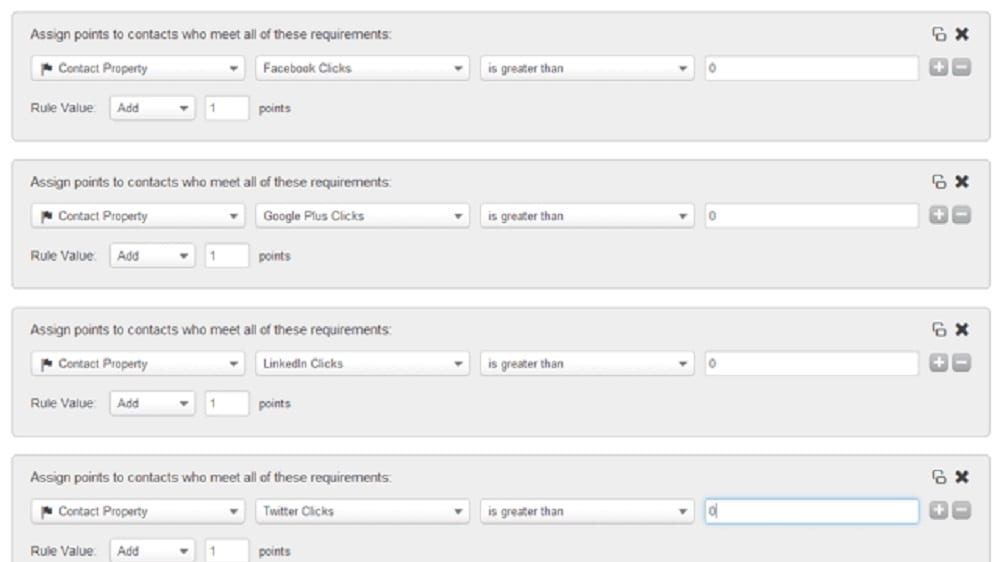
By assessing lead quality based on data precision and relevance, Lusha ensures that businesses can zero in on the most promising candidates.
Lead qualification is crucial in the sales process, and Lusha has carved a niche for itself with its specialized lead scoring feature. By assessing lead quality based on data precision and relevance, Lusha ensures that businesses can zero in on the most promising candidates. For instance, a lead with a recently updated profile and verified contact details would score higher in Lusha's system. This is a boon for sales teams aiming to optimize their outreach efficiency.
In contrast, ZoomInfo, renowned for its deep B2B intelligence, doesn't spotlight a similar lead scoring mechanism. As a result, organizations prioritizing direct lead ranking will find Lusha's offering particularly beneficial.
ZoomInfo's Superiority in Data Security Over Lusha
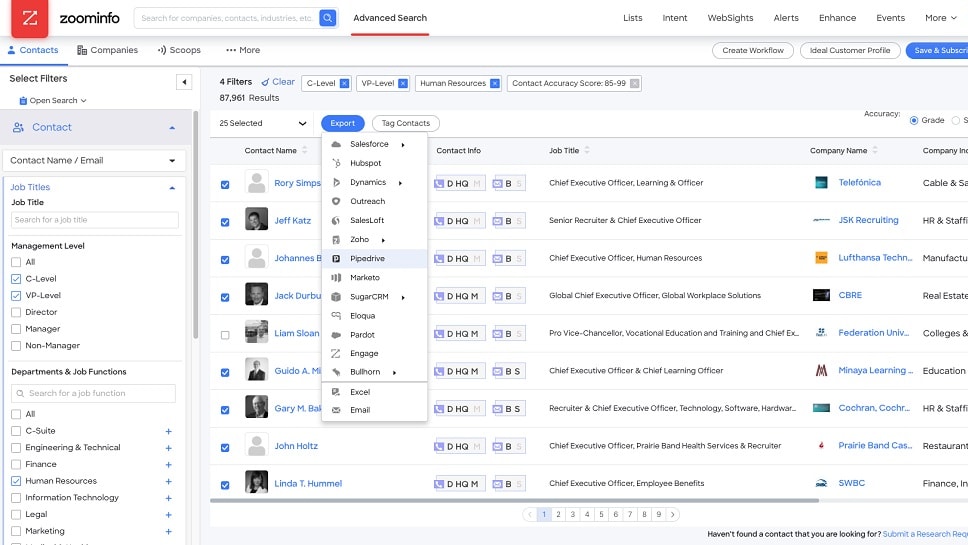
Consequently, businesses seeking a platform that offers paramount data integrity and regulatory compliance will find ZoomInfo to be the frontrunner.
In today's digital age, the importance of data security cannot be overstated. Between Lusha and ZoomInfo, the latter clearly sets a higher benchmark in this domain. ZoomInfo's rigorous compliance with international privacy regulations, namely GDPR and CCPA, offers a reassuring foundation for its users. But what truly sets ZoomInfo apart are its ISO 27001 and ISO 27701 certifications – recognized markers of excellence in data security and privacy management.
While Lusha does provide essential data protection measures, the extensive security layers of ZoomInfo exemplify its robust commitment to safeguarding data. Consequently, businesses seeking a platform that offers paramount data integrity and regulatory compliance will find ZoomInfo to be the frontrunner.
ZoomInfo's Data-Driven Approach Equals Lusha's Role-Based Insights

ZoomInfo utilizes sophisticated, data-driven analytics to identify companies that are most likely to make a purchase in the near future.
Both Lusha and ZoomInfo are powerhouses when it comes to refining lead outreach strategies. Lusha zeroes in on detailed insights about a company and the specific roles of leads, providing a foundation for highly personalized communication. Picture this: with Lusha's data, a sales representative can craft bespoke pitches; a marketing executive might be approached with a different angle than someone from finance, ensuring messages resonate deeply.
On the other side of the spectrum, ZoomInfo utilizes sophisticated, data-driven analytics to identify companies that are most likely to make a purchase in the near future. This foresight allows sales teams to focus their efforts where they're most likely to see returns. In essence, while Lusha facilitates precision in message crafting, ZoomInfo excels in guiding strategic outreach to high-value prospects.
ZoomInfo's Operations Surpasses Lusha in Data Automation
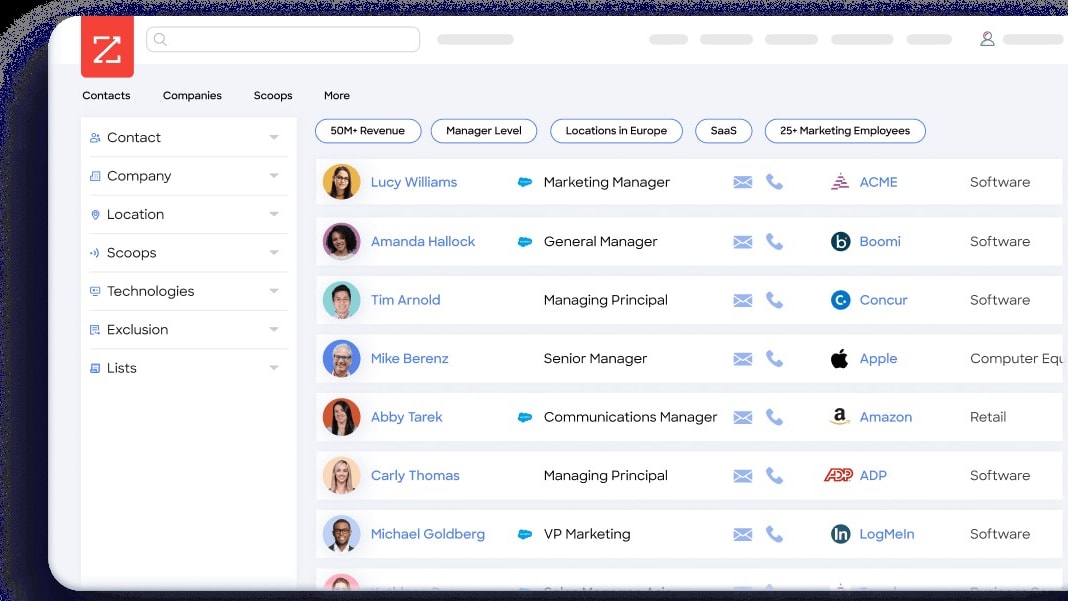
ZoomInfo takes the crown when it comes to sophisticated automated data management with its notable OperationsOS feature.
ZoomInfo takes the crown when it comes to sophisticated automated data management with its notable OperationsOS feature. This advanced system offers several practical applications, such as auto-cleansing customer data to maintain data integrity, efficiently merging any duplicate records to avoid redundancy, and precisely assigning leads to their respective accounts. These functionalities significantly reduce manual tasks and errors, ensuring smoother operations.
While Lusha does have its strengths, such as offering enriched contact data with specifics like job titles and company affiliations, it doesn't match the automation prowess exhibited by ZoomInfo. Consequently, businesses in need of superior data automation would likely gravitate towards ZoomInfo's comprehensive solution.
ZoomInfo Outshines Lusha in Integration Capabilities

ZoomInfo's integration prowess is evident as it seamlessly fuses with industry-leading CRM and marketing platforms, including giants like Salesforce, HubSpot, and Microsoft Dynamics
While both ZoomInfo and Lusha boast significant capabilities when it comes to software integrations, ZoomInfo clearly pulls ahead in terms of breadth and depth. ZoomInfo's integration prowess is evident as it seamlessly fuses with industry-leading CRM and marketing platforms, including giants like Salesforce, HubSpot, and Microsoft Dynamics. For example, a business heavily reliant on Marketo's marketing automation can effortlessly bridge it with ZoomInfo, ensuring that they have access to enriched, actionable data.
On the other side, Lusha does offer integrations with well-known CRM platforms, but the scope isn't as vast. Consequently, for enterprises that prioritize expansive integration capabilities to streamline their operations, ZoomInfo distinctly stands out as the top contender.
08 Lusha vs ZoomInfo: Which is the best for your business?
Lusha is the best tool for you if:
- You’re in the market for a tool to retrieve direct business contact details of B2B connections, including email addresses and phone numbers.
- Budgetary considerations are a top priority and you’re seeking an affordable solution with publicly available pricing information.
- You prefer a user-friendly tool with an intuitive interface that offers a streamlined user experience and enables quick access to direct contact information.
- You need a platform to help you craft bespoke pitches and to do this, you’re seeking B2B data, including the specific roles of leads.
- Lead scoring is a vital part of your sales strategy and you want sales intelligence data software with built-in lead scoring functionality.
 You’re in the market for a tool to retrieve direct business contact details of B2B connections, including email addresses and phone numbers.
ZoomInfo is the best tool for you if:
- Your priority is having access to a B2B contact database with a large number of contacts both within and outside of the US.
- You need a tool with various integrations to ensure your sales intelligence data software integrates with your existing tech stack, including your CRM and other software.
- Detailed company insights, including their operations, revenue, and industries, are crucial for your market analysis and business development strategy.
- You’re looking for a solution with a breadth of information to deepen your understanding of potential clients, partners, or specific market segments.
- You require sales intelligence data software to help you navigate strategic outreach to high-value prospects.
Lusha
Used by 477 members
15% off monthly plans and 35% off annual plans
Save up to $240
ZoomInfo
Used by 329 members
14 days free
Save up to $50
09 Alternatives to Lusha & ZoomInfo

Apollo.io
Used by 5133 members
50% off the annual Basic or Professional plan for 1 year (Up to 5 seats)
Save up to $3,000

Clay
Used by 3043 members
14 days free + 10% off annual plans
Save up to $229

HubSpot
Used by 2919 members
90% off the Professional and Enterprise plans for 1 year
Save up to $7,000

FullEnrich
Used by 745 members
2,000 free credits
Save up to $100
10 Promotions on Lead Management and Prospecting software
Lusha and ZoomInfo are great tools, but Secret offers promo codes with discounts on over 2240+ different SaaS solutions. New deals are added regularly, helping you save money on your online subscriptions. Get access to codes for other Lead Management and Prospecting software you might want to purchase

Freshworks deal
14 days free on Freshdesk
Promo codes for Clay
14 days free + 10% off annual plans

Pipedrive promo code 2026
30% off for 12 months
Promo code for HubSpot
90% off the Professional and Enterprise plans for 1 year
Apollo.io discount
50% off the annual Basic or Professional plan for 1 year (Up to 5 seats)

Crunchbase discounts
20% off for 1 year

Waalaxy (ex. ProspectIn) promotion
14 days free + 50% off annual plans

Discount for folk CRM
14 days free + 20% off annual plans

Promo codes for Kaspr
20% off monthly and annual plans for 1 year

Expandi discount code
30% off for 1 year
Start saving on the best SaaS
Secret has already helped tens of thousands of startups save millions on the best SaaS like Microsoft Teams, Google Workspace & many more. Join Secret now to buy software the smart way.